Understanding the N324 Warrant Request Process: A Step-by-Step Approach
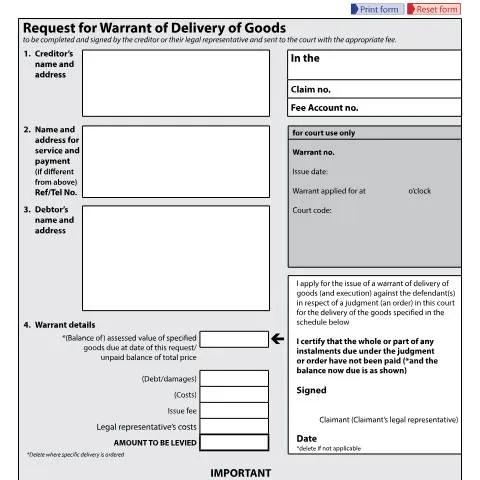
When a judgment is rendered in favour of a creditor, the next logical step may involve the recovery of specified goods. This is where the N324 form comes into play. Specifically designed for creditors wishing to enforce a court order for the delivery of goods, this official document plays a pivotal role in the enforcement of civil judgments. Whether you are a creditor seeking to reclaim possession of goods or a legal representative guiding a client through the process, understanding the intricacies of the N324 form is essential.
Preparing the N324: Key Information and Documentation
Before proceeding with the completion of the N324 form, it is crucial to prepare all necessary information and documentation. The completeness and accuracy of the details provided can significantly affect the speed and success of the process.
Essential Information Required
When filling out the N324 form, the following information must be gathered:
- Creditor's Details: Include the full name and address of the creditor or their legal representative.
- Debtor's Details: Accurate information regarding the debtor, including their full name and address.
- Warrant Details: Specify the goods you wish to recover as stated in the court's judgment.
- Amounts Due: Clearly outline the assessed value of the goods and any unpaid balances.
Documentation to Accompany the N324 Form
Along with the N324 form, certain documents may be required to support your warrant request. These include:
- Copy of the court judgment or order.
- Proof of non-payment of any instalments due.
- Contact information for any associated legal representatives.
Collecting these documents in advance will streamline the submission process and help prevent delays.
Who Can Submit the N324 Form?
The N324 form must be submitted by either the creditor or their legally appointed representative. Understanding who is qualified to file this document can help clarify roles during the enforcement process. Here are the key parties involved:
Individuals and Entities Eligible to Submit
- Individual Creditors: Any person who has received a favorable judgment can file the N324.
- Legal Representatives: Solicitors or other authorized representatives acting on behalf of a creditor may also submit the form.
Considerations for Foreign Creditors
For creditors residing outside the UK, additional considerations may apply. It is essential to consult with legal counsel familiar with cross-border claims to ensure compliance with applicable laws and requirements.
Completing the N324 Form: Detailed Instructions
The N324 form is structured to guide you step by step through the information collection process. Each section has specific requirements, which are crucial for a successful application.
Filling Out Each Section
Here’s how to effectively complete each section of the N324 form:
- Creditor Information: Clearly state the name and contact details. Ensure that this matches the details filed in the original court order.
- Debtor Information: Provide accurate details; any discrepancies might lead to complications in enforcement.
- Warrant Request Details: Specify what goods are to be retrieved. If any specific goods have been ordered for delivery, make sure to delete any irrelevant sections.
- Amount to Be Levied: Detail the financial aspects, including the debt or damages owed, and any associated fees. If applicable, distinguish between amounts due for different categories clearly.
Common Pitfalls and Issues When Completing the Form
While completing the form, be vigilant of common pitfalls:
- Incomplete Forms: Ensure no sections are left blank, as this can delay processing.
- Inaccurate Information: Double-check all names and addresses for accuracy to prevent judicial errors.
- Missing Documentation: Verify that all required documents are included with the N324 submission.
Submitting the N324 Form: The Next Steps
After filling out the N324 form, the next significant step is submission. The timeline and method of submission can influence the overall process.
Where and How to Submit the N324
The N324 form must be submitted to the relevant court that issued the original judgment. Here’s a structured approach to ensure proper submission:
- Payment of Fees: Before submission, verify the required fee for processing the warrant. Payment is generally made through a court fee account or other accepted methods.
- Submit the Form: The completed form, along with any supporting documents, must be sent to the court. This can often be done via postal service or, in some regions, electronically.
- Keep Records: Retain a copy of the submitted form and any correspondence with the court for your records.
What Happens After Submission?
Once the N324 form is submitted, the court will process the request and may issue a warrant for delivery of goods. This warrant authorizes bailiffs to take action for the retrieval of the specified goods.
Responding to Challenges: What to Do if Issues Arise
Even with careful preparation and submission, challenges may arise during the enforcement process. Knowing how to respond to issues can save time and resources.
Handling Refusals or Delays
If the court refuses to issue the warrant or if there are delays, consider the following:
- Clarifying Issues: Contact the court to understand the reasons for refusal or delay.
- Amending the Application: If errors are found in the submission, promptly correct and resubmit the N324.
- Seeking Legal Advice: In complex cases, consulting a legal professional may provide insights into further actions.
What to Do If Payments Are Received Post-Submission
If payments are received after submitting the N324, it is vital to inform the court immediately. This transparency can affect the processing and efficacy of the warrant request.
Connecting the N324 to Broader Enforcement Procedures
The N324 form does not operate in isolation. It is a crucial component of a broader enforcement procedure aimed at ensuring that court judgments are respected and executed.
The Role of the Warrant in Debt Recovery
The issuance of a warrant for delivery of goods signifies that the court has authorized appropriate measures to retrieve what is owed. This is a fundamental step in the debt recovery process, allowing creditors to legally reclaim assets.
Interactions with Bailiffs
Once a warrant is issued, bailiffs are designated to carry out the enforcement. Their role includes:
- Visiting the debtor’s premises to recover the specified goods.
- Assessing the situation and determining the best approach for enforcement.
- Ensuring compliance with the law during the execution of the warrant.
Distinguishing the N324 from Similar Forms
In the realm of legal enforcement, various forms exist, and it is crucial to understand the specific purpose of the N324 to avoid confusion.
N324 Versus Other Enforcement Forms
| Form | Purpose | Context |
|---|---|---|
| N324 | Request a warrant for delivery of goods | Enforcement of a judgment for possession of specified goods |
| N322 | Request for a warrant of execution | Enforcement of a monetary judgment through seizure of assets |
| N28 | Application for a Charging Order | Securing debt against the debtor’s property |
Understanding these distinctions can significantly aid in selecting the correct form based on your specific enforcement needs.
Final Considerations: The N324 in Practice
Engaging with the N324 form can feel daunting, but with thorough preparation, accurate completion, and adherence to the proper procedures, the process can be navigated successfully. Whether reclaiming goods or seeking the enforcement of a judgment, being well-informed amplifies the chances of a favourable outcome.
Fill in your form directly online
No printing: type your details into the boxes of the official form, tick, then download the PDF ready to send.
- 1Type into the form boxes
- 2Tick in one click
- 3Save and download the PDF
As you prepare your N324 application, remember that the success of your claim relies not just on the completion of the form but also on the engagement with the court system and the legal framework governing enforcement actions. Stay proactive, informed, and prepared for any outcomes, and your efforts will yield results.
Understanding the Grounds for Requesting a Warrant for Delivery of Goods
When you consider requesting a warrant for delivery of goods through Form N324, it's crucial to understand the legal grounds upon which such a request can be made. A warrant is essentially a court order that allows you to reclaim goods that you believe are rightfully yours but have been unlawfully withheld by another party. Common situations that may justify requesting a warrant include breaches of contract, non-payment for goods supplied, or disputes over ownership of specific items.
In particular, you must demonstrate to the court that you have taken all reasonable steps to resolve the issue amicably before proceeding with this legal action. This could involve sending formal letters of demand or attempting mediation. The court will look for evidence that you have acted in good faith to reclaim your property, and establishing this can significantly influence the outcome of your application.
Additionally, you should be prepared to provide evidence such as contracts, invoices, or previous correspondence with the debtor. The court will assess this documentation to determine the validity of your claim, so meticulous record-keeping is essential.
Procedure for Completing Form N324: Step-by-Step Guidance
Completing Form N324 is a straightforward process, but it requires careful attention to detail to avoid delays or complications in your application. Below is a step-by-step guide to help you through the process:
- Gather Necessary Information: Before you start filling out Form N324, collect all relevant information, including details of the goods in question, the parties involved, and any previous court orders related to the case.
- Fill Out Personal Details: In Part 1 of the form, provide your full name, address, and contact details. If you are acting on behalf of a business, include the company's registered address.
- Provide Case Details: In Part 2, specify the case number, if applicable, and outline the basis for your request for a warrant, citing any previous attempts to recover the goods.
- Detail the Goods: In Part 3, clearly describe the goods you are seeking to reclaim. Include serial numbers, descriptions, or any other identifying features to assist the bailiff in locating them.
- Sign and Date the Form: Ensure you sign and date the form before submitting it. Failing to do so may result in your application being rejected.
- Submitting the Form: Send the completed form to the relevant court. Be mindful of any fees associated with the application, and check for the preferred method of submission, which may include post or electronic filing.
What to Expect After Submitting Form N324
Once you have submitted Form N324, you will enter a waiting period during which the court will process your request. Depending on the court's current caseload, this could take anywhere from a few days to several weeks. During this time, it is advisable to keep all communication lines open in case the court requires additional information or clarification regarding your request.
Upon approval of your warrant application, you will receive a sealed copy of the warrant, which you will then need to present to a bailiff for enforcement. Depending on the circumstances, the bailiff will contact the individual or business that has possession of your goods to arrange a suitable time for collection. It’s important to note that the bailiff does not need to provide prior notice to the debtor about the enforcement action.
Should the debtor dispute the warrant or refuse access to the property, the bailiff has the authority to take necessary actions to enforce the warrant. However, you should remain aware that some goods may be exempt from seizure. The bailiff will be familiar with the legal requirements governing the seizure of goods and will act accordingly.
In case the warrant is denied, or if you face complications during the enforcement process, seeking legal advice can be beneficial. A solicitor with experience in property law can assist you in clarifying your options and the next steps you may take.