Navigating the Termination of a Cooling Off Period: A Practical Guide
In the realm of intellectual property, parties often find themselves engaged in disputes over trademarks. A pivotal stage in these disputes is the cooling off period, a window intended to facilitate negotiation and resolution. However, circumstances may arise where an opponent wishes to terminate this period. This is where the Request to Terminate a Cooling Off Period (Form TM9T) issued by the Intellectual Property Office (IPO) comes into play. Understanding the ins and outs of this document is essential for those involved in trademark opposition.
Understanding the Cooling Off Period
The cooling off period serves a vital role in trademark disputes, allowing both parties to engage in negotiations. This window typically spans 28 days, although it can be extended by mutual agreement. During this time, the oppressor and the applicant can communicate and possibly resolve the dispute without proceeding to a formal hearing.
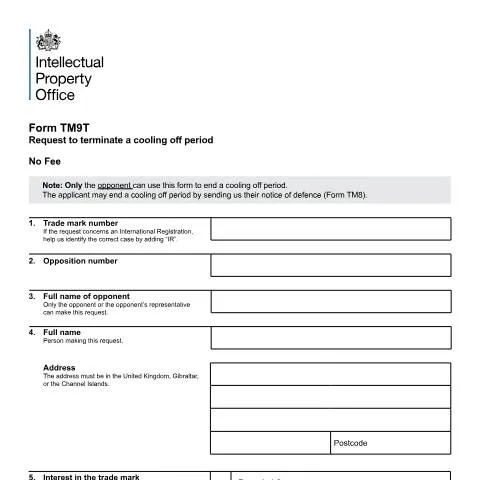
However, it is important to remember that only the opponent can instigate the termination of this cooling off period using Form TM9T. In contrast, the applicant can end the cooling off period by submitting their defense via Form TM8. Here’s a breakdown of the necessary aspects of Form TM9T:
- Trade Mark Number – essential for identifying the specific trademark under dispute.
- Opposition Number – used to reference the ongoing opposition case.
- Opponent's Details – including name and address, which must be within the UK or its territories.
- Interest in the Trademark – clarifying whether the request comes from the recorded opponent or a representative.
- Signature and Date – finalizing the request formally.
Who Can Submit Form TM9T?
The authority to submit this request is restricted to the opponent or their appointed representative. This limitation is crucial because it underscores the opponent's role in the opposition process. Should an applicant wish to terminate the cooling off period, they must utilize Form TM8 instead. Here’s a closer look at the profiles involved:
| Role | Form Required | Purpose |
|---|---|---|
| Opponent | TM9T | To terminate the cooling off period |
| Applicant | TM8 | To provide a notice of defence |
Filling Out Form TM9T: A Step-by-Step Approach
Completing Form TM9T requires careful attention to detail. Here’s how to navigate each section effectively:
Section 1: Trade Mark Number
The first requirement is to identify the trademark number. If applicable, for international registrations, prefix the number with “IR” to avoid confusion.
Section 2: Opposition Number
This section requires the opposition number, which is crucial for linking the request to the specific case in question.
Section 3: Full Name of Opponent
Only the opponent or their representative is permitted to make this request, so ensure that the name is correctly entered.
Section 4: Full Name and Address
Here, the individual making the request must provide their full name and a postal address within the jurisdiction of the UK, Gibraltar, or the Channel Islands. This is a critical point as forms from outside these territories may not be accepted.
Section 5: Interest in the Trademark
This section requires the individual to indicate their relationship to the trademark. It is vital to select the correct option — either as a Recorded Opponent or a Recorded Representative — to avoid delays.
Section 6: Signature and Date
Form TM9T must be signed, either by typing or handwriting, along with the date of submission. An unsigned form is invalid and will be automatically rejected.
Section 7: Your Reference
This optional field can be filled out if the individual wishes to maintain a specific reference for future communications with the IPO.
Contact Details
Finally, ensure that the contact details, including a daytime telephone number, are provided in case the IPO requires clarification or additional information.
Submissions and Next Steps
Once Form TM9T is completed, the opponent can choose to submit it electronically or via post. Electronic submission via email to [email protected] is typically faster than postal submissions, which can experience significant delays. For postal submissions, the address is:
Intellectual Property Office, Concept House, Cardiff Road, Newport, South Wales, NP10 8QQ.
It is recommended to double-check the completeness of the form before submission to avert processing delays, especially given that missing or incorrectly filled sections could lead to rejection.
The Path Following Submission: Processing and Communication
Upon submission of Form TM9T, the IPO will process the request. The timeframe for processing can vary but generally takes several weeks. The form does not incur any fees; however, applicants should remain proactive in monitoring the progress.
The opponent may follow up with the IPO if there is a delay beyond what appears reasonable. Communication is key, and having the reference number and contact details readily available can expedite the process. The IPO adheres to the Data Protection Act 2018 and the UK GDPR when handling personal data, ensuring confidentiality throughout the process.
Implications of Terminating the Cooling Off Period
Once the cooling off period is terminated via Form TM9T, several implications arise for both parties involved in the opposition:
- The Opponent: The opponent may now prepare to proceed to the next stages of the opposition process, which could involve gathering evidence or potentially entering into litigation.
- The Applicant: Following the termination, the applicant must respond adequately to the opposition, usually by filing their defense (Form TM8) within the designated deadline.
Failure to act promptly by either party can result in adverse outcomes, highlighting the importance of staying organized and attentive to deadlines throughout the opposition process.
What Sets Form TM9T Apart from Other Similar Forms
Understanding the distinctions between Form TM9T and other related forms can prevent confusion. While Form TM9T is specific to terminating the cooling off period, here’s how it compares to other relevant forms:
| Form | Purpose | Who Can Use It? |
|---|---|---|
| TM9T | Terminate cooling off period | Opponent |
| TM8 | Notice of defence | Applicant |
| TM7 | Opposition notice | Opponent |
This differentiation is crucial for trademark parties to ensure they are filling out the correct documentation as required by their specific circumstances.
Common Pitfalls to Avoid When Completing Form TM9T
While the TM9T form is straightforward, several pitfalls can delay the processing of your request. Here are key points to keep in mind:
- Inaccurate Information: Double-check all entries for accuracy, especially the trademark and opposition numbers.
- Signature Issues: Ensure the form is signed. An unsigned form will be deemed invalid.
- Address Requirements: Remember that the address must be within the UK, Gibraltar, or the Channel Islands.
Taking the time to thoroughly review the form before submission can save significant headaches down the line.
The Importance of Keeping Records
Lastly, maintaining meticulous records of all correspondence and submissions related to Form TM9T is essential. This documentation can serve as critical evidence in case of disputes or challenges later in the opposition process. A well-organized system for tracking deadlines, forms submitted, and communications with the IPO can make all the difference when navigating the complexities of trademark opposition.
Fill in your form directly online
No printing: type your details into the boxes of the official form, tick, then download the PDF ready to send.
- 1Type into the form boxes
- 2Tick in one click
- 3Save and download the PDF
Ultimately, understanding the nuances of Form TM9T and the broader context of trademark opposition can empower opponents to navigate this vital phase effectively. By adhering to the guidelines outlined and ensuring thoroughness in their submissions, individuals can position themselves favorably within the trademark landscape.
Understanding the Cooling-Off Period in Consumer Contracts
The cooling-off period is a crucial aspect of consumer rights within the UK, particularly under the Consumer Contracts Regulations 2013. This legislation provides consumers with the ability to cancel certain contracts within a specified timeframe. Usually, this period lasts 14 days, starting from the day after the consumer receives their goods or the conclusion of the service contract. It's important to note that not all purchases are eligible for a cooling-off period; exceptions include bespoke items or services that have been fully performed with the consumer's consent.
During this timeframe, consumers can withdraw from a transaction without incurring any penalties, although they may be responsible for the return of items. Understanding the nuances of this period, including how to effectively communicate a termination request, is vital for consumers wishing to exercise their rights.
Steps to Effectively Terminate the Cooling-Off Period
When considering the termination of a cooling-off period, it is essential to follow a systematic approach to ensure that your intentions are clearly communicated and legally valid. Here are the steps you should take:
- Review the Terms and Conditions: Before proceeding, carefully read the terms and conditions of the purchase. Look for any clauses that pertain to the cooling-off period and cancellation rights, as these may impact your ability to terminate.
- Prepare Your Documentation: Gather all relevant information, including receipts, order confirmations, and any correspondence with the seller. This documentation will support your request and provide clarity regarding your intent.
- Draft a Formal Request: Compose a written request to the seller or service provider. Be clear about your intention to terminate the cooling-off period and state your reasons if you wish. Include your contact details, order number, and any other pertinent information. Using a formal tone is advisable as it demonstrates professionalism.
- Send Your Request Promptly: Submit your request as soon as you decide to terminate the cooling-off period. Consider using a method that provides proof of delivery, such as recorded delivery or email with a read receipt, to ensure that the seller cannot dispute your request.
- Follow Up: If you do not receive acknowledgment of your request within a few days, follow up with the seller. Ensure they are processing your termination request and remind them of your rights under the Consumer Contracts Regulations.
By following these steps, you can ensure that you effectively terminate the cooling-off period, protecting your consumer rights in the process.
Potential Challenges and How to Overcome Them
While exercising your right to terminate a cooling-off period is typically straightforward, various challenges can arise. Understanding these potential pitfalls can prepare you to navigate them effectively.
One common issue is a lack of response from the seller after submitting your termination request. To overcome this, ensure you document all communications and consider escalating the matter to a consumer protection agency if necessary. You can reach out to the Citizens Advice Bureau for guidance on next steps and to file a complaint if the seller does not cooperate.
Another challenge may involve the seller disputing your right to terminate based on their interpretation of the cooling-off period. It's essential to be well-versed in the specific conditions under which the cooling-off period applies and to reference the Consumer Contracts Regulations when communicating with the seller. Providing evidence, such as the original agreement and any relevant communications, can help solidify your position.
Additionally, if returning goods is part of the process, be cautious about the return policy stipulated by the seller. Clarify who bears the cost of return shipping and ensure you package items securely to avoid damages during transit. Some sellers may have policies that stipulate certain conditions for returns, which could affect your ability to terminate the cooling-off period smoothly.
Being proactive and informed about your rights can mitigate these challenges and facilitate a more straightforward cancellation process.