Understanding Form PC001: The Crucial Step in Judicial Proceedings
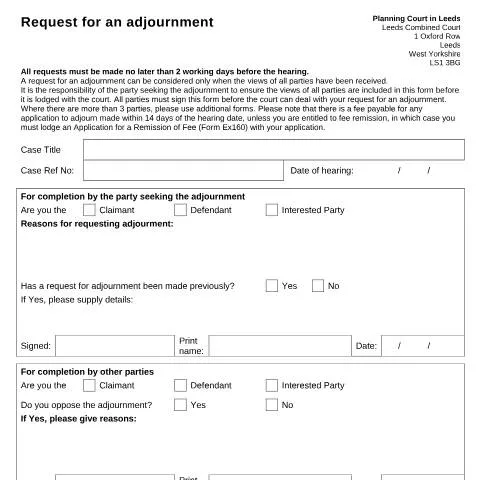
When faced with the complexities of court proceedings, the need to request an adjournment can arise for various reasons. The Form PC001: Request for an Adjournment, issued by the HM Courts & Tribunals Service, plays a pivotal role in this process. This form is essential for parties needing to postpone a court hearing in the Planning Court in Leeds.
It is critical to grasp the significance of this form and how its completion can influence the outcome of a case. Navigating the legal landscape, especially when timing and compliance are paramount, requires a clear understanding of this bureaucratic tool.
A Closer Look at the Circumstances Necessitating an Adjournment
There are numerous situations where a party may find it necessary to request an adjournment. Understanding these specific contexts not only aids in justifying the request but also ensures a more seamless interaction with the court. Below are several scenarios where submitting Form PC001 might be warranted:
- Unforeseen Circumstances: If a key witness is unable to attend due to sudden illness, or if significant evidence has come to light that requires further investigation.
- Legal Representation Issues: When a party's legal representative is unavailable due to another commitment or is newly appointed, thus requiring additional time to prepare.
- Negotiation Opportunities: If ongoing negotiations might yield a resolution before the hearing date.
- Complexity of the Case: When additional time is necessary to prepare an adequately detailed argument due to the complexity of the legal issues at stake.
The Essential Components of Form PC001
Completing Form PC001 requires attention to detail and an understanding of the purpose of each section. The form itself is structured as follows:
- Case Title and Reference: Clearly identify the case by providing the case title and the case reference number.
- Date of Hearing: Input the scheduled date of the hearing to establish the timeline of the adjournment request.
- Party's Role: Indicate whether you are the Claimant, Defendant, or an Interested Party, which positions you in the context of the case.
- Reasons for Requesting Adjournment: Provide a comprehensive explanation of why an adjournment is necessary. This should be precise and compelling, as it forms the basis of your application.
- Prior Requests: If any previous adjournment requests have been made, details must be included to provide the court with a complete picture.
- Signatures: Ensure that all parties involved in the case sign the form, as their agreement is pivotal to the consideration of your request.
Timing is Everything: Understanding the Deadlines
The court is strict about timeline adherence when it comes to submitting adjournment requests. All applications must be made no later than two working days before the scheduled hearing. This requirement ensures that the court can effectively manage its schedule and inform all parties involved. Here’s a breakdown of important dates and what to consider:
| Action | Deadline | Further Information |
|---|---|---|
| Submission of Form PC001 | Two working days before the hearing | Ensures the court has time to process your request. |
| Fee Payment (if applicable) | Along with the adjournment request | A fee is payable for requests made within 14 days of the hearing unless fee remission is applicable. |
| Response from Court | Varies | The court will notify you of its decision regarding the adjournment. |
Step-by-Step Process: From Submission to Decision
Understanding what happens after you submit the request can alleviate much of the anxiety associated with judicial proceedings. The following outlines the typical journey of Form PC001 once submitted:
- Preparation: Gather all necessary information and documentation to support your adjournment request, including any additional forms required if multiple parties are involved.
- Submission: Ensure that you submit the completed form to the Leeds Combined Court, along with any applicable fees.
- Court Review: The court will review the submission, considering the views of all parties involved before making a decision.
- Notification: You will receive a notification regarding the court's decision, which may be to grant or deny the adjournment.
- Next Steps: Depending on the court's decision, either prepare for the hearing or address any new dates or conditions that have been set.
The Role of All Parties in the Adjournment Process
The collaborative nature of legal proceedings means that all parties involved play a crucial role in the adjournment request process. As the party requesting the adjournment, it is your responsibility to ensure that:
- All Views are Collected: You must obtain the views of all other parties regarding the adjournment before submitting the form.
- Signature Collection: The form cannot be processed without the signatures of all involved parties, which indicates their agreement or disagreement with your request.
- Communication is Key: Maintaining open lines of communication with other parties can facilitate a smoother process and potentially lead to an amicable resolution.
Follow-Up Actions: Ensuring Your Request is Processed
After submitting Form PC001, it is important to follow up to ensure that your request is being processed. Here are practical steps to take:
- Check Submission Confirmation: Confirm that the court has received your form. You may need to contact the Leeds Combined Court directly.
- Monitor Responsiveness: Be attentive to any correspondence from the court regarding your adjournment request, especially if a decision is not communicated promptly.
- Prepare for Different Outcomes: Depending on the court’s decision, be ready to proceed if the adjournment is denied, or adjust your plans if granted.
Understanding Fees and Fee Remission
In some cases, a fee is associated with adjournment requests, particularly if the request is made within 14 days of the hearing date. Understanding how this fee structure works, and the potential for fee remission, is essential:
- Standard Fee: A fee applies if you submit your request late, unless you qualify for fee remission.
- Form Ex160: If you believe you are entitled to fee remission, you must complete and submit Form Ex160 alongside your adjournment request.
- Documentation: Always ensure you have the necessary financial documentation to support your claim for remission.
In conclusion, navigating the complexities of legal proceedings and court forms can be daunting. However, by understanding the importance of Form PC001 and following the outlined steps, you can effectively manage your adjournment request and contribute to the overall process with confidence. For specific cases or further guidance, consider seeking professional legal advice tailored to your individual circumstances.
Understanding the Adjournment Process in Leeds
When involved in legal proceedings, it is essential to understand the adjournment process, particularly in the Leeds jurisdiction. An adjournment refers to the postponement of a court hearing to a later date, which can occur for various reasons such as the unavailability of key witnesses, the need for additional evidence, or simply requiring more time to prepare a case adequately. This approach seeks to ensure that all parties have a fair opportunity to present their arguments without undue pressure.
The court’s discretion plays a significant role in granting an adjournment. The presiding judge will consider factors such as the interests of justice, the reasons for requesting the adjournment, and whether it will cause any undue delay in the proceedings. Therefore, when filing Form PC001, it is crucial to provide a comprehensive explanation of the reasons necessitating the adjournment, supported by any relevant documents, to strengthen your case.
Another important aspect is that the request for adjournment should be made as early as possible, ideally well before the scheduled hearing date. Late applications can be detrimental as they may not provide the court with sufficient time to consider the request or adjust the court's schedule accordingly. It's also advisable to notify the other party involved in the proceedings about the adjournment request, as they may have their views on the matter, which the court will consider.
Implications of an Adjournment on Legal Proceedings
Requesting an adjournment can have various implications on legal proceedings, both positive and negative. On the one hand, an adjournment can provide the necessary breathing space for a party to gather evidence, prepare witnesses, and refine their legal arguments. This can ultimately lead to a more robust presentation in court, potentially influencing the outcome of the case in favor of the party requesting the adjournment.
On the other hand, adjournments can also lead to delays in the resolution of the case. This can be particularly frustrating for the parties involved, as well as for the court system, which aims to manage its caseload efficiently. In cases where multiple adjournments are requested, there may be a risk of the court viewing the requests unfavorably, leading to potential challenges in future applications or even costs being awarded against the party seeking the adjournment. Therefore, it is vital to weigh the necessity of the adjournment against the potential delays it may cause.
Moreover, the type of case and the nature of the proceedings can influence how an adjournment is perceived. For instance, in more serious criminal cases, frequent adjournments may be scrutinized more closely, whereas civil matters may allow for a bit more leniency, provided the reasons are justified. Legal representatives should be cognizant of such nuances and prepare their clients accordingly when considering an adjournment.
How to Prepare a Strong Adjournment Application Using Form PC001
To maximize the chances of a successful adjournment application using Form PC001, thorough preparation is critical. Start by compiling all necessary documents and evidence that supports your request. This may include witness statements, medical records if health issues are involved, or any correspondence that can substantiate the need for postponement.
When filling out Form PC001, ensure that you clearly articulate your reasons for the adjournment in a concise but detailed manner. The court appreciates clarity and specificity, so avoid vague terms and provide concrete examples where applicable. Additionally, it is beneficial to outline the potential impact of not granting the adjournment, such as prejudice against your case or the inability to present important testimony.
Consider also proposing an alternative date for the hearing when possible. While the court is not obliged to accept this suggestion, it demonstrates your commitment to moving the case forward and can help the court in rescheduling its calendar. Furthermore, it is advisable to consult with the other party to gauge their position on the adjournment, which can bolster your application if they are in agreement.
Finally, it’s vital to file the application in a timely manner, adhering to any specific court timelines related to adjournment requests. Always check local Leeds court rules or guidelines to ensure compliance with procedural requirements, as this can significantly impact the outcome of your application.