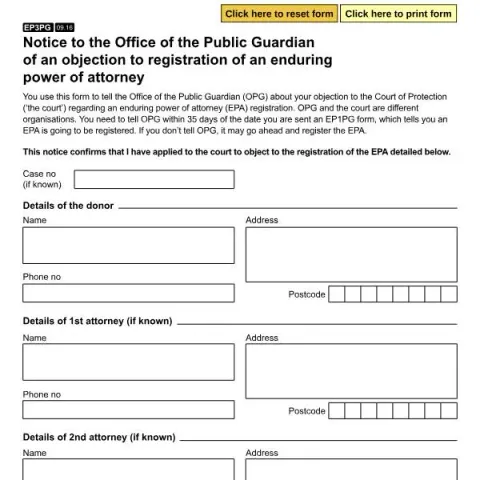
Understanding the Official Notice to the Office of the Public Guardian (EP3PG Form)
The EP3PG form is an important legal document used within the United Kingdom's guardianship and mental capacity framework. Specifically, it serves as a formal notification to the Office of the Public Guardian (OPG) regarding an objection to the registration of an Enduring Power of Attorney (EPA). This article explains the purpose of the form, when and how to use it, and key points to consider if you need to submit an objection.
What is the EP3PG Form and When Is It Used?
The EP3PG is a legal notice that allows individuals to formally object to the registration of an EPA with the OPG. An EPA is a legal document that enables a person (the donor) to appoint someone (the attorney) to manage their affairs if they lose mental capacity. Once an EPA is registered, the attorney can act on behalf of the donor.
However, there are situations where a concerned party may believe the registration should not proceed. These situations include doubts about the donor’s mental capacity at the time the EPA was made, suspicions of coercion or fraud, or concerns about the suitability of the proposed attorney. In such cases, the EP3PG form provides a formal channel to raise objections with the OPG.
Key Elements of the Form
Details of the Donor and Attorneys
The form requires basic information about the donor, including their name, address, and contact details. If known, details of the attorneys involved in the EPA should also be provided. The form allows for up to three attorneys, with space to specify each one’s name, address, and phone number.
Reasons for Objection
The form includes a section where the objector must specify the grounds for their objection. The possible reasons include:
- The EPA is not legally correct, such as doubts about the donor’s mental capacity.
- The donor cancelled their EPA while they still had mental capacity.
- The application to register the EPA is premature because the donor has not yet lost capacity.
- The donor was pressured into making the EPA.
- Suspected fraud, such as forgery of signatures.
- The attorney is unsuitable to act on behalf of the donor.
If the objection is based on the unsuitability of the attorney, the form provides space to list the specific attorney(s) involved.
Notification and Submission Details
The person making the objection must sign and date the form. It must then be sent by post to the OPG at the specified address:
Office of the Public Guardian PO Box 16185 Birmingham B2 2WH
It is crucial to submit the completed form within 35 days of receiving the initial notification (EP1PG) about the EPA registration. Failure to do so may result in the registration proceeding without your objection being considered.
Fill in your form directly online
No printing: type your details into the boxes of the official form, tick, then download the PDF ready to send.
- 1Type into the form boxes
- 2Tick in one click
- 3Save and download the PDF
Timing and Legal Considerations
The EP3PG form is part of the legal process to ensure that any concerns about an EPA are formally registered before registration is finalized. The legal framework governing this process is designed to protect individuals who may be vulnerable or subject to undue influence. It is important to act promptly, as the window for submitting objections is limited to 35 days from receipt of the initial notice.
Points of Attention and Practical Advice
- Accurate Information: Ensure all details about the donor and attorneys are correct to avoid delays.
- Clear Reasons: Clearly specify your reasons for objection, referencing concerns about capacity, coercion, or fraud.
- Legal Support: If unsure about the grounds for objection, consider seeking legal advice to understand your rights and the implications.
- Timely Submission: Remember the 35-day deadline to prevent the EPA from being registered without your input.
Conclusion
The EP3PG form is a vital tool for safeguarding the interests of individuals who may be vulnerable or whose capacity to make decisions is in question. By understanding when and how to use this form, concerned parties can ensure that the registration of an EPA is properly scrutinized, thereby protecting the donor’s rights and well-being.