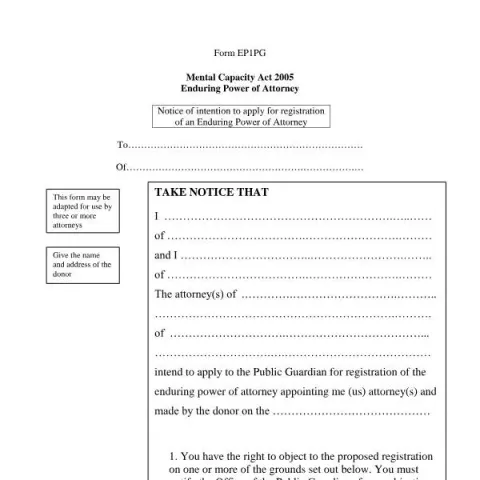
Understanding the Official Notice for Registering an Enduring Power of Attorney in the UK
The Office of the Public Guardian provides a formal process for individuals seeking to register an Enduring Power of Attorney (EPA) under the Mental Capacity Act 2005. The form designated for this purpose is known as Form EP1PG. This document serves as a formal notice of intention to apply for registration and is essential for those involved in managing or overseeing the legal arrangements made by a donor who may lack mental capacity in the future.
When and Why Is This Notice Used?
This notice is primarily used in situations where an attorney, appointed through an Enduring Power of Attorney, intends to have this authority officially registered with the Office of the Public Guardian. Registration is a crucial step that allows the attorney to act legally on behalf of the donor concerning their property and financial affairs once the donor is deemed mentally incapable.
Notably, this process is initiated before the donor loses mental capacity, ensuring that the attorney's authority is formally recognised when needed. It also provides an opportunity for others to object to the registration if they believe it is inappropriate or invalid.
Key Information Required in the Notice
The form requires detailed information to be completed accurately, including:
- The name and address of the donor.
- The names and addresses of the attorney(s).
- The date of the original Enduring Power of Attorney document.
Additionally, the notice must specify the intention to apply for registration and include signatures from all attorneys involved, confirming their awareness and agreement to the application.
How to Object to the Registration
Individuals who believe that the registration should not proceed can lodge an objection within five weeks of receiving this notice. Grounds for objection include:
- The power claimed is not valid as an enduring power of attorney.
- The power no longer exists.
- The application is premature because the donor has not yet become mentally incapable.
- Fraud or undue pressure was used to induce the donor to make the power.
- The attorney is unsuitable due to their relationship or circumstances.
Objections must be submitted in writing to the Office of the Public Guardian at the specified address. If an individual wishes to challenge the application further, they can seek a decision from the Court of Protection by obtaining the relevant court forms, which are available through the HM Courts & Tribunals Service.
Legal and Practical Considerations
It is important to understand that until the Enduring Power of Attorney is registered, the attorney cannot act on behalf of the donor regarding property and financial affairs. Furthermore, even after registration, revoking the power requires a court order from the Court of Protection.
Fill in your form directly online
No printing: type your details into the boxes of the official form, tick, then download the PDF ready to send.
- 1Type into the form boxes
- 2Tick in one click
- 3Save and download the PDF
Attorneys must keep detailed records of the notice process, including dates of notification to the donor and any relatives. This information will be required during the registration process and in case of future disputes.
Additional Guidance
While the Office of the Public Guardian staff can assist with procedural questions related to lodging objections or completing the form, they cannot offer legal advice or opinions on the validity of the objections or specific circumstances.
For more information about making or registering an Enduring Power of Attorney, individuals should consult official guidance or seek legal advice to ensure compliance with current laws and procedures.