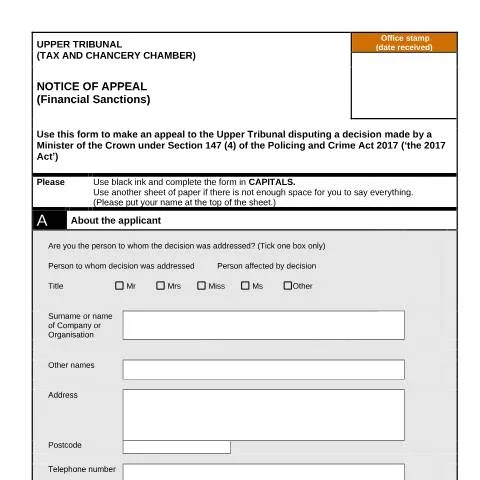
Understanding the Notice of Appeal – Financial Sanctions: Form FTC6
The Notice of Appeal under the financial sanctions procedures, specifically Form FTC6, serves as a critical instrument for those seeking to contest decisions made by Ministers of the Crown under Section 147 (4) of the Policing and Crime Act 2017. This document is not just a mere formality but a vital step in upholding one's rights in the complex landscape of financial sanctions. Whether you are an individual directly affected by a sanction or an entity seeking redress, understanding the intricacies of this form is essential.
Who Needs to File This Notice?
This notice is particularly pertinent for individuals or organisations that have received adverse financial decisions impacting their operations or personal circumstances. Common scenarios include:
- Individuals who have been subject to asset freezes.
- Businesses facing penalties that affect their financial standing.
- Representatives or advocates acting on behalf of affected parties, such as solicitors or community organisations.
For instance, if a business has been unjustly sanctioned, the owners may find the necessity to appeal a decision that they believe does not reflect the realities of their financial activities or compliance with regulations. In such cases, Form FTC6 becomes an indispensable tool for initiating a formal appeal to the Upper Tribunal.
Key Terminology and Concepts
To navigate the appeal process effectively, it's crucial to grasp some key concepts relating to the FTC6 form:
- Respondent: The person or entity that made the decision you are appealing against, typically a governmental body or a minister.
- Appellant: The individual or organisation filing the appeal, often the one directly affected by the decision.
- Upper Tribunal: A higher judicial authority that hears appeals from decisions made by lower tribunals, including those related to financial sanctions.
- Extension of Time: In some cases, if an appellant fails to file the notice within the standard 28-day period, they may seek an extension, provided they justify the delay.
Understanding these terms not only provides clarity but also ensures that the applicant can articulate their situation more effectively when filling out the form and when presenting their case.
The Scope of Form FTC6: What's Covered?
The FTC6 form specifically addresses appeals related to financial sanctions imposed under the 2017 Act, but it is essential to note its limitations:
- This form is not intended for general complaints against government decisions or policies.
- Only decisions made under the specific provisions outlined in the Policing and Crime Act 2017 can be contested using this form.
- Any appeal must be based on legitimate grounds, such as procedural errors, misinterpretation of the law, or lack of evidence supporting the decision.
While the form facilitates the appeal process, it does not cover scenarios where the sanction was imposed through other legislative frameworks or where the decision was made by a body outside the Ministerial domain.
A Step-By-Step Guide to Using Form FTC6
Filing an appeal using the FTC6 form can be broken down into several clear steps:
1. Gather Required Information
Before completing the form, ensure you have all necessary documentation at hand, including:
- The original decision from the respondent.
- Any Treasury decisions relating to your case.
- Supporting evidence that substantiates your appeal.
2. Complete the Form
When filling out the FTC6, focus on the following sections:
- Applicant Details: Provide accurate personal information or that of your organisation, ensuring that contact details are up to date.
- Respondent's Decision Details: Clearly state what decision you are appealing against, including the date and reference number.
- Reasons for Appeal: Articulate why you believe the decision should be overturned and what the correct decision ought to be.
3. Submit the Form
Once completed, the form must be submitted to the Upper Tribunal. There are two options available:
- Use the E-Filing service, which allows for digital submission and tracking of your appeal.
- Alternatively, send the form by post to the designated address, ensuring that a copy is sent to the respondent as well.
4. Await Confirmation
After submission, the tribunal office will notify you of receipt. If you do not receive confirmation within a week, it's advisable to follow up with them to ensure your appeal is in process.
Common Procedural Questions
As with any legal process, questions frequently arise regarding the procedural aspects of filing an appeal. Here are some of the most pertinent queries:
What if I miss the deadline?
If your application is submitted beyond the 28-day limit, you must explicitly request an extension, detailing the reasons for your delay. The tribunal will assess these reasons to determine whether to grant the extension based on the merits of your situation.
Can I appeal without legal representation?
Yes, individuals can represent themselves; however, engaging legal counsel can significantly enhance the quality of your appeal. A solicitor or barrister can provide critical insights on how to frame your case and interpret legal nuances.
What happens after I submit the FTC6 form?
The Upper Tribunal will schedule a hearing, where both the appellant and the respondent can present their cases. Be prepared to provide further evidence and to articulate your reasons clearly to the tribunal judges.
Fill in your form directly online
No printing: type your details into the boxes of the official form, tick, then download the PDF ready to send.
- 1Type into the form boxes
- 2Tick in one click
- 3Save and download the PDF
Common Misinterpretations and Pitfalls
Understanding potential pitfalls in the appeal process can save time and resources:
- Assuming all decisions can be appealed: Remember that only specific ministerial decisions under the 2017 Act can be challenged via this form.
- Neglecting to provide complete information: Incomplete forms can lead to delays or rejections, so ensure all sections are filled out thoroughly.
- Failing to send copies of necessary documents: As outlined in the form, include all required documents, or risk your appeal being delayed.
Practical Considerations for a Successful Appeal
While navigating the Upper Tribunal can be daunting, a strategic approach can significantly enhance your chances of a successful outcome:
- Prepare your case meticulously, focusing on relevant legislation and precedents that support your appeal.
- Be clear and concise in your communication, avoiding jargon while accurately portraying the situation.
- Maintain a professional demeanor throughout the process, whether dealing with tribunal officials or representing your case in hearings.
Navigating the complexities of financial sanctions and their appeals is undeniably challenging. However, the Form FTC6 provides a structured pathway for individuals and entities seeking to contest decisions that impact their financial integrity. Taking the time to understand the requirements, procedures, and best practices will empower appellants in their quest for justice.
Understanding the Financial Sanction Appeals Process
When you receive a financial sanction, it’s crucial to understand the appeals process to ensure you are adequately prepared to contest the decision. The appeal process revolves around specific legal frameworks and procedural requirements, particularly when submitting the Form FTC6. Financial sanctions can arise from various contexts, including social security benefits and tax obligations. Understanding the grounds for appeal, the evidence needed, and the timeframe is vital for a successful case.
Key Considerations When Completing Form FTC6
The Form FTC6 is pivotal when challenging financial sanctions issued by various authorities such as HMRC or the DWP. When completing the form, it is important to keep several key considerations in mind:
- Accurate Information: Ensure that all personal and financial information is accurate and aligns with the evidence you intend to submit. Inaccuracies can lead to delays or outright dismissal of your appeal.
- Grounds for Appeal: Clearly articulate the grounds for your appeal. Is it due to an administrative error, or do you believe the sanction was disproportionate? Articulating a clear argument strengthens your case.
- Supporting Evidence: Attach all relevant documentation that supports your appeal. This can include payslips, tax returns, and correspondence with HMRC or DWP. The more comprehensive your evidence, the better your chances of a favorable outcome.
- Timeliness: Be mindful of deadlines. The standard timeframe for submitting an appeal following notification of a financial sanction is typically 30 days. However, it is advisable to check specific guidelines as they may vary depending on the issuing authority.
Potential Outcomes of the Appeal Process
Understanding the possible outcomes of your appeal can help manage expectations. When you submit Form FTC6, there are several potential outcomes:
- Successful Appeal: If the appeals panel finds in your favor, the financial sanction may be overturned, and any penalties or additional payments will be nullified.
- Partial Success: In some cases, the decision may not be entirely in your favor. For instance, the amount of the sanction might be reduced, or certain conditions may be amended.
- Unsuccessful Appeal: If your appeal is dismissed, you will generally receive a detailed explanation of the reasons for the decision. It’s essential to carefully review this reasoning, as it may provide insight into the authority’s considerations and whether further action is viable.
Regardless of the outcome, if you believe there are sufficient grounds, you may have the option to escalate your case further, potentially through judicial review or additional complaints mechanisms.