Navigating the Miscarriage of Justice Compensation Form
Injustice can shatter lives, especially when a wrongful conviction leads to years spent behind bars. The Miscarriage of Justice Application Service (MOJAS), under the auspices of the Ministry of Justice, provides a route for individuals to seek compensation after a conviction has been quashed. Understanding how to properly navigate this system is essential for a successful application. This guide delves into the specifics of the compensation form, exploring the intricacies of the application process and the administration's role in evaluating claims.
The Role of the Miscarriage of Justice Compensation Form
At the core of seeking compensation is the Miscarriage of Justice: Claim Compensation form. This document serves a critical function, allowing individuals convicted of a crime and later exonerated to seek restitution for their suffering. However, the eligibility to apply is not merely a matter of being wrongfully convicted. There are specific legal frameworks governing who can apply, under what conditions, and what documentation is necessary.
Understanding Eligibility Criteria
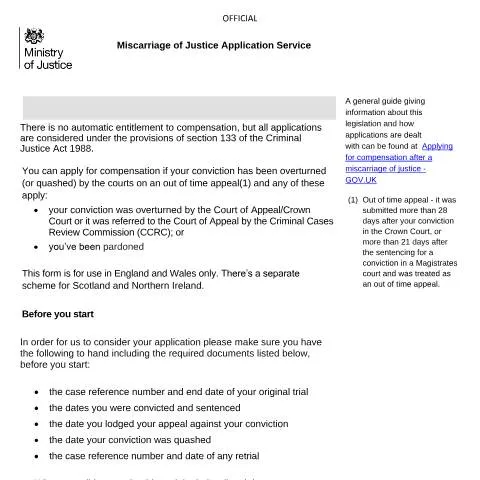
Before engaging with the form, it is crucial to understand the eligibility criteria established by the Ministry of Justice. You can only apply for compensation if:
- Your conviction has been quashed by the Court of Appeal or the Crown Court on an out-of-time appeal.
- You have been pardoned for the crime for which you were convicted.
Moreover, applications must be made within two years of the conviction being quashed, unless exceptional circumstances apply. It is essential for applicants to gather all relevant documentation that supports their case, including:
- Case reference number and end date of the original trial.
- Dates of conviction, sentencing, and when the appeal was lodged.
- Date the conviction was quashed.
- Any retrial details, if applicable.
Completing the Compensation Form: A Step-by-Step Guide
Filling out the Miscarriage of Justice Compensation form is a meticulous process. The form typically takes about 30 minutes to complete, but prospective applicants should be prepared to invest additional time in gathering necessary documents and reflecting on their personal experiences regarding the conviction.
Section Breakdown of the Form
The form is divided into several sections, each designed to extract crucial information about the applicant's past conviction and current circumstances. Here’s a closer look at the sections you will encounter:
- Personal Information: This first section requires basic details such as name, date of birth, and contact information.
- Conviction Details: Here, the applicant must provide information regarding the conviction, including the date it occurred and the court where it was heard.
- Out-of-Time Appeal: Applicants must indicate whether they lodged an out-of-time appeal against their conviction. This section is vital, as it directly relates to eligibility for compensation.
- Supporting Documentation: In this part, you will need to attach relevant documents that corroborate your claims, such as certificates of conviction and the results of any appeals.
- Exceptional Circumstances: If the application is being made after the two-year window, the applicant must provide a detailed explanation of the exceptional circumstances that prevented timely application.
Each section requires precision and attention to detail. Incomplete or incorrect information can lead to delays or even outright denial of the application.
Submission Channels: Paper vs. Online
Applicants have the option to submit the Miscarriage of Justice Compensation form either online or via postal mail. The choice of submission can impact the speed and efficiency of the application process.
Online Submission
Submitting the form online is typically faster and allows for immediate confirmation of receipt. Applicants will need access to the internet while filling out the form, which can be a barrier for some. However, online submission provides the advantage of easier document uploading, making the application process more streamlined.
Paper Submission
For those who prefer traditional methods or lack reliable internet access, submitting a paper application is still an option. It is essential to ensure that all documents are neatly organized and included with the application. Sending the form via recorded delivery is advisable to ensure that you have proof of submission. However, this method may introduce delays, as the processing time can be longer than with online submissions.
Handling Denials, Errors, and Missing Documentation
The unfortunate reality is that not all applications are approved. If your application is rejected, there are steps you can take. Understanding the reasons behind a denial is essential for any future attempts. Common issues include:
- Lack of necessary supporting documentation.
- Failure to meet eligibility criteria.
- Applications submitted outside the two-year timeframe without valid exceptional circumstances.
If you find yourself in this situation, the first step is to review the rejection letter carefully. It will outline the reasons for denial and provide guidance on any appeals process. If the issue is related to missing documentation, you can request assistance from the Miscarriage of Justice Application Service (MOJAS), which may help you retrieve necessary documents from relevant courts.
Special Cases: Navigating Complex Situations
The process for applying for compensation can vary based on individual circumstances. Special cases may include foreign nationals, minors, and individuals with complex legal histories. Each of these groups may face unique challenges and requirements when submitting an application.
Foreign Nationals
Individuals who were convicted in the UK but are not citizens may encounter specific hurdles regarding their applications for compensation. It’s crucial for these applicants to seek legal advice tailored to their situation, particularly concerning their residency status and any international agreements that may apply.
Minors
Applications submitted on behalf of minors must be handled with particular care. Individuals acting as representatives must ensure they meet the requirements set out under the Administration of Estates Act. In cases where the minor has reached adulthood since the conviction, they will need to file the application themselves. Guidance from legal professionals is recommended to navigate the complexities of representing a minor.
Following Up: How to Track Your Application
After submitting your application, it’s vital to keep track of its progress. Understanding the timeline for processing claims can help manage expectations. Generally, the Ministry of Justice aims to process applications in a timely manner, but the complexity of your case may extend this timeframe.
Tracking Your Application
To follow up on the status of your application, you can contact the Miscarriage of Justice Application Service directly. It is helpful to have your application reference number available when making inquiries. The service can provide updates on processing times and any additional information required.
What to Do If You Experience Delays
In instances where processing takes longer than expected, applicants can submit a written inquiry for updates. If you believe the delay is unreasonable, consider escalating the matter through official channels, such as contacting your MP for assistance. Keeping a personal record of all correspondence related to your application will be invaluable in these situations.
The Impact of Compensation on Lives Affected by Injustice
Compensation may not undo the harm caused by wrongful convictions, but it can provide essential support for rebuilding lives. For many, the compensation awarded after a successful application is a vital lifeline—enabling them to access housing, healthcare, and other necessary resources to reintegrate into society.
Financial Compensation: Understanding the Payment Process
Upon approval of the application, the compensation payment will be processed, and the applicant will receive a notification detailing the amount awarded and how it will be disbursed. The Ministry of Justice has specific timelines regarding payments, and it’s important for applicants to be aware of any tax implications that may arise from receiving compensation.
Emotional and Psychological Support Services
Beyond financial compensation, individuals who have suffered wrongful convictions may benefit from psychological support services. Many organizations specialize in providing counselling and support tailored to those who have experienced miscarriages of justice. Exploring these resources should be a part of the recovery process.
Conclusion: Empowerment Through Knowledge
Navigating the complexities of the Miscarriage of Justice Compensation form can be daunting, but understanding the process can empower applicants. By being well-informed about the requirements, potential pitfalls, and avenues for support, individuals can take meaningful steps towards reclaiming their lives after wrongful conviction. As you embark on this journey, remember that you are not alone—the Ministry of Justice and support networks are there to assist you through this challenging yet hopeful process.
Understanding the Compensation Process for Miscarriage of Justice
The process of claiming compensation for a miscarriage of justice in the UK can be complex and requires a clear understanding of the legal framework surrounding wrongful convictions. A key piece of legislation that governs this area is the Criminal Justice Act 1988, which allows individuals who have served a prison sentence and were later exonerated to seek compensation for the wrongful conviction. This section will outline the essential steps involved in the compensation process, including the eligibility criteria, necessary documentation, and interactions with relevant authorities.
To begin with, the individual must have their conviction quashed by the Court of Appeal. This means that the higher court has determined that the original conviction was unsafe. Once this milestone is achieved, the next step involves submitting a claim to the Ministry of Justice. It is essential to note that there is no statutory time limit for submitting a claim, but it is advisable to do so as soon as possible to ensure that evidence and witness testimonies remain available.
Fill in your form directly online
No printing: type your details into the boxes of the official form, tick, then download the PDF ready to send.
- 1Type into the form boxes
- 2Tick in one click
- 3Save and download the PDF
When preparing the claim, it is crucial to gather comprehensive documentation that supports the case for compensation. This includes the court judgment that quashed the conviction, any relevant legal representations, and personal statements that detail the effects of the wrongful conviction on the individual’s life. Additionally, financial records demonstrating loss of income or other financial detriment as a result of the imprisonment can bolster the claim. The Ministry of Justice will evaluate these documents and determine the appropriate level of compensation, which can vary widely based on the individual circumstances of the case.
Furthermore, consultations with legal professionals experienced in handling compensation claims for miscarriages of justice can significantly enhance the likelihood of a successful outcome. Legal aid may be available for individuals pursuing their claims, allowing them to receive expert advice without incurring substantial costs.
Impact of Miscarriages of Justice on Victims and Their Families
The implications of a miscarriage of justice extend far beyond the individual wrongfully convicted. Families and loved ones often bear the emotional and financial burdens associated with such cases. This section explores the multifaceted impact on victims and their families, highlighting the need for comprehensive support systems in place.
Firstly, the psychological effects on the individual who has been wrongfully convicted are profound. Many individuals experience mental health issues such as anxiety, depression, or post-traumatic stress disorder (PTSD) following their release. These conditions can be exacerbated by the stigma of being associated with a criminal conviction, even after exoneration. Access to mental health support services tailored specifically for exonerated individuals can be pivotal in facilitating their reintegration into society.
Moreover, families often face significant challenges during the incarceration of a loved one. The wrongful conviction can strain familial relationships, lead to financial instability due to loss of income, and result in social isolation. Furthermore, children of wrongfully convicted parents may experience emotional distress and stigma in their communities, which can have long-lasting effects on their development and well-being.
To address these challenges, various charities and non-profit organizations provide resources and support for both victims of miscarriages of justice and their families. These organizations often offer counseling, legal support, and community integration programs aimed at rebuilding lives after wrongful imprisonment. It is crucial for those impacted to be aware of these resources and to seek assistance when needed, as navigating the aftermath of a miscarriage of justice can be an isolating and overwhelming experience.
The Role of Advocacy Groups in Miscarriage of Justice Cases
Advocacy groups play a vital role in addressing miscarriages of justice within the UK legal system. These organizations work tirelessly to raise awareness, provide support to those affected, and campaign for changes in legislation to prevent wrongful convictions in the future. Understanding the contributions of these groups can shed light on the broader efforts to reform the criminal justice system.
One prominent organization is the Innocence Project, which focuses on identifying and exonerating individuals who have been wrongfully convicted. They utilize DNA evidence and legal expertise to reassess cases and advocate for exoneration. The Innocence Project emphasizes the importance of post-conviction testing and the need for more robust safeguards within the justice system to prevent wrongful convictions from occurring in the first place.
In addition to legal advocacy, various grassroots movements aim to raise public awareness about the prevalence of miscarriages of justice. These groups utilize social media campaigns, public speaking events, and collaborations with journalists to highlight specific cases and push for legislative changes. By bringing public attention to these issues, advocacy groups can create pressure on lawmakers to implement reforms that enhance the fairness and accuracy of the criminal justice system.
Furthermore, advocacy groups often provide direct support to individuals and families affected by miscarriages of justice, offering resources, guidance, and community connections. This support network is crucial for helping individuals navigate the complexities of the legal system, access mental health resources, and rebuild their lives after being exonerated.
In conclusion, advocacy groups serve as a lifeline for individuals affected by miscarriages of justice, providing essential support, raising awareness, and advocating for systemic changes within the legal framework. Engaging with these organizations can empower victims and their families, aiding them in their journey toward justice and healing.