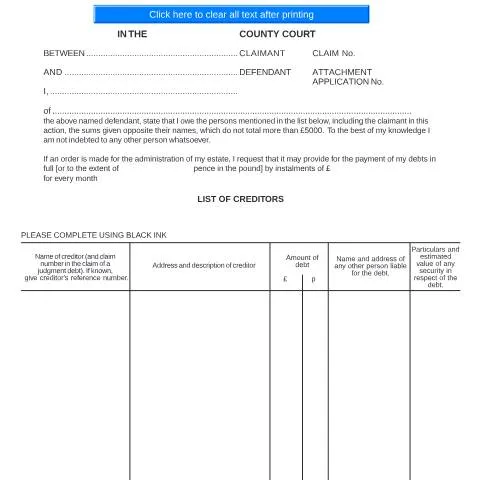
Understanding the List of Creditors Furnished Under the Act of 1971: Form N93
The Form N93 is an official document used within the UK legal system, specifically in the context of county court proceedings. It serves as a formal list of creditors owed money by an individual or entity involved in a legal claim, often related to bankruptcy, insolvency, or debt disputes. This guide aims to clarify the purpose, scope, and practical implications of the form, providing a comprehensive overview for individuals and legal professionals navigating such proceedings.
Purpose and Legal Context of the Form N93
The primary objective of the Form N93 is to compile a detailed and verified list of creditors to whom the defendant or debtor owes money. This process is governed by the Insolvency Act 1971, which outlines procedures for the fair distribution of assets among creditors and the transparent reporting of debts. When a court case involves the administration of a person's estate or a bankruptcy process, the debtor is required to disclose all outstanding debts, including those owed to the claimant and others.
The form ensures that the court has a clear overview of all debts, which is essential for determining the appropriate distribution of assets or for making informed legal decisions regarding debt repayment or insolvency proceedings. It also helps prevent fraudulent claims and ensures that all creditors are duly recognized in the process.
Scope and Application of the Form
The Form N93 is applicable in various legal contexts, including:
- In insolvency proceedings, where a debtor's estate is being administered.
- In cases where a defendant admits owing money but disputes the amounts or the legitimacy of claims.
- When a court orders the examination or disclosure of debts as part of a judgment or enforcement process.
The form is typically completed by the defendant or debtor, who declares the debts owed to listed creditors, including the claimant in the case. The declaration must be sworn before a court officer, affirming the accuracy and completeness of the information provided.
Key Components of the Form N93
The form requires detailed information to be provided for each creditor, including:
- Name of the creditor: Including any claim or judgment number, and if available, a reference number.
- Address and description of the creditor: To specify the creditor's location and nature of the entity.
- Amount of debt: The precise sum owed, expressed in pounds sterling.
- Additional liable persons: Details of any other individuals or entities responsible for the debt.
- Security details: Information about any security interests or assets securing the debt, along with their estimated value.
The form also includes sections for totals, such as the cumulative amount owed and the total security value, providing a comprehensive snapshot of the debtor's liabilities.
Legal and Procedural Implications for the User
Completing the Form N93 accurately is crucial. The individual making the declaration must swear an oath affirming the truthfulness of the information. This oath is taken before a court officer, such as a magistrate or judge, and carries legal weight. Providing false or misleading information can have serious legal consequences, including charges of perjury.
For legal practitioners, ensuring the completeness and accuracy of the creditor list is vital for the integrity of the proceedings. The form's data may influence decisions on debt repayment plans, asset distribution, or insolvency declarations. Furthermore, the court may require the production of any related claims or judgments, especially if creditors have initiated legal actions in other courts.
Conclusion: What the Form N93 Means for Debtors and Creditors
The Form N93 is a fundamental document in UK insolvency and debt-related legal proceedings. It promotes transparency, fairness, and proper administration of debts by providing a verified list of creditors. For debtors, it offers a formal opportunity to declare their liabilities and seek court protection or facilitate debt resolution. For creditors, it ensures their claims are officially recognized and considered in the court’s decision-making process.
Understanding the purpose and proper completion of this form can help individuals and legal professionals navigate complex debt and insolvency cases effectively, adhering to the legal standards established under the Insolvency Act 1971.