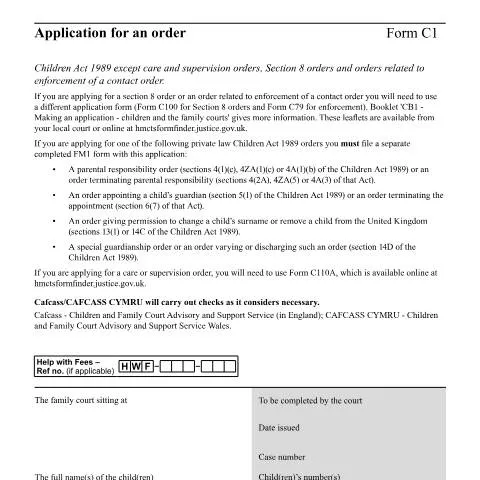
Understanding the Application Process for Orders Under the Children Act 1989 Using Form C1
The application process for certain orders under the Children Act 1989 is a crucial aspect of family law in the United Kingdom. This guide provides an overview of the purpose of the application, who should use Form C1, and the key considerations involved in initiating proceedings in the family courts.
Purpose and Scope of Form C1
Form C1 is designed for individuals seeking specific types of orders concerning children under the Children Act 1989, excluding care and supervision orders, Section 8 orders, and orders related to the enforcement of contact orders. Its primary function is to facilitate applications for private law orders, which typically involve disputes between parents or guardians over arrangements for children.
The form is used to request orders such as parental responsibility orders, guardianship appointments, or orders permitting changes to a child's surname or their removal from the United Kingdom. It is also applicable for applications related to special guardianship orders or variations and discharges of such orders. However, applications for care or supervision orders require different forms, such as Form C110A.
Who Should Use Form C1?
Applicants include parents, guardians, or other individuals with a legitimate interest in the child's welfare. The form must be completed accurately to ensure the court has sufficient information to consider the application. It is essential to specify details about the children involved, the nature of the orders sought, and any relevant history concerning the child's care or previous court cases.
Key Sections of the Application Form
1. About the Applicant
This section requires personal details of the person applying, including their full name, address, date of birth, and relationship to the child(ren). If the applicant wishes to keep their address confidential, they can submit a separate Confidential Contact Details form.
2. Details of the Child(ren) and Orders Sought
The applicant must provide full names, dates of birth, and gender of each child involved. They should also specify the type of order they are applying for concerning each child, such as parental responsibility or guardianship.
3. Previous Court Cases
If there have been prior or ongoing court cases involving the child or related parties, details must be provided. This includes copies of relevant orders, court names, and contact details of involved professionals such as social workers or legal representatives.
4. Respondent(s) Details
The applicant must list all respondents, including their full names, addresses, dates of birth or ages, and their relationship to the child(ren). Accurate information ensures proper notification and service of court papers.
5. Other Notice Recipients
If there are other individuals who need to be notified about the application, their details should be included. This might include extended family members or other relevant parties.
6. Child Care Arrangements
This section covers where the child currently resides, the duration of their stay, and who is responsible for their care. It helps the court understand the child's living situation and the stability of their environment.
7. Concerns about Domestic Abuse, Violence, or Harm
Applicants are asked to disclose if they believe the child has suffered or is at risk of suffering harm due to domestic abuse, violence, or other conduct. If this applies, they must complete an additional form to provide detailed information.
8. Social Services Involvement
The form requires details about any involvement of social services, including whether the child is on a Child Protection Register or known to social workers. This information is vital for assessing the child's safety and welfare.
9. Education and Health
Information about the child's current educational placement, health status, and any special needs or disabilities is necessary. This helps the court consider the child's overall well-being when making decisions.
10. Parental Details
Details about the child's parents, including their full names, addresses, and contact information, are essential for establishing the legal context of the application.
Conclusion
Applying for an order under the Children Act 1989 using Form C1 is a formal legal process that requires careful preparation and accurate information. The form ensures that the family courts have all relevant details to make informed decisions in the best interests of the child. It is advisable to seek legal advice or support from family law professionals when completing this process to ensure compliance with legal requirements and to safeguard the child's welfare.