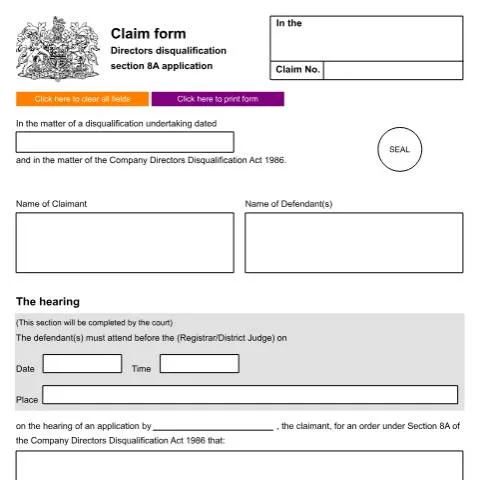
The Crucial Role of Form N501 in Directors Disqualification Proceedings
When a company's management fails to adhere to the legal and ethical standards required of directors, the implications can extend beyond financial penalties to personal responsibilities. In the United Kingdom, Form N501 is pivotal in initiating the legal process for disqualifying a director under the Company Directors Disqualification Act 1986. This form is not merely a procedural requirement; it represents a critical step for stakeholders, including creditors and shareholders, who seek to maintain corporate governance and accountability. Understanding the significance of Form N501 and the nuances of its application is essential for anyone involved in corporate management or oversight.
Understanding the Legal Framework Behind Form N501
The foundation for Form N501 lies within the Company Directors Disqualification Act 1986, which was established to protect the public and maintain confidence in the integrity of UK businesses. This legislation empowers the courts to disqualify individuals from acting as directors if they are found guilty of misconduct, including fraudulent trading, persistent breaches of company law, or failures in financial management.
The legal process surrounding disqualification involves several stages, starting with the claimant—often a regulatory body or an affected party—submitting Form N501 to the HM Courts & Tribunals Service. This initiates proceedings that can lead to disqualification for a period ranging from one year to a maximum of fifteen years, depending on the severity of the infractions. The implications for a director facing disqualification are severe, potentially affecting their future employment opportunities and legal standing within the business community.
Distinguishing Form N501 from Similar Applications
Navigating the landscape of legal forms can be daunting, especially when multiple documents serve overlapping purposes. Form N501 specifically addresses the disqualification of directors, distinguishing it from related forms such as those used for insolvency proceedings or general complaint submissions against directors.
Key Differences and Specificity
- Targeted Application: Form N501 exclusively pertains to directors facing allegations of misconduct, while other forms may deal with broader corporate disputes.
- Legal Thresholds: The grounds for using Form N501 are specifically delineated under Section 8A of the Company Directors Disqualification Act 1986, which does not apply to other forms regarding corporate governance.
- Required Evidence: The evidence submitted with Form N501 must include affidavits detailing the claims against the director, a requirement that is not uniformly applicable across all legal forms.
A Step-by-Step Guide to Submitting Form N501
The process of submitting Form N501 is structured yet demands careful attention to detail. Here’s a chronological breakdown to help guide claimants through the procedure, from the initial decision to submit the form to the eventual court hearing.
1. Assessing the Grounds for Disqualification
Before filling out Form N501, it’s imperative for the claimant to thoroughly assess the grounds for disqualification. Reasons could include:
- Fraudulent trading
- Failure to keep proper accounting records
- Persistent breaches of company law
2. Completing Form N501
Once the grounds are established, the next step is meticulously filling out Form N501. Key sections include:
- Claim Details: Include details such as the claimant's and defendant's names, the claim number, and the court fee.
- Hearing Information: Dates and times for court hearings must be indicated here, allowing the defendant to prepare adequately for the proceedings.
- Statement of Truth: The form must include a statement affirming the truthfulness of the claims made, which can be a crucial element during court proceedings.
3. Filing the Form with HM Courts & Tribunals Service
After completing Form N501, it must be filed with the HM Courts & Tribunals Service. Claimants can submit the form via:
- Online Submission: This is often the most efficient route, allowing for quick confirmation of receipt.
- Paper Submission: While traditional, this method can be riskier in terms of delays or documents being lost in transit.
- In-person Submission: Claimants may also choose to deliver the form directly to the court office, which can provide immediate feedback.
4. Awaiting Court Response
Upon submission, it is important to await a court response, which may take several weeks. The court will review the application, and either schedule a hearing or request additional information. During this phase, responsiveness and thoroughness are essential.
5. Preparing for the Hearing
Preparation for the court hearing includes gathering all relevant evidence, including affidavits from witnesses or financial records supporting the claims made in Form N501. The court will require these documents to be filed within 28 days of the claim being served.
Who is Impacted by Form N501? A Closer Look
Form N501 is primarily aimed at directors of companies, but its implications extend to various stakeholders. Understanding the profiles of individuals who may find themselves involved in this process can reveal the broader impacts of disqualification proceedings.
1. The Directors
Directors facing disqualification may come from a range of industries and backgrounds. Their prior conduct as directors will be scrutinised, and there are numerous scenarios that can lead to disqualification, including:
- Repeated financial mismanagement, leading to insolvency
- Personal misconduct, such as fraud or negligence
2. Stakeholders and Creditors
Stakeholders, including shareholders and creditors, may instigate the submission of Form N501. Their motivations are often centred around the desire for transparency and protection of their investments. Their successful claims can lead to increased scrutiny on corporate governance.
3. Regulatory Bodies
Regulatory bodies such as the Insolvency Service may also be involved in the process. These entities have the authority to initiate disqualification proceedings if they discover misconduct during their investigations into a company’s financial practices.
Unique Scenarios: When Exceptional Circumstances Arise
While Form N501 is a standard procedure, there are unique circumstances that can complicate the disqualification process.
International Directors
For directors based outside the UK, the complexities increase. They must consider both UK laws and the regulations of their country of residence, which may affect their ability to respond to a disqualification claim. Additionally, issues around jurisdiction may arise, complicating the proceedings significantly.
Directors with Disabilities
Directors who have disabilities are afforded certain considerations under UK law. The courts may take into account the impairment when determining the severity of the alleged misconduct or the appropriate length of disqualification.
Complex Corporate Structures
In cases where companies are part of complex group structures, apportioning responsibility can be challenging. Directors may argue that their roles did not involve direct oversight of problematic financial practices, thereby complicating the claims made under Form N501.
The Real Consequences of Disqualification
The stakes are high for directors facing disqualification. Beyond the immediate legal ramifications, the long-term implications of being disqualified can reverberate throughout a director's professional life.
1. Impact on Future Employment
Directors found guilty of misconduct may struggle to find future positions within the corporate sector. Their disqualification can serve as a red flag to potential employers, who may hesitate to trust individuals previously found in violation of company law.
2. Legal and Financial Ramifications
In addition to the disqualification period, individuals may also face financial penalties. Legal costs incurred during the proceedings can be substantial, further complicating the financial landscape for the director involved.
3. Reputational Damage
Perhaps most damaging is the potential for reputational harm. A public record of disqualification can lead to a loss of trust from peers, stakeholders, and the general public, fundamentally altering how the individual is perceived within the business community.
Navigating the Complexities of Form N501
In conclusion, engaging with Form N501 is a serious undertaking that necessitates a comprehensive understanding of the legal environment surrounding directors’ disqualifications. Stakeholders must approach this process with diligence, ensuring that all aspects—from the grounds for application to the preparation for court hearings—are meticulously addressed. Failure to do so can have significant, long-lasting consequences for all parties involved.
Understanding the Grounds for Disqualification
When considering whether to initiate proceedings for director disqualification using Form N501, it's crucial to understand the various grounds on which disqualification can be based. The main grounds outlined under the Company Directors Disqualification Act 1986 include:
Misconduct: This can encompass a wide range of activities such as fraudulent activities, failing to keep proper accounting records, or allowing the company to trade while insolvent. Misconduct is often the most cited reason for disqualification, as it reflects a breach of the fiduciary duties owed to the company and its stakeholders.
Unfit Conduct: The test for unfit conduct examines whether a director's behaviour falls below the standards expected of a company director. The Secretary of State can consider different factors, including the director's lack of commercial competence, disregard for the company's financial health, and failure to adhere to regulatory obligations.
Repeated Breach of Company Law: If a director has a history of non-compliance with company regulations, including multiple offences under the Companies Act, this can also provide a basis for disqualification. Each case is evaluated on its individual merits, but a pattern of disregard for the law can heavily influence the Secretary of State’s decision.
Understanding these grounds not only prepares an applicant for filing Form N501 but also assists in gathering appropriate evidence to substantiate claims. Compliance with due process and a thorough review of the director’s actions prior to filing can increase the likelihood of a successful outcome.
Filing Process and Essential Documentation
Filing Form N501 is not just about submitting the form; it involves a detailed process that requires careful documentation and adherence to specific procedural rules. Here’s an in-depth look at the steps involved:
Fill in your form directly online
No printing: type your details into the boxes of the official form, tick, then download the PDF ready to send.
- 1Type into the form boxes
- 2Tick in one click
- 3Save and download the PDF
Preparation of Evidence: Before you fill out Form N501, it is essential to gather all relevant evidence supporting your case. This may include:
- Financial statements and accounting records indicating mismanagement.
- Correspondence showing disregard for company obligations.
- Minutes from board meetings demonstrating poor decision-making or misconduct.
Filling Out the Form: Form N501 must be completed accurately and in detail. Key sections of the form include:
- Applicant’s Information: Providing your details, including your relationship to the company (e.g., shareholder, creditor).
- Details of the Director: Name, address, and the nature of their misconduct or unfit conduct.
- Grounds for Disqualification: Clearly articulate the reasons for seeking disqualification, backed by the evidence collected.
Submitting the Form: Once you’ve completed Form N501, it needs to be submitted to the appropriate court, typically the High Court in England or Wales. Ensure you also pay the required fee, which may vary depending on the specifics of your case.
Awaiting Response: After submission, the court will review the application. Be prepared to respond to any requests for additional information or clarification from the court. The process can involve hearings where both parties may need to present their arguments.
Follow-up: It’s important to follow up on your application to ensure it is progressing through the system. Maintaining communication with the court can help you stay informed about any developments.
By meticulously preparing your application and providing a robust evidential basis for your claims, you significantly improve your chances of a successful disqualification process.
Impact and Consequences of Disqualification on Directors
Disqualification of a director is a serious matter that carries significant implications not only for the individual involved but also for the companies they may be associated with. Understanding these consequences is essential for both those considering filing Form N501 and for the directors facing potential disqualification:
Duration of Disqualification: A director may face disqualification for a period ranging from a minimum of 2 years up to 15 years, depending on the severity of the misconduct or unfit conduct identified. The length of the disqualification can deeply affect their future career prospects and ability to engage in business activities.
Restrictions on Future Directorships: Following disqualification, individuals are barred from acting as a director of any company, directly or indirectly, for the duration of the disqualification. This prohibition extends to influencing or controlling a company, which can significantly hinder their professional trajectory in the business world.
Public Record: Disqualification orders are publicly recorded, which can tarnish a director's reputation and credibility in future business dealings. Potential investors, partners, or employers may view a disqualification as a severe red flag, potentially affecting future opportunities.
Impact on Related Businesses: A director’s disqualification can also have a ripple effect on affiliated companies, especially if the individual holds key roles or relationships within those organisations. Companies may face scrutiny or pressure as stakeholders reassess their trust in management.
Financial Consequences: Disqualified directors may also face financial repercussions, including personal liability for debts incurred during periods of improper conduct. If a company is found to be trading at a loss due to a director's unfit actions, creditors may hold those directors liable for outstanding debts.
Given these potential impacts, both applicants for disqualification and directors facing such proceedings should seek professional legal advice to navigate this complex landscape effectively.