Understanding the Role of Form N502 in Director Disqualification Cases
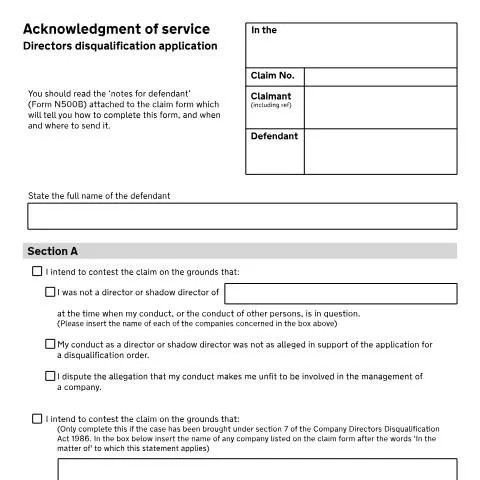
The Acknowledgment of Service – Section 8 Directors Disqualification Application: Form N502 plays a pivotal role in the judicial process of disqualifying directors in the UK. This form is submitted to the HM Courts & Tribunals Service (HMCTS) when a claim has been made against an individual for misconduct as a director under the Company Directors Disqualification Act 1986. By acknowledging the service, the defendant confirms their receipt of the claim and indicates how they intend to respond.
The Legal Framework Surrounding Form N502
The necessity of Form N502 springs from specific provisions in the Company Directors Disqualification Act 1986. This legislation allows for the disqualification of directors whose conduct is deemed unfit. The Act outlines various grounds for disqualification, encompassing insolvency, violations of competition law, and other misconduct. Understanding the Act is essential as it informs the grounds upon which a defendant may contest their disqualification.
Key Provisions of the Company Directors Disqualification Act 1986
- Section 6: Addresses the circumstances under which a director may be disqualified on the basis of company insolvency.
- Section 7: Covers the implications of being a shadow director.
- Section 9A: Discusses breaches of competition law that may lead to disqualification.
The Process Leading to the Submission of Form N502
Typically, the process begins when a claimant, often the Secretary of State or an official receiver, identifies a director's alleged unfit conduct. Once a formal claim is made, it is served to the defendant along with instructions that include Form N500B, which provides guidance on completing the N502. The timeline here is crucial, as the defendant has a limited timeframe to respond.
Timeline and Deadlines
The defendant must acknowledge service within 14 days of receiving the claim. Failing to adhere to this deadline may result in a default judgment against the defendant, leading to automatic disqualification.
Navigating the Filling Process of Form N502
Filling out Form N502 requires careful attention to detail. Each section must be completed accurately to reflect the defendant's intentions regarding the claim. Below are the main sections of the form and what information should be provided.
Section Breakdown
| Section | Description |
|---|---|
| Section A | Indicates whether the defendant intends to contest the claim and outlines the grounds for their defense. |
| Section B | For defendants who do not dispute the disqualification but wish to mitigate the penalty. |
| Section C | Used when the claim was served outside of England or Wales, allowing the defendant to dispute the court's jurisdiction. |
| Section D | Statement of Truth, declaring that the information provided is truthful to the best of the defendant's knowledge. |
Common Situations and Required Evidence
Defendants must prepare specific evidence based on their situation to support their claims. This preparation is crucial as it can significantly influence the case outcome.
Scenarios and Corresponding Evidence
- Contesting Director Status: Evidence may include board meeting minutes or company records proving that the individual was not a director at the time of the alleged misconduct.
- Disputing Misconduct: Documentation showcasing compliance with company regulations or successful financial audits that contradict claims of unfitness.
- Jurisdiction Challenges: Proof that the claim was improperly served, such as correspondence that indicates the service did not occur within the UK jurisdiction.
Comparative Analysis with Similar Forms
Form N502 is often confused with other court forms related to director disqualifications, such as Form N500 for the initial claim and Form N503 for a counterclaim. Understanding the distinctions between these forms is critical for defendants navigating disqualification proceedings.
Key Differences
| Form | Purpose | When to Use |
|---|---|---|
| N500 | Initiates the disqualification claim. | Used by claimants to commence proceedings. |
| N502 | Acknowledges receipt and indicates the response of the defendant. | Filed by the defendant upon receipt of the claim. |
| N503 | Counterclaims against the original disqualification request. | Used by defendants who wish to counter the claim. |
What Happens After Filing Form N502?
Upon submission of Form N502, several outcomes are possible based on the defendant's indicated intentions. If a defendant contests the claim, a court hearing will be scheduled where both parties can present their evidence. Alternatively, if the defendant agrees to the disqualification, the court may issue an order accordingly.
Next Steps and Court Proceedings
- Court Hearing: If contested, the defendant must prepare for a hearing where they will present their case.
- Decision: After hearing both sides, the court will make a decision regarding the disqualification.
- Compliance: If disqualified, the defendant must adhere to the terms specified by the court, including the duration of the disqualification.
Addressing Refusals and Errors
Should the court refuse to accept Form N502 due to errors or missing information, defendants have the right to rectify these issues. It is important to address refusals promptly to avoid further complications in the disqualification process.
Best Practices for Handling Rejections
- Review the court's feedback carefully to understand the specific reasons for refusal.
- Gather any necessary documentation that can support corrections or clarifications.
- Resubmit the form within the specified timeframe to ensure compliance with judicial requirements.
Channels for Submitting Form N502
Form N502 can be submitted through various channels. Each method has its advantages and potential drawbacks, which are important to consider when deciding how to submit.
Submission Options
- Online: Submission via the HMCTS online system is often the most efficient. However, access may depend on the case type.
- Paper Submission: Completed forms can be mailed to the relevant court office, ensuring to keep a copy for personal records.
- In-Person: Defendants may also choose to submit their forms in person at the court office. This option allows for immediate confirmation of receipt.
Conclusion and Key Reminders
Successfully navigating the complexities of Form N502 requires an understanding of its role within the disqualification process, careful completion, and adherence to timelines. Familiarity with surrounding legislation and court procedures will empower defendants to effectively present their case and challenge claims against them. Remember, always double-check for accuracy before submission, and utilise available resources for guidance.
Understanding the Directors Disqualification Process
The process of director disqualification in the UK is designed to protect the integrity of the business environment by ensuring that only individuals who meet certain standards can serve as company directors. Applications for disqualification can arise for a variety of reasons, including misconduct, failure to comply with company law, or even insolvency events. When a disqualification application is made, the affected directors are given a chance to respond through an acknowledgment of service, commonly using Form N502.
This acknowledgment is not merely a formality; it serves as the director's official response to the application. It allows them to confirm whether they accept or contest the application and to outline their reasons for doing so. Importantly, the submission of Form N502 is a critical step, as failing to respond or missing the deadline could lead to an automatic judgment against the director. For instance, if a director does not file their acknowledgment within 14 days of service, they may face disqualification without the opportunity for a hearing.
Directors should be aware of their rights and obligations during this process. They can seek legal advice to navigate the complexities involved, including understanding the grounds for disqualification and preparing their case effectively. Moreover, gathering evidence to support their position can significantly influence the outcome of the proceedings. Factors such as a director's history of compliance, their role during the alleged misconduct, and any mitigating circumstances can be pivotal in court considerations.
Key Considerations When Completing Form N502
Completing Form N502 correctly is crucial for directors who wish to respond to a disqualification application. The form requires accurate and comprehensive information, and the following considerations should be kept in mind:
- Personal Information: Ensure that all personal details, including your full name, address, and National Insurance number, are correctly entered. Any discrepancies may delay proceedings or complicate your response.
- Grounds for Contesting the Application: Clearly outline the reasons for contesting the disqualification application. This may include demonstrating a lack of misconduct or providing context that mitigates the alleged breaches of conduct.
- Supplementary Evidence: Attach any relevant documentation that supports your case. This might include board meeting minutes, financial statements, and correspondence that demonstrate good governance and compliance with legal norms.
- Legal Representation: Consider having legal representation when filling out Form N502. A solicitor experienced in corporate law can provide invaluable guidance on how to effectively present your case.
- Deadline Awareness: Be mindful of the deadlines associated with this form. Timely submission is imperative, as any delays could lead to unfavorable outcomes. Aim to submit your acknowledgment as soon as possible within the stipulated timeframe.
Once completed, Form N502 should be submitted to the court and served to the applicant. It’s also advisable to keep a copy for your records, as this document may be referenced in future proceedings.
The Implications of Directors Disqualification
The consequences of being disqualified as a director in the UK are far-reaching and can significantly impact an individual's professional life. Understanding what being disqualified entails is essential for directors facing an application, as well as for those supporting them through the process.
First and foremost, a disqualified director cannot serve as a director of any company for the duration of the disqualification order. This restriction can last from one to fifteen years, depending on the severity of the misconduct. The ramifications extend beyond directorship; individuals may also face challenges in securing employment in similar roles, as many companies conduct background checks that will reveal disqualification.
Furthermore, disqualified directors may also be held liable for the company's debts if they continue to operate in a managing capacity. This could lead not only to financial penalties but also to potential criminal charges if there is evidence of fraudulent activity. More so, disqualifications can tarnish reputations, making it difficult for affected individuals to engage in future business ventures or partnerships.
In addition to the personal implications, companies themselves can suffer when key personnel are disqualified. A sudden loss of leadership can lead to instability and affect stakeholder confidence. It often necessitates a hurried appointment of replacement directors, which can disrupt the strategic vision and operational effectiveness of the company.
Thus, understanding the implications of disqualification and preparing a robust defense against such applications is crucial for any director. Seeking legal advice early in the process can make a significant difference in mitigating potential consequences.