Navigating the Family Mediation Claim Process: A Comprehensive Guide
Under the auspices of the Legal Aid Agency, the Family Mediation Claim Form plays a crucial role in resolving disputes amicably, especially in sensitive situations involving children and financial matters. Understanding how to effectively navigate this process can significantly ease tension during challenging times. This guide delves into the specificities of the Family Mediation Claim Form, detailing the steps involved, the nuances of eligibility, and the critical information required to ensure a seamless experience.
Understanding the Landscape: The Role of Family Mediation
Family mediation serves as a vital tool for individuals seeking to resolve conflicts without resorting to court proceedings. It involves a neutral third party who facilitates discussions between disputing parties, aiming to reach a mutually acceptable solution. The Family Mediation Claim Form is used to apply for legal aid to cover the costs associated with mediation.
Who Initiates the Process?
- Individuals in Dispute: Primarily, the individuals involved in a family dispute will initiate the claim.
- Legal Representatives: Solicitors or other legal representatives may also submit the form on behalf of their clients.
- Eligibility Check: It's essential that individuals confirm their eligibility for legal aid before proceeding with the form.
The Step-by-Step Journey: From Claim Submission to Resolution
Filing a Family Mediation Claim involves several key steps, which are crucial for ensuring that all necessary information is provided, thereby streamlining the process.
Step 1: Preparation and Documentation
Before commencing the claim, gather essential documentation. This includes:
- A valid National Insurance number, which serves as your identifier throughout the process.
- Details of your financial situation, including any income and savings that may affect your eligibility for legal aid.
- Any previous court orders or relevant legal documents pertaining to the dispute.
Step 2: Completing the Family Mediation Claim Form
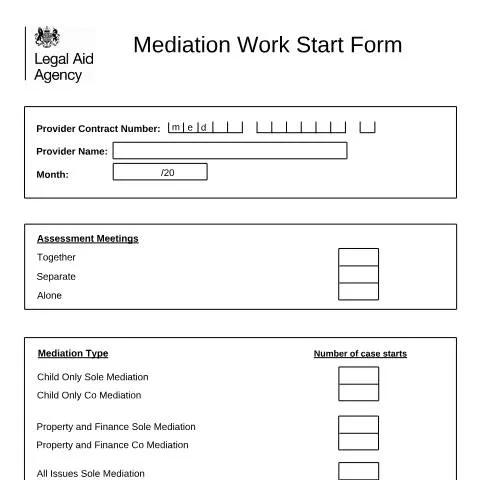
When filling out the form, it is vital to pay close attention to each section. Here’s a breakdown of the form’s key areas:
| Section | Description | Pitfalls to Avoid |
|---|---|---|
| Provider Details | Information about your mediation provider; ensure all details are accurate. | Incorrect provider information can lead to delays. |
| Assessment Meetings | Specify whether meetings occurred together or separately. | Misreporting meeting types can affect funding eligibility. |
| Mediation Type | Select the type of mediation relevant to your situation (e.g., Child Only, Property and Finance). | Choosing the wrong type may invalidate your claim. |
| Signatures | Ensure the form is signed by all parties involved. | Missing signatures can lead to immediate rejection of the claim. |
Step 3: Submission Channels: Choosing the Right Path
The completed form can be submitted through various channels:
- Online Submission: Many prefer submitting forms electronically via the Legal Aid Agency’s online portal for quicker processing.
- Postal Submission: Alternatively, forms can be mailed directly to the Legal Aid Agency’s designated address. Ensure you send it via a traceable method.
- In-Person: Some mediation providers may allow in-person submissions; however, confirm this in advance.
Addressing Potential Issues: What Happens After Submission?
Once the Family Mediation Claim Form is submitted, the Legal Aid Agency will review your application. Understanding the potential outcomes is crucial for managing expectations.
Refusals and Appeals
In the event that your application is refused, it is important to understand your rights:
- Review the Decision: The refusal should include reasons why the application did not meet the criteria.
- Request for Reconsideration: You can formally request the Legal Aid Agency to reconsider their decision. This may involve providing additional documentation or clarification.
- Appeals Process: If reconsideration does not yield a positive outcome, there is a formal appeals process that can be initiated.
Common Errors and Missing Information
One of the most frequent issues leading to delays in processing is the submission of incomplete forms. Ensuring that every section is filled accurately and fully is critical.
- Verify that all required documents are attached.
- Double-check personal information for accuracy, as mistakes can cause significant delays.
Complex Cases: Navigating Special Situations
Several scenarios may complicate the mediation process, and understanding them can help you better prepare.
Cases Involving Children
When children are involved, the mediation process may have additional considerations:
- Child Only Mediation: Specific provisions are in place if the mediation relates solely to children.
- Involvement of Social Services: If social services are involved, it’s critical to coordinate with them as they can offer valuable support.
International and Immigration Considerations
If you or your partner are not from the UK, or if you have immigration-related issues, it is vital to seek specific advice:
- Legal aid eligibility may differ based on immigration status.
- International laws may also impact the mediation process; engage with a solicitor who specializes in family and immigration law.
Final Thoughts: Preparing for Mediation Success
Completing the Family Mediation Claim Form is just the beginning of the mediation journey. Adequate preparation, understanding the nuances of your specific situation, and maintaining open lines of communication with all parties involved will enhance the likelihood of a successful mediation outcome.
Remember, the objective of mediation is to find common ground and reach agreements that work for all parties. By approaching the process informed and prepared, you are setting the stage for constructive dialogue and resolution.
Understanding the Family Mediation Process
Family mediation is an effective process for resolving disputes between family members, particularly in situations involving divorce or separation. The aim is to facilitate communication and negotiation between parties to reach a mutually acceptable agreement, which can often reduce the emotional and financial strain associated with court proceedings. It's essential to understand that mediation is voluntary and requires both parties to participate willingly.
The process typically begins with an initial meeting, known as a Mediation Information and Assessment Meeting (MIAM). During this session, a trained mediator will assess whether mediation is suitable for your situation and explain the next steps. It's important to note that if one party refuses to attend the MIAM, the other may still proceed to court but will need to demonstrate that mediation was considered.
Mediation sessions can cover various topics, including financial arrangements, child custody, and living arrangements. The mediator's role is to remain neutral, ensuring that both parties have equal opportunities to express their views and concerns. Agreements reached through mediation can be documented and later made legally binding if necessary, providing a clear framework for both parties moving forward.
Fill in your form directly online
No printing: type your details into the boxes of the official form, tick, then download the PDF ready to send.
- 1Type into the form boxes
- 2Tick in one click
- 3Save and download the PDF
Criteria for Eligibility and Financial Support in Family Mediation
Eligibility for family mediation services in the UK may depend on several factors, including the nature of the dispute and the willingness of both parties to engage in the process. Generally, mediation is suitable for couples who can communicate at some level and are open to negotiating possible solutions. However, situations involving domestic violence or child safeguarding issues may require alternative arrangements, including legal proceedings.
Financial capability can also influence access to mediation. While many mediation services charge fees, individuals with a low income may qualify for financial assistance. The Legal Aid Agency offers funding for mediation services under specific conditions, provided that both parties meet the financial eligibility criteria and the case meets legal requirements. This means that even if you are facing financial difficulties, you may still access mediation services at little to no cost.
To determine eligibility for legal aid, applicants must provide evidence of their income, savings, and any financial commitments. The assessment is conducted using a means test that evaluates whether the applicant's financial means fall below the threshold set by the Legal Aid Agency. Importantly, legal aid is only available for mediation, not for representation in court, encouraging parties to resolve their differences amicably without escalating to litigation.
Preparing for Your Family Mediation Session
Preparation is key to a successful mediation session. Before attending, it's crucial to gather all relevant information and documentation that may assist in negotiations. This includes financial statements, information about assets, and any pertinent personal circumstances that could influence discussions. Being well-prepared ensures that you can present your case clearly and effectively.
Furthermore, consider your objectives for the mediation. Reflect on possible outcomes and be ready to discuss your priorities and areas where you may be willing to compromise. It can be helpful to set aside emotional baggage and focus on resolving disputes pragmatically, especially regarding child custody or financial arrangements.
Additionally, it’s advisable to approach the session with an open mind. While you may have strong feelings regarding certain issues, flexibility can be crucial for achieving a satisfactory outcome. Engaging in active listening during the mediation can foster a more constructive dialogue and pave the way for collaborative solutions.
Lastly, don't hesitate to consult with a legal professional prior to the mediation. This can provide clarity on your rights and responsibilities and equip you with the knowledge necessary to navigate the discussions effectively. Remember, the mediator is there to guide the process, but being well-informed will empower you to advocate for your interests within the framework of family mediation.