When an Attorney Steps Back: Understanding the Disclaimer Process for Enduring Powers of Attorney
The appointment as an attorney under an enduring power of attorney represents a profound responsibility, one that some individuals may find themselves unable or unwilling to continue. Whether due to personal circumstances, professional conflicts, or the simple recognition that they cannot fulfil their duties adequately, attorneys have the legal right to disclaim their appointment through a formal process administered by the Office of the Public Guardian.
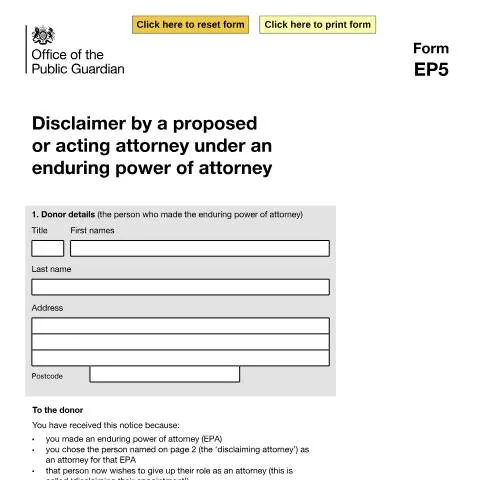
Form EP5 serves as the official mechanism for this disclaimer process, creating a clear paper trail that protects both the departing attorney and the donor who originally granted the power. This isn't merely a bureaucratic formality—it's a crucial legal safeguard that ensures continuity of care and decision-making authority for vulnerable individuals who may have lost mental capacity.
The disclaimer process affects multiple parties simultaneously: the donor whose affairs need continued management, remaining attorneys who may inherit additional responsibilities, and replacement attorneys who might need to step forward. Understanding this interconnected web of relationships helps explain why the Office of the Public Guardian requires such meticulous documentation and notification procedures.
The Legal Foundation: What Makes an EPA Disclaimer Binding
Under English law, an attorney's appointment isn't merely a casual arrangement—it's a formal legal relationship governed by specific statutes and regulations. The Enduring Powers of Attorney Act 1985 established the framework for these arrangements, though new EPAs can no longer be created following the introduction of Lasting Powers of Attorney in 2007. However, existing EPAs remain valid and continue to require proper administration.
An attorney's disclaimer becomes legally effective once properly executed and communicated to all required parties. This isn't automatic resignation—it requires adherence to specific procedures that Form EP5 facilitates. The disclaimer protects the attorney from future liability whilst ensuring the donor's interests remain safeguarded through remaining or replacement attorneys.
The timing of a disclaimer can significantly impact its consequences. An attorney who disclaims before the EPA is registered faces different obligations than one who steps down after registration has occurred. Similarly, whether other attorneys remain appointed affects the urgency and complexity of the transition process.
Distinguishing EPAs from Modern Arrangements
Enduring Powers of Attorney differ fundamentally from their successors, Lasting Powers of Attorney (LPAs). EPAs could only cover financial and property matters, whilst LPAs extend to health and welfare decisions. More critically, EPAs were often created with less formal oversight, sometimes lacking the detailed guidance that modern LPA forms provide about attorney responsibilities.
This historical context matters because many EPA donors and their families may not fully understand the scope of authority they've granted or the implications of an attorney's disclaimer. The Office of the Public Guardian's role in managing these transitions helps bridge this knowledge gap whilst maintaining legal continuity.
Decoding Form EP5: Section-by-Section Navigation
Form EP5's structure reflects the multi-party nature of EPA arrangements, requiring detailed information about the donor, the disclaiming attorney, and the power of attorney itself. Each section serves specific legal and administrative purposes that support the Office of the Public Guardian's oversight responsibilities.
Donor Details and Notification Requirements
Section 1 focuses on the donor—the person who originally created the EPA. The form requires complete identifying information including full name, title, and current address. This information must match the details on the original EPA document to ensure proper identification and prevent confusion with similarly named individuals.
The notification box on page 1 serves an educational purpose, explaining to the donor why they're receiving this formal notice. Many donors, particularly those experiencing cognitive decline, may not immediately understand why someone is stepping down from their attorney role. This explanation helps family members and carers provide appropriate context and support.
Address accuracy proves particularly crucial for donors who may have moved since creating their EPA, possibly into care facilities or with family members. The Office of the Public Guardian uses this address information to maintain accurate records and ensure future correspondence reaches the appropriate parties.
EPA Registration Status and Reference Numbers
Section 2 addresses the EPA's registration status with the Office of the Public Guardian, a distinction that significantly affects the disclaimer process. Registered EPAs carry different obligations and require additional steps, including returning physical copies of the power of attorney document to the OPG.
The OPG reference number serves as a unique identifier within the Office of the Public Guardian's database systems. Attorneys should locate this number on any correspondence from the OPG or on the EPA registration certificate if available. When this number isn't immediately accessible, attorneys can still proceed with the disclaimer, though it may slightly delay processing.
The registration date proves important for determining how long the EPA has been active under OPG oversight. This timeline can affect the complexity of financial arrangements and the urgency of finding replacement representation for the donor.
| EPA Status | Additional Requirements | Timeline Considerations |
|---|---|---|
| Unregistered EPA | Notification to remaining attorneys only | Disclaimer takes effect immediately |
| Registered EPA | Return physical EPA copies to OPG | OPG processing may take several weeks |
| Sole attorney disclaimer | Notify replacement attorneys if named | May trigger urgent replacement procedures |
Attorney Information and Contact Details
Section 3 captures comprehensive details about the disclaiming attorney, including current contact information that enables ongoing communication if questions arise. The Office of the Public Guardian may need to contact the disclaiming attorney months or even years later regarding decisions made during their tenure.
Phone and email details facilitate faster communication, particularly important when the disclaimer affects time-sensitive financial or legal matters. Attorneys should provide contact methods they expect to remain stable, as forwarding arrangements may not always reach them for urgent matters.
The Ripple Effect: How Attorney Disclaimer Impacts All Parties
An attorney's decision to disclaim creates immediate practical consequences that extend far beyond the paperwork itself. Understanding these implications helps all parties prepare for the transition and maintain continuity in the donor's care and financial management.
Impact on Remaining Joint Attorneys
When multiple attorneys were appointed jointly, a disclaimer by one attorney doesn't automatically terminate the arrangement—remaining attorneys can usually continue acting. However, their responsibilities may increase significantly, particularly if the disclaiming attorney held specific expertise or handled particular aspects of the donor's affairs.
Joint attorneys must consider whether they can adequately manage the expanded responsibilities. The original EPA may have distributed duties based on each attorney's skills and availability, and losing one member of the team might necessitate engaging professional advisers or seeking additional support.
Practical challenges often emerge around banking arrangements, property management, and ongoing financial commitments. Financial institutions may require updated documentation showing the current attorney configuration, and some may freeze accounts temporarily whilst verifying the new arrangements.
Sole Attorney Disclaimer Scenarios
The disclaimer of a sole attorney creates an immediate crisis requiring urgent resolution. Unless replacement attorneys were named in the original EPA, the donor may be left without legal representation precisely when they need it most—often due to declining mental capacity.
In such situations, family members may need to apply to the Court of Protection for appointment of a deputy, a process that can take several months and costs significantly more than EPA registration. This scenario underscores the importance of having replacement attorneys named in the original document.
The Office of the Public Guardian cannot appoint replacement attorneys directly—they can only register attorneys specifically named in the EPA or appointed by the court. This limitation means that sole attorney disclaimers often trigger complex legal proceedings that the original EPA was designed to avoid.
Timing Considerations: When Disclaimer Becomes Necessary or Strategic
The decision to disclaim attorney responsibilities rarely occurs in isolation—it typically results from changing circumstances that affect the attorney's ability to fulfil their duties effectively. Understanding common triggers helps attorneys recognise when disclaimer might be necessary and plan accordingly.
Health and Capacity Challenges
Attorneys experiencing their own health challenges may find themselves unable to manage another person's affairs adequately. This situation becomes particularly complex when the attorney's cognitive abilities decline, potentially compromising their decision-making capacity regarding the donor's interests.
Professional advisers often recommend disclaimer when an attorney develops conditions that affect their judgement, memory, or ability to communicate effectively with financial institutions and service providers. Early disclaimer in such circumstances protects both parties and ensures smoother transitions to replacement representation.
Geographic relocation presents another common trigger, particularly when attorneys move internationally or to distant parts of the UK. Managing another person's affairs across significant distances creates practical challenges and may compromise the attorney's ability to respond quickly to emergencies or opportunities.
Professional and Ethical Conflicts
Professional obligations sometimes conflict with attorney duties, particularly for individuals in regulated industries such as financial services, legal practice, or healthcare. Regulatory bodies may require disclaimer when continuing as attorney could create conflicts of interest or compromise professional independence.
Business relationships between attorneys and donors can evolve in ways that make continued representation inappropriate. For example, an attorney who enters into commercial dealings with the donor's business interests may face conflicts that necessitate stepping down from the attorney role.
Family dynamics also influence disclaimer decisions, particularly when relationships deteriorate or when other family members challenge the attorney's decisions. Rather than engaging in prolonged disputes, some attorneys choose disclaimer to preserve family relationships and avoid costly legal proceedings.
Administrative Processing: The Office of the Public Guardian's Role
The Office of the Public Guardian's involvement in EPA disclaimer processing serves multiple protective functions, ensuring legal compliance whilst maintaining accurate records of attorney appointments and changes. Understanding their procedures helps attorneys navigate the process efficiently and avoid unnecessary delays.
Documentation Review and Verification
Upon receiving Form EP5, the Office of the Public Guardian conducts verification checks against their existing records, confirming the attorney's identity and their authority under the specific EPA. This process may reveal discrepancies that require resolution before the disclaimer can be processed.
Common issues include name variations between the original EPA and the disclaimer form, changes in the donor's circumstances that weren't previously reported, or missing information about other attorneys appointed under the same EPA. The OPG may request additional documentation or clarification before proceeding.
For registered EPAs, the Office of the Public Guardian updates their central database to reflect the attorney's disclaimer, ensuring that future enquiries and correspondence reflect the current arrangement. This database serves as the authoritative record for financial institutions and other parties requiring verification of attorney authority.
Fill in your form directly online
No printing: type your details into the boxes of the official form, tick, then download the PDF ready to send.
- 1Type into the form boxes
- 2Tick in one click
- 3Save and download the PDF
Communication Protocols and Follow-up
The Office of the Public Guardian maintains communication with all parties throughout the disclaimer process, though the extent of this communication depends on the EPA's registration status and complexity of the arrangement. They may contact remaining attorneys to confirm their continued willingness to serve and their understanding of any expanded responsibilities.
When sole attorney disclaimers occur, the Office of the Public Guardian may provide guidance about alternative arrangements, though they cannot directly appoint replacement attorneys. They maintain information about Court of Protection procedures and may signpost families toward appropriate legal resources.
Processing timelines typically range from several weeks to two months, depending on the complexity of the case and whether additional verification is required. Attorneys requiring confirmation of their disclaimer for urgent matters should contact the OPG customer service team directly.
Post-Disclaimer Responsibilities and Ongoing Obligations
The attorney's formal obligations don't necessarily end with disclaimer submission—several important responsibilities continue, particularly regarding decisions made and actions taken during their tenure. Understanding these ongoing obligations helps attorneys properly conclude their involvement whilst protecting themselves from future liability.
Financial Record Preservation
Attorneys remain accountable for decisions made during their appointment period, requiring preservation of financial records, correspondence, and decision-making documentation. These records may become crucial if questions arise about past transactions or if the Court of Protection becomes involved in the donor's affairs.
Best practice involves preparing a comprehensive handover document for remaining or replacement attorneys, detailing current financial arrangements, ongoing commitments, and any pending matters requiring attention. This document should include bank account details, investment portfolios, property management arrangements, and contact information for professional advisers.
Tax obligations present particular complexity, as the disclaiming attorney may remain liable for tax years during which they acted. They should ensure that remaining attorneys understand any outstanding tax obligations and have access to necessary documentation for future returns.
Transition Support and Knowledge Transfer
Professional courtesy and practical necessity often require disclaiming attorneys to provide transition support to their successors, even though this isn't legally mandated. This support might include introductions to key service providers, explanation of established routines and preferences, and guidance on managing specific aspects of the donor's affairs.
Property management arrangements frequently require particular attention during transitions, especially when the disclaiming attorney established relationships with letting agents, maintenance contractors, or property managers. Ensuring smooth handover of these relationships prevents disruption to rental income and property maintenance.
Healthcare and social care arrangements may also require careful transition, particularly when the disclaiming attorney established relationships with care providers or holds important information about the donor's preferences and needs. Whilst EPAs don't cover healthcare decisions directly, attorneys often become knowledgeable about these matters through their involvement in the donor's life.
Preventing Disclaimer: Alternative Approaches to Attorney Challenges
Before proceeding with disclaimer, attorneys might consider alternative approaches that address their concerns whilst maintaining continuity for the donor. These alternatives can sometimes resolve the underlying issues without requiring the formal disclaimer process.
Professional support services can address many practical challenges that lead attorneys to consider disclaimer. Engaging solicitors, accountants, or professional deputies to handle complex matters allows attorneys to maintain their role whilst ensuring expert management of challenging aspects of the donor's affairs.
Delegation arrangements, where permitted by the EPA terms, enable attorneys to appoint professionals to handle specific functions whilst retaining overall responsibility. This approach works particularly well for investment management, property administration, or tax compliance where specialist expertise proves beneficial.
Communication with remaining attorneys about redistributing responsibilities can sometimes resolve capacity concerns without requiring disclaimer. Joint attorneys might agree to specialise in different areas based on their respective skills and availability, creating more sustainable long-term arrangements.
Temporary arrangements during periods of illness or unavailability can sometimes bridge gaps without permanent disclaimer. Other attorneys or professional advisers might provide interim support whilst the challenged attorney recovers or resolves their circumstances.
Understanding these alternatives helps attorneys make informed decisions about whether disclaimer truly serves the donor's best interests or whether other solutions might prove more appropriate. The Office of the Public Guardian's customer service team can provide guidance about available options and their implications for different circumstances.