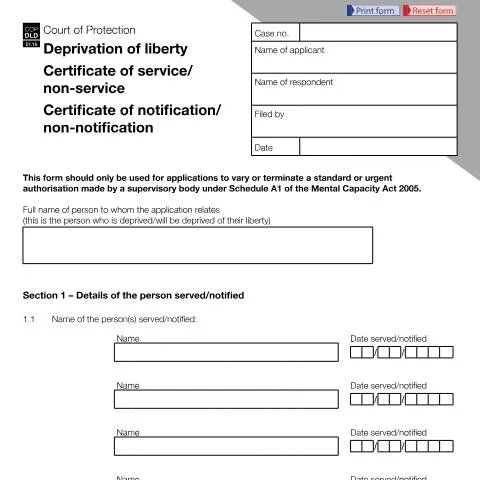
Navigating the Deprivation of Liberty Certificate: A Critical Resource
When the courts intervene to impose restrictions on an individual's freedom, it is essential to ensure that all legal formalities are properly observed. The Deprivation of Liberty Certificate (DLD) is a pivotal document issued under the Mental Capacity Act 2005, specifically tailored for circumstances where a person's liberty is deprived. Understanding its significance, usage, and the procedural requirements surrounding it is crucial for both applicants and legal representatives.
Understanding the Legal Framework: The Mental Capacity Act 2005
The Mental Capacity Act 2005 provides the legal basis for the treatment of individuals who may lack the capacity to make decisions for themselves. The DLD, including the Certificate of Service and Certificate of Notification, serves as proof of compliance with the law when someone’s liberty is affected.
According to the Act, a deprivation of liberty occurs when a person is under continuous supervision and control and is not free to leave. This can happen in various settings, including hospitals and care homes, where individuals may be unable to make informed choices about their care due to mental impairments.
Certification in Context: The Role of HM Courts & Tribunals Service
The HM Courts & Tribunals Service administers the processes surrounding the DLD. This body ensures that all necessary legal protocols are followed, allowing for fair assessments and guarding against unlawful detention. The DLD form serves as a record that relevant parties have been informed about the deprivation of liberty, thus aligning with the principles of transparency and accountability established by the Mental Capacity Act.
Who Can Apply for a Deprivation of Liberty Certificate?
The application for a DLD can be made by a range of individuals or bodies, typically involved in the care of the person being deprived of their liberty:
- Care Providers: Those in charge of facilities where individuals reside.
- Family Members: In certain circumstances, relatives can lodge an application.
- Legal Representatives: Solicitors and advocates acting on behalf of the individual.
Each applicant must provide substantial evidence to support their claims regarding the individual's mental capacity and the necessity for depriving them of their liberty. The complexity of the situation often necessitates legal counsel to navigate the application process effectively.
Criteria for Application: Key Considerations
When applying for a DLD, several criteria must be met:
- Assessing Capacity: A thorough assessment must confirm that the individual lacks the capacity to make decisions about their care and treatment.
- Best Interests Assessment: The deprivation of liberty must be deemed in the best interest of the individual, ensuring safety and wellbeing.
- Least Restrictive Option: Alternatives to depriving liberty must be considered and documented.
Understanding these criteria can help streamline the application process and ensure compliance with legal obligations.
The Application Process: Detailed Steps
Securing a DLD involves several steps that must be meticulously followed to ensure that the application is valid and accepted by the court.
Step-by-Step Guide to Filing for a DLD
- Preparation of Relevant Documentation: Gather all necessary documents, including the individual's medical records, assessments of capacity, and evidence supporting the necessity of the deprivation.
- Completion of the DLD Form: Fill out the Deprivation of Liberty Certificate correctly, ensuring all details are accurate and complete.
- Submission to Court: File the completed DLD form with the relevant court, ensuring that all associated fees are paid and receipts retained.
- Notification: Notify all relevant parties about the application. This includes family members, advocates, or anyone else with an interest in the case.
- Await Court Decision: Monitor the progress of the application and be prepared to provide further information if requested by the court.
This process, while straightforward in theory, can become complex depending on individual circumstances. Legal advice is often beneficial at each step to ensure compliance with all legal requirements and to assist with potential complications.
What Happens After the DLD is Issued?
Once a DLD is granted, it becomes crucial to maintain accurate records and abide by the terms set forth by the court. The certificate provides not only legal validity but also clarity for all parties involved regarding the individual's rights and the rationale for their deprivation of liberty.
Renewal and Duration of the Certificate
The DLD has specific timeframes and conditions under which it remains valid:
| Situation | Duration | Renewal Process |
|---|---|---|
| Standard DLD | Usually valid for 12 months | Submit a new application 4-6 weeks before expiration. |
| Urgent DLD | Valid for up to 7 days | Transition to a standard DLD must occur within this timeframe. |
It is vital to track the expiration of these certificates to prevent any legal complications regarding the unlawful detention of individuals. Failure to renew or transition from an urgent to a standard DLD can lead to legal ramifications for care providers.
Common Challenges and How to Address Them
In the course of obtaining or utilizing a Deprivation of Liberty Certificate, several challenges may arise. These can include disputes over the necessity of a DLD, improper notifications, or loss of documentation.
Addressing Notifications: Service and Non-Service
The process involves serving documents to relevant parties. In cases where notifications have not been properly executed, the DLD may face complications. It is essential to document every attempt at notification, as this can be critical in resolving disputes.
- Certificate of Notification: This verifies that all relevant parties were notified as per the requirements.
- Certificate of Non-Notification: If some parties were not notified, this certificate must detail the reasons for this oversight.
In the event that there are challenges related to notification, or if any party wishes to contest the issuance of the DLD, a formal appeal can be lodged with the court. This process requires legal representation and a compelling argument to be successful.
Lost or Incorrect Certificates: Remedial Actions
Losing a DLD certificate or discovering an error within it can lead to significant issues for both the individual deprived of liberty and the care providers. Having an action plan in place for such instances is crucial.
Steps to Take in Case of Loss or Error
- Report the Loss: Contact the HM Courts & Tribunals Service immediately to report the situation.
- Apply for a Replacement: Request a duplicate certificate, providing the necessary identification and case details.
- Rectify Errors: If an error is discovered, file a request for correction with the court, outlining the nature of the error and providing evidence.
Timeliness is essential in these situations to ensure that there are no interruptions to the individual’s care or legal status.
The Importance of Legal Guidance
Navigating the complexities of the Deprivation of Liberty framework can be daunting. The implications of legal actions surrounding a DLD are significant, and missteps can lead to unlawful deprivation, lawsuits, or additional oversight by regulatory bodies.
Engaging with a legal professional who specializes in mental capacity law can provide peace of mind. Legal experts can offer the following:
- Personalized Advice: Tailored guidance based on individual circumstances.
- Complete Documentation: Assistance with ensuring that all necessary forms are completed accurately.
- Representation: Support in court appearances and negotiations with other parties.
Final Insights: The Future of Deprivation of Liberty Certification
As society evolves and our understanding of mental capacity and individual rights expands, the frameworks surrounding Deprivation of Liberty are likely to undergo changes. Continuous education for care providers, legal professionals, and families will be essential to adapt to these changes effectively.
For those involved in the care and support of individuals with diminished capacity, remaining informed and proactive in understanding legal requirements will foster a more just and compassionate care environment.
Fill in your form directly online
No printing: type your details into the boxes of the official form, tick, then download the PDF ready to send.
- 1Type into the form boxes
- 2Tick in one click
- 3Save and download the PDF
Understanding the Deprivation of Liberty Safeguards (DoLS)
The Deprivation of Liberty Safeguards (DoLS) is a crucial aspect of UK law that aims to protect individuals who may lack the capacity to make decisions about their care and treatment. The safeguards are primarily designed for individuals who are in care homes or hospitals and are deprived of their liberty in a manner that is contrary to their rights under Article 5 of the European Convention on Human Rights (ECHR). Understanding the nuances of this legislation is essential for care providers, health professionals, and family members involved in the care of these vulnerable individuals.
Under DoLS, a “Deprivation of Liberty” occurs when an individual is not free to leave a care setting and the restriction is not a part of their best interests. A formal assessment must take place to determine whether the individual meets the criteria. The process involves a series of assessments, including a Mental Capacity Assessment, Best Interests Assessment, and further evaluations to ascertain if the deprivation is lawful.
It is vital to note that the DoLS framework is being replaced by the Liberty Protection Safeguards (LPS) as part of the Mental Capacity (Amendment) Act 2019. However, until the new system is fully implemented, care providers must adhere strictly to the existing DoLS requirements, ensuring they follow the correct procedures for applying for a Deprivation of Liberty safeguard through the appropriate local authority. The completion of Form COP DLD is a significant part of this process, ensuring that the necessary notifications and assessments are documented effectively.
The Role of the Court of Protection in Deprivation of Liberty Cases
The Court of Protection plays a pivotal role in cases involving deprivation of liberty. This court is responsible for making decisions on behalf of individuals who lack capacity regarding their welfare and financial matters. When there are challenges to a deprivation of liberty, or when an individual’s rights are believed to be infringed upon, cases are often escalated to this court for resolution.
One key function of the Court of Protection is to review and authorise the deprivation of liberty in cases where individuals have not consented to their care arrangements. This can include situations where there are disputes among family members or between family members and care providers regarding what is in the best interest of the individual concerned.
Form COP DLD serves as the application form to the Court of Protection for such cases, detailing the circumstances surrounding the deprivation of liberty and the reasons for seeking the court's review. It is crucial that all relevant information is included; this may encompass medical assessments, best interest determinations, and details surrounding the individual’s living conditions and care provisions. Applications to the Court of Protection can be complex and may require the assistance of legal professionals to ensure they are processed correctly, particularly to navigate the intricacies of the Mental Capacity Act 2005 and related regulations.
Responsibilities of Local Authorities and Health Care Providers
Local authorities and health care providers have specific responsibilities when it comes to implementing the Deprivation of Liberty Safeguards. These responsibilities include ensuring appropriate training for staff, conducting regular assessments, and maintaining accurate records of any deprivations of liberty that occur. An effective implementation of DoLS requires collaboration between various stakeholders, including care home managers, social workers, and healthcare professionals.
Local authorities are tasked with overseeing applications for DoLS and must ensure that assessments are conducted promptly and thoroughly. If an application is submitted using Form COP DLD, the local authority will initiate the assessment process, which must adhere to strict timeframes to protect the rights of the individual involved. This includes appointing a Best Interests Assessor and ensuring that the individual has representation or advocacy if they lack capacity and have no family or friends to support them.
Health care providers must ensure that they are fully compliant with the DoLS requirements, including maintaining transparency with families and other stakeholders about the decisions that affect the individual’s care. This involves providing clear and accessible information about the deprivation of liberty process, the rights of the individual, and the recourse available for challenging any decisions made. It is vital that care providers do not treat the DoLS process as a mere formality, but as an integral part of safeguarding vulnerable individuals who may not be able to advocate for themselves.