Understanding the Impact of Form 4: Complaint Against a Certificated Bailiff
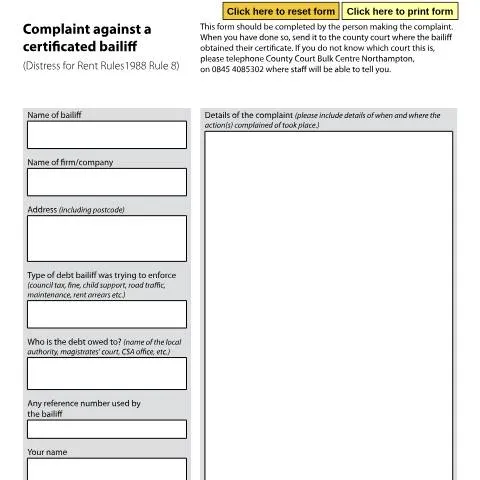
When faced with aggressive or unjust actions by a certificated bailiff, individuals may feel overwhelmed by the implications of such encounters. The Form 4: Complaint Against a Certificated Bailiff serves as a crucial tool for those seeking to address grievances related to bailiff conduct under the Distress for Rent Rules 1988, Rule 8. This document holds significant weight in the legal process, allowing individuals to formally articulate their objections and initiate necessary redress.
The Legal Significance of Form 4
Form 4 is not merely a document; it is a formal complaint that has specific legal implications. Once submitted to the appropriate county court, it acts as the basis for an investigation into the actions of the bailiff involved. Here’s a breakdown of its legal significance:
- Authority of the Court: This form empowers the county court to review the actions of the bailiff, ensuring they are compliant with the law.
- Legal Recourse: Submitting Form 4 provides a pathway for individuals to seek compensation or rectification if the bailiff’s actions are found to be unlawful.
- Documentation: Completing the form creates an official record of the complaint, which is essential if further legal action is needed.
What This Document Attests To
At its core, Form 4 attests to a complaint regarding the conduct of a bailiff, but it also encapsulates broader themes of justice and accountability. Here’s what this document specifically attests to:
- Details of the Complaint: Complainants must provide specific details regarding the bailiff’s conduct, including dates, locations, and nature of the complaint.
- Identification of the Bailiff: The form requires details about the bailiff, including their name, the firm they represent, and the debt type involved.
- Personal Identification: Complainants must identify themselves, reinforcing the personal nature of the complaint.
The Process of Obtaining Form 4
Obtaining Form 4 is straightforward but must be approached with care. Here’s how one can effectively navigate the process:
- Identify the Relevant Court: Determine the county court where the bailiff obtained their certificate. This is crucial, as the complaint must be filed in the correct jurisdiction.
- Contact Information: If uncertain about which court to approach, individuals can call the County Court Bulk Centre in Northampton at 0845 4085302 for assistance.
- Acquire the Form: Forms are typically available at the court or can be requested through official channels. Ensure to have the latest version.
Completing Form 4: A Detailed Overview
Once the form is in hand, completing it accurately is essential for the success of the complaint. Below are some key aspects to consider:
- Details of the Bailiff: Clearly provide the bailiff's name and the name of their firm. This is necessary for the court to identify the individual under scrutiny.
- Description of the Debt: Specify the type of debt the bailiff was attempting to enforce, such as rent arrears, council tax, or fines.
- Personal Information: Include your name and address, ensuring all details are current. This helps the court in processing the complaint effectively.
What Happens After Submission of Form 4?
Once Form 4 is submitted, it enters the judicial process. Complainants may wonder what to expect during this phase:
- Review by the Court: The county court will review the complaint to ascertain validity and relevance.
- Investigation: An investigation may be launched wherein evidence will be gathered from both the complainant and the bailiff.
- Possible Outcomes: Depending on the findings, the court may issue a ruling in favor of the complainant, which could include financial compensation or direction for the bailiff to cease their actions.
The Role of Evidence in Strengthening Your Complaint
Evidence plays a crucial role in supporting the claims made in Form 4. Here’s how to strengthen your case:
- Documentation: Gather any relevant documentation, such as notices, payment records, and correspondence with the bailiff.
- Witness Statements: If possible, obtain statements from individuals who witnessed the bailiff’s actions.
- Chronology of Events: Prepare a timeline detailing interactions with the bailiff to provide a clear context for the complaint.
The Duration and Validity of Form 4 Complaints
It’s essential to understand the time-sensitive nature of submitting complaints using Form 4. Here’s what you need to know:
| Aspect | Details |
|---|---|
| Validity Period | Complaints should be submitted promptly after the incident occurs, ideally within six months. |
| Renewal of Complaints | If further issues arise, a new complaint can be lodged; however, it must address new incidents. |
| Conditions for Withdrawal | Complainants can withdraw their complaint before a court hearing by notifying the court in writing. |
Real-Life Scenarios: When to Use Form 4
Understanding the context in which Form 4 is applicable can illuminate its value. Here are some real-life scenarios:
- Unjust Charges: A tenant feels that a bailiff has added unjustified fees related to rent arrears enforcement.
- Improper Conduct: A complainant observes a bailiff acting unprofessionally or aggressively during an enforcement visit.
- Exceeding Authority: A bailiff attempts to enforce a debt that the complainant believes is not legally owed.
Tips for Effectively Navigating the Complaint Process
Successfully navigating the complaint process with Form 4 requires preparation and diligence. Here are some tips to enhance your experience:
- Stay Informed: Familiarize yourself with the Distress for Rent Rules to understand your rights and the bailiff’s obligations.
- Keep Records: Document every interaction with the bailiff and any related parties to build a comprehensive case.
- Seek Legal Advice: If possible, consult with a legal professional to ensure your complaint is as robust as possible.
Understanding the Role and Responsibilities of Certificated Bailiffs
Before delving into the process of lodging a complaint against a certificated bailiff, it is essential to understand their role and the legal framework that governs their activities in the UK. Certificated bailiffs are appointed under the Distress for Rent Rules 1988 and can be employed to recover unpaid rent or other debts by taking control of goods. They operate under strict regulations designed to protect the rights of both creditors and debtors.
Bailiffs must adhere to the rules outlined in the Tribunals, Courts and Enforcement Act 2007, which emphasizes proper conduct, transparency, and accountability. A certificated bailiff must carry a valid certificate issued by a court, confirming their capability to perform their duties legally. It is crucial that they follow the correct procedure when executing their responsibilities, including giving notice of their intended actions and providing information to the debtor about their rights.
Common issues that may arise with certificated bailiffs include improper conduct, failure to adhere to legal procedures, intimidation, or taking control of goods that are exempt from seizure. Knowing these details can be helpful when formulating a complaint, as it offers clear points of reference for the specific grievances one might have.
Steps to Prepare for Filing a Complaint
Filing a complaint against a certificated bailiff requires careful preparation to ensure that your concerns are well-articulated and supported by necessary evidence. Here are the steps to follow:
1. Gather Evidence
Before initiating the complaint process, document every aspect of your interaction with the bailiff. Collect relevant materials such as:
- Copies of any correspondence between you and the bailiff or their agency.
- Photographs or videos of the bailiff's actions (if applicable).
- Witness statements from individuals who observed the events.
- Any notes or recordings of conversations that took place.
- Evidence of payments made or any other relevant financial records.
2. Identify the Appropriate Authority
Depending on the nature of your complaint, it may need to be directed to different authorities. Complaints against certificated bailiffs can typically be made to the following agencies:
- The bailiff's employer, if they are employed by an agency.
- The court that issued the bailiff's certification.
- The HM Courts & Tribunals Service, which oversees bailiffs’ conduct.
It’s vital to ensure that you’re addressing your complaint to the most appropriate body to facilitate a prompt and effective response.
3. Know Your Rights
Familiarize yourself with your rights as a debtor when dealing with bailiffs. The Citizens Advice provides a detailed overview of your rights and obligations, including:
- The right to refuse entry to bailiffs unless they hold a court order.
- The right to request identification and certification from the bailiff.
- The right to have a witness present during the bailiff's actions.
- Protection from intimidation or harassment.
Understanding these rights not only empowers you in your dealings with bailiffs but also serves as a foundation when articulating your complaint.
The Complaint Process: Detailed Steps and Timeline
Once you have collected your evidence and clarified your rights, you can proceed with filing your complaint. The process generally involves the following steps:
1. Write Your Complaint Letter
Your complaint should be clear, concise, and factual. Include the following elements:
- Your full name and contact information.
- A detailed account of the incident, including dates, times, and locations.
- The identification details of the bailiff (name, agency, certification number if available).
- Specific breaches of conduct or law that you believe occurred.
- A description of the impact of their actions on you or your property.
- Your expectations regarding how the complaint should be resolved.
2. Submit Your Complaint
Send your complaint letter to the relevant authority identified in the previous section. Be sure to keep a copy for your records. Depending on the authority, you may need to submit your complaint via postal mail or through an online platform. Ensure you check for any specific submission guidelines they may have.
3. Waiting for a Response
Upon submission, the authority will typically acknowledge receipt of your complaint. The timeline for a response can vary significantly depending on the agency involved, but you may expect an initial acknowledgment within a few working days followed by a more thorough response within four to eight weeks. If the matter is complex, it may take longer.
4. Escalation
If you are dissatisfied with the response you receive, you have the right to escalate your complaint. This may involve:
- Contacting a relevant ombudsman or regulatory body, such as the Parliamentary and Health Service Ombudsman.
- Seeking legal advice or pursuing legal action in court if necessary.
Documenting all communications during this escalation process is crucial, as it may strengthen your case if further action needs to be taken.