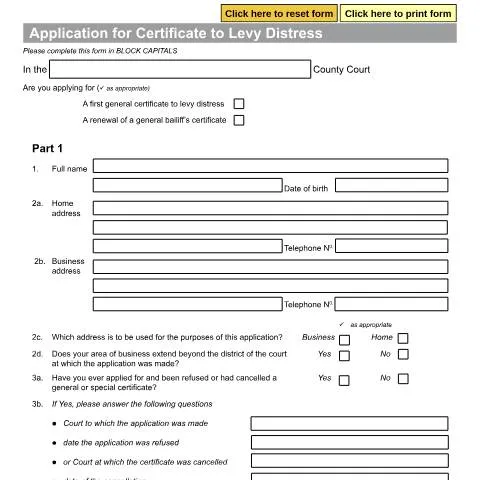
Navigating the Distress Levy Process: The Significance of Form Rent 3
In the realm of property management and the enforcement of rental agreements, the ability to levy distress is critical for landlords seeking to recover unpaid rent. The Form Rent 3: Application for Certificate to Levy Distress serves as a pivotal document for bailiffs and landlords alike, granting the legal authority to reclaim possessions to cover unpaid debts. Understanding the intricacies of this form is essential for effectively navigating the UK legal landscape surrounding property rights and tenant obligations.
Significance of the Rent 3 Certificate in Property Management
The Rent 3 certificate is not merely a bureaucratic hurdle; it embodies the legal framework that governs distress levies in the UK. Here are some concrete applications of this document:
- Landlord Enforcements: Landlords utilize this certificate to initiate the seizure of goods from tenants who fail to meet their rental obligations, ensuring that they can recover losses.
- Financial Recovery: The certificate acts as a safeguard for landlords, enabling them to reclaim financial stability through legal means when tenants default.
- Tenant Protections: By regulating the conditions under which distress levies can occur, the Rent 3 certificate also serves to protect tenants from unjust actions, ensuring due process is followed.
As such, obtaining a Rent 3 certificate is a crucial step for landlords looking to enforce their rights while adhering to the legal standards established by the HM Courts & Tribunals Service.
The Path to Obtaining the Rent 3 Certificate
Gaining access to the Rent 3 certificate involves a well-defined process. Below are the key steps involved in making your application:
- Complete the Application Form: Fill out the Form Rent 3 in BLOCK CAPITALS, providing all the necessary personal and business information.
- Disclosure of Past Applications: If you have previously applied for a certificate and were refused or had it cancelled, disclose these details transparently.
- Verification of Business Activities: Clearly outline your business structure, indicating whether you operate as a sole trader, partner, or employee.
- Criminal Record Check: Include a certified copy of your criminal conviction certificate if applicable, ensuring it is no more than one month old.
- References Requirement: Provide two referees who can attest to your knowledge of the law of distress and your prior experience in the field.
- Submission of Additional Documentation: Attach supporting documents, including proof of business registration and any qualifications pertinent to your ability to levy distress.
- Application Fees: Ensure the appropriate fees are enclosed with your application, and consider whether you will need to include a bond or deposit.
Once the application is submitted, it typically takes about 60 days for the court to process it, contingent upon the receipt of all required references.
Duration, Renewal, and Conditions of the Rent 3 Certificate
The validity of a Rent 3 certificate is contingent upon compliance with ongoing legal and operational requirements. Here’s what to keep in mind:
- Certificate Validity: The certificate remains valid as long as the holder adheres to the legal responsibilities outlined in the application and maintains a current knowledge of relevant laws.
- Renewal Process: When approaching the expiration of a certificate, it’s imperative to apply for a renewal in a timely manner by submitting a new application for a general certificate.
- Conditions for Retention: Should a certificate holder face legal issues, such as a criminal conviction or bankruptcy, they must inform the court immediately, as these can affect the validity of their certificate.
Failure to comply with these conditions can lead to the revocation of the certificate, resulting in the inability to levy distress and reclaim debts.
What the Rent 3 Certificate Legally Attests
The legal weight of the Rent 3 certificate extends beyond mere paperwork; it confirms several critical elements:
- Fit and Proper Person Assessment: The court must be satisfied that the applicant is a fit and proper person to hold such authority, evaluating their character and past conduct.
- Knowledge of Distress Law: The certificate signifies that the applicant possesses adequate knowledge of the law regarding distress levies and has the requisite skills to act as a bailiff.
- Compliance with Regulations: Holding a Rent 3 certificate demonstrates compliance with the legal requirements set forth by the HM Courts & Tribunals Service, thus safeguarding tenant rights.
This legal endorsement provides reassurance to both landlords and tenants that the processes of levying distress are regulated and just.
Eligibility Criteria for Obtaining the Rent 3 Certificate
Not everyone can apply for a Rent 3 certificate. The following are the eligibility criteria that must be met:
- Business Operations: Applicants must be engaged in a relevant business that involves the levying of distress for rent.
- No Serious Criminal Convictions: Individuals with serious criminal convictions are typically ineligible for this certificate unless they can show that such convictions are spent under the Rehabilitation of Offenders Act 1974.
- Professional Qualifications: Evidence of qualifications or experience in the law of distress may strengthen an application.
Understanding these criteria is vital before proceeding with your application, as failing to meet them could lead to a rejection.
Addressing Issues: Loss, Errors, or Contestations with Rent 3 Certificates
In the event of a lost Rent 3 certificate, or if you believe there has been an error in the issuance process, here’s how to proceed:
- Report the Loss: Notify the HM Courts & Tribunals Service immediately about the lost certificate to prevent misuse.
- Request a Reissue: You may need to complete an application for a duplicate certificate, bearing in mind that additional fees may apply.
- Correcting Errors: If mistakes are found in the certificate, contact the court to request corrections promptly.
- Contestations: Should there be grounds to contest a decision regarding your certificate, submit a formal appeal to the court, detailing your reasons.
These steps are crucial for maintaining the legitimacy and efficacy of your distress levying operations.
Final Thoughts on Leveraging the Rent 3 Certificate for Effective Property Management
Obtaining a Rent 3 certificate is a fundamental step in the arsenal of landlords and property managers in the UK. It provides the necessary authority to pursue unpaid rent through legal means while ensuring that both parties adhere to the laws governing property rights and tenant responsibilities. By understanding the application process, maintaining compliance with the required conditions, and knowing how to manage issues like loss or errors, applicants can effectively navigate the complexities of levying distress. As the property market continues to evolve, the Rent 3 certificate remains a crucial tool in safeguarding the interests of landlords while upholding the rights of tenants.
In this landscape, proactive engagement with the certification process will facilitate smoother property management, ensuring that rights are respected and obligations are upheld in the pursuit of justice and financial recovery.
Understanding the Distress Levy Process
The distress levy process, governed by UK law, is a legal mechanism used by businesses and the HM Revenue and Customs (HMRC) to recover certain debts owed to them. This process is often initiated when there is a failure to pay taxes, such as VAT or corporate tax. The application for a Certificate to Levy Distress, commonly referred to as Form Rent 3, plays a pivotal role in ensuring that creditors can legally take action against a debtor's assets.
To initiate this process, the creditor must demonstrate that certain conditions are met. This includes showing that the debtor has failed to pay the debts despite previous notices and reminders, and that there are insufficient funds in the debtor's bank accounts or other financial resources. Once the Certificate is issued, enforcement agents may be able to enter the debtor’s premises to seize goods or assets to cover the outstanding debt. It is crucial for both creditors and debtors to understand their rights and obligations under this process, including the types of goods that can be seized and the legal protections that may be available to the debtor.
In practice, the distress levy process can be complex, involving multiple stages and potential legal nuances. Creditors must also be aware of the implications of the Data Protection Act 2018 and the UK GDPR, ensuring that all personal data is handled appropriately throughout the distress levy process. This means maintaining accurate records and processing data lawfully when making applications for a Certificate to Levy Distress.
Fill in your form directly online
No printing: type your details into the boxes of the official form, tick, then download the PDF ready to send.
- 1Type into the form boxes
- 2Tick in one click
- 3Save and download the PDF
The Role of Enforcement Agents in Levy Distress
Enforcement agents, commonly known as bailiffs, are often the individuals who carry out the distress levy process once a Certificate to Levy Distress has been obtained. Their role is critical, as they are responsible for executing the duties involved in seizing goods or assets from debtors. Understanding how these agents operate can help both creditors and debtors navigate the distress process more effectively.
Enforcement agents must operate within strict legal frameworks to ensure compliance with the law. They are required to give proper notice before entering a property, and they typically must first assess the nature of the debt and the debtor's circumstances. Furthermore, the agents are mandated to carry out their duties in a professional and respectful manner, adhering to guidelines provided by the Civil Enforcement Association (CEA) and the National Standards for Enforcement Agents.
Debtors should also be aware of their rights when dealing with enforcement agents. For instance, they have the right to request that agents provide identification and details regarding the debt in question. Additionally, certain goods, such as essential household items or tools required for work, may be exempt from seizure. Debtors are encouraged to communicate openly with enforcement agents to negotiate payment plans or explore alternative solutions to avoid asset seizure.
Dispute Resolution and Appeal Mechanisms
Once a Certificate to Levy Distress has been issued, debtors may find themselves in a challenging position. However, it is essential to understand that there are mechanisms in place for disputing the levy and appealing the decision. Individuals or businesses who believe the Certificate was issued in error, or who contest the amount of debt, have the option to challenge the enforcement action.
The first step in this process is typically to contact HMRC or the relevant creditor to raise concerns about the Certificate or the amount owed. It is advisable to do this in writing, providing clear evidence and documentation to support the claim. If the issue remains unresolved, debtors may escalate the matter to an independent tribunal or seek legal advice from a solicitor specializing in debt recovery or consumer rights.
Debtors should also familiarize themselves with the alternative dispute resolution (ADR) processes available, which may provide a more informal route to resolving disputes without resorting to court proceedings. These processes encourage dialogue between the parties involved and can often lead to mutually beneficial outcomes without the stress and costs associated with formal court action.
Understanding these dispute resolution pathways is vital for effectively navigating the distress levy process, allowing debtors to assert their rights and seek resolutions that can alleviate financial burdens.