Understanding Enforcement Agent Complaints: When Bailiff Conduct Goes Wrong
When an enforcement agent—commonly known as a bailiff—oversteps their legal boundaries or fails to meet professional standards, the consequences can be severe for those on the receiving end. Whether it's aggressive behaviour during debt collection, unlawful entry to property, or mishandling of personal belongings, such misconduct undermines the entire regulatory framework designed to protect vulnerable debtors whilst ensuring legitimate debt recovery.
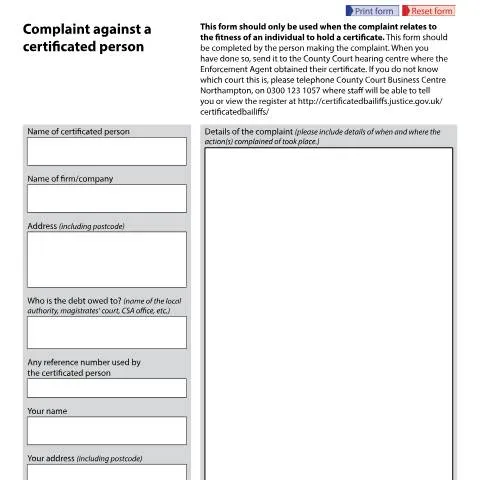
Form EAC2 serves as the formal gateway for lodging complaints about certificated enforcement agents with HM Courts & Tribunals Service. This isn't simply a customer service complaint form—it's a serious legal mechanism that can result in disciplinary action, suspension, or even permanent revocation of an enforcement agent's certificate. Understanding when and how to use this process effectively can make the difference between ongoing harassment and proper accountability.
The Certificate System: Who Can Be Complained Against
Not every debt collector can be the subject of an EAC2 complaint. This form specifically targets certificated persons—enforcement agents who have obtained official certification from a County Court to carry out enforcement activities. These individuals must hold valid certificates to legally:
- Enter premises to seize goods under a writ or warrant
- Remove and sell items to satisfy court judgments
- Collect council tax, parking fines, and other statutory debts
- Exercise powers of entry and seizure on behalf of local authorities
The certification process requires agents to demonstrate competence, undergo training, and maintain professional standards. More importantly, it creates a direct line of accountability back to the court system. Uncertificated debt collectors—such as those working purely for commercial debt collection agencies without enforcement powers—fall outside this complaints mechanism and would need to be addressed through different channels.
Each certificated agent is issued with a unique certificate number and must display their credentials when conducting enforcement activities. If you're unsure whether the person you're dealing with holds certification, the online register at the Ministry of Justice website allows you to verify their status before proceeding with a complaint.
Grounds for Complaint: When Professional Standards Fail
Form EAC2 isn't designed for general dissatisfaction with debt collection—it specifically addresses fitness to hold a certificate. This distinction is crucial because it focuses on conduct that calls into question whether the individual should continue to be authorised by the courts to exercise enforcement powers.
Common grounds for legitimate complaints include:
| Category | Examples of Misconduct | Potential Consequences |
|---|---|---|
| Unlawful Entry | Forcing entry without proper authority, entering at prohibited times, ignoring exempt premises | Certificate suspension, criminal charges |
| Excessive Force | Physical intimidation, threats of violence, aggressive behaviour toward vulnerable persons | Certificate revocation, police investigation |
| Procedural Breaches | Failing to provide required documentation, removing exempt goods, incorrect fee charging | Formal warning, mandatory retraining |
| Professional Misconduct | Dishonesty, conflicts of interest, failure to maintain proper records | Certificate revocation, industry ban |
The key test is whether the conduct demonstrates that the person is unfit to continue holding enforcement powers. Minor procedural errors might result in additional training requirements, whilst serious misconduct such as theft, fraud, or violence typically leads to permanent certificate revocation.
Vulnerable Persons and Enhanced Protections
Enforcement agents owe particular duties of care when dealing with vulnerable individuals, including those with mental health conditions, disabilities, or serious illness. Complaints involving vulnerable persons often receive expedited handling and can result in immediate interim suspension of certificates pending full investigation.
The Complaint Process: From Submission to Resolution
Successfully lodging an EAC2 complaint requires careful preparation and attention to procedural requirements. The form itself appears deceptively simple, but the quality and detail of the complaint significantly impacts the likelihood of meaningful action.
Essential Information Requirements
The form demands specific details about both the enforcement agent and the underlying debt situation. You'll need to provide:
- The certificated person's full name and any company affiliation
- Complete address details including postcode
- The creditor's identity (local authority, magistrates' court, etc.)
- Any reference numbers used during the enforcement action
- Your own contact details and signature
The most critical section covers details of the complaint, where you must describe exactly what happened, when, and where. Vague allegations rarely result in action—courts need specific, factual accounts that can be investigated and potentially proven.
Documentation and Evidence
Whilst the form doesn't explicitly request supporting documents, attaching relevant evidence significantly strengthens your complaint. Consider including:
- Photographs of any damage to property or removed items
- Written records of conversations, threats, or demands made
- Witness statements from family members or neighbours
- Medical evidence if the incident affected your health
- Correspondence showing the agent's failure to follow proper procedures
Remember that enforcement agents are required to provide various documents during their visits, including notices of enforcement and inventories of seized goods. If these weren't provided, or contained incorrect information, this itself constitutes grounds for complaint.
Court Jurisdiction and Submission Procedures
One of the most challenging aspects of the EAC2 process involves identifying the correct court for submission. The form must be sent to the County Court hearing centre where the enforcement agent originally obtained their certificate—not necessarily the court closest to where the incident occurred or where you live.
Locating the Issuing Court
If you're unsure which court issued the certificate, several options are available:
- Contact the County Court Business Centre Northampton on 0300 123 1057 for guidance
- Check the certificated bailiffs register online for the agent's details
- Review any documentation provided during the enforcement visit for court references
- Contact the original creditor who instructed the enforcement agent
Submitting to the wrong court can significantly delay your complaint, as it may need to be transferred or resubmitted entirely. Taking time to verify the correct jurisdiction upfront prevents unnecessary complications later.
Timing Considerations
Whilst the form doesn't specify a strict deadline for submission, complaints should be made as soon as reasonably practicable after the incident. Delays can affect the availability of evidence, witness recollections, and the court's ability to take immediate protective action if necessary.
If the enforcement agent is continuing to cause problems whilst your complaint is pending, you may need to seek urgent interim relief through other legal channels, such as applying for an injunction or seeking police assistance if criminal activity is suspected.
Investigation Outcomes and Disciplinary Measures
Once submitted, EAC2 complaints trigger a formal investigation process managed by HM Courts & Tribunals Service. The enforcement agent will be notified of the complaint and given an opportunity to respond, creating an adversarial process where evidence and arguments are carefully weighed.
Range of Possible Sanctions
The disciplinary powers available to courts are extensive and can have severe career implications for enforcement agents:
- Formal warnings for minor breaches or first-time offenders
- Mandatory additional training to address specific competency gaps
- Conditional continuation with enhanced supervision or restricted powers
- Temporary suspension pending completion of remedial measures
- Certificate revocation for serious misconduct or repeat offences
The most serious cases can result in permanent disqualification from holding enforcement certificates, effectively ending the person's career in the industry. Such outcomes typically involve dishonesty, violence, or systematic abuse of powers rather than isolated procedural errors.
Appeals and Further Action
Both complainants and enforcement agents have rights of appeal against disciplinary decisions. If you believe the investigation outcome was insufficient given the severity of the misconduct, you may be able to challenge the decision through judicial review or other legal mechanisms.
Conversely, if your complaint is dismissed but you have new evidence or believe the investigation was flawed, resubmission may be possible in appropriate circumstances.
Beyond the Complaint: Seeking Compensation and Recovery
While EAC2 complaints focus on disciplinary action against enforcement agents, they don't directly address financial losses or damages suffered as a result of misconduct. Victims of bailiff misconduct may need to pursue separate legal remedies to recover compensation.
Civil Recovery Options
Depending on the circumstances, several avenues may be available for financial recovery:
- County Court claims for damages caused by unlawful enforcement action
- Professional indemnity insurance claims against the enforcement company
- Local authority compensation schemes where council tax enforcement went wrong
- Criminal Injuries Compensation Authority applications if violence was involved
The success of any compensation claim often depends on the outcome of the EAC2 complaint process. A finding of misconduct by the court system provides powerful evidence to support subsequent civil claims.
Prevention and Early Intervention Strategies
Understanding your rights during enforcement visits can prevent situations from escalating to the point where EAC2 complaints become necessary. Enforcement agents operate within strict legal frameworks, and knowing these boundaries helps protect against misconduct.
Key Rights During Enforcement Visits
Certificated enforcement agents must follow specific procedures, and any deviation can form the basis of a complaint:
- Proper identification must be provided, including certificate details
- Entry restrictions apply—agents cannot force entry for most debts
- Exempt goods cannot be removed, including basic household necessities
- Vulnerable person protections require modified approaches and procedures
- Fee transparency demands clear explanation of all charges imposed
If an enforcement agent refuses to follow these requirements or becomes aggressive when challenged, this may indicate misconduct warranting an EAC2 complaint.
Remember that Form EAC2 represents a significant escalation in addressing enforcement problems. Before reaching this stage, consider whether the issue might be resolved through direct contact with the enforcement company's complaints procedure or the original creditor's oversight mechanisms. However, when serious misconduct occurs—particularly involving vulnerable persons, unlawful entry, or aggressive behaviour—the formal complaint process provides essential protection for both individual victims and the broader public.
Evidence Requirements and Supporting Documentation for EAC2 Complaints
The strength of your EAC2 complaint often hinges on the quality and comprehensiveness of supporting evidence you provide. The Architects Registration Board expects complainants to substantiate their allegations with concrete documentation that demonstrates how the certificated person's conduct falls short of professional standards.
Essential documentary evidence typically includes original contracts or engagement letters that establish the professional relationship, correspondence between you and the architect (emails, letters, meeting notes), project drawings or specifications that show the scope of work, and any relevant planning permissions or building control approvals. If your complaint involves financial irregularities, gather invoices, payment records, and any disputed fee calculations.
For complaints about design defects or construction issues, photographic evidence proves invaluable. Take clear, dated photographs showing the problems from multiple angles, and consider including measurements or scale references. If structural issues are involved, obtain reports from qualified structural engineers or building surveyors, as these carry significant weight in professional misconduct proceedings.
Witness statements can strengthen your case considerably. These might come from other construction professionals who observed the architect's work, neighbours affected by planning or building issues, or family members who witnessed unprofessional behaviour during site visits. Ensure witness statements are signed, dated, and include the witness's full contact details and professional qualifications where relevant.
When gathering evidence, maintain chronological order and create a clear timeline of events. This helps ARB case officers understand how the situation developed and identify key moments where professional standards may have been breached. Include context about any attempts you made to resolve matters directly with the architect, as this demonstrates you sought informal resolution before escalating to formal complaint procedures.
Expert opinions carry particular weight in technical disputes. If your complaint involves alleged design errors, building regulation breaches, or departure from accepted professional practices, consider obtaining a report from another qualified architect or relevant construction professional. While this involves additional cost, such reports can provide the technical foundation necessary for ARB to assess whether professional standards were met.
Be mindful that evidence must be relevant to the specific allegations in your complaint. ARB focuses on professional conduct rather than general dissatisfaction with outcomes, so ensure your documentation directly supports claims about breaches of the Architects Code rather than broader project disappointments.
Understanding Professional Standards and the Architects Code
To submit an effective EAC2 complaint, you must understand the professional standards that govern certificated architects in the UK. The Architects Registration Board operates under the Architects Code, which sets out twelve fundamental principles that all registered architects must follow throughout their professional practice.
Standard 1 requires architects to be honest and act with integrity, meaning they must not mislead clients about their qualifications, experience, or the scope of services they can provide. Complaints under this standard often involve architects misrepresenting their expertise in specialist areas or failing to disclose conflicts of interest that might affect their professional judgement.
Standards 2 and 3 focus on competence and professional knowledge. Architects must only undertake work they are competent to perform and must maintain their professional knowledge and skills. This means keeping up with building regulations, planning law changes, and evolving construction techniques. Complaints might arise when architects design buildings that fail to comply with current regulations or demonstrate gaps in essential technical knowledge.
Client care standards (Standards 4-7) require architects to provide good customer service, maintain proper records, handle client money appropriately, and carry adequate insurance. These standards generate numerous complaints, particularly regarding poor communication, failure to progress projects within agreed timescales, or inappropriate handling of client funds in trust accounts.
Standards 8-10 address relationships with others in the construction industry, requiring architects to work cooperatively with other professionals and avoid discriminatory behaviour. Complaints under these standards might involve architects undermining other consultants' professional advice or creating hostile working environments on construction sites.
Environmental responsibility (Standard 11) requires architects to consider environmental impact in their designs and advice. While complaints solely based on environmental grounds are less common, they may arise when architects fail to advise clients about energy efficiency requirements or sustainable design options where these form part of the agreed scope of services.
Standard 12 requires compliance with relevant laws and regulations. This broad standard covers everything from planning law and building regulations to health and safety legislation and data protection requirements. Architects who ignore planning conditions, design buildings that breach building regulations, or mishandle personal data may face complaints under this standard.
When framing your EAC2 complaint, identify which specific standards the architect's conduct allegedly breached. Avoid vague allegations of "poor service" and instead focus on concrete examples of how their behaviour departed from these professional requirements. This targeted approach helps ARB assess whether formal disciplinary action is warranted.
Alternative Resolution Pathways and When to Consider Them
Before submitting Form EAC2, carefully consider whether alternative resolution methods might address your concerns more effectively. The Architects Registration Board emphasises that formal disciplinary proceedings should typically be a last resort when other approaches have failed or are clearly inappropriate given the severity of the alleged misconduct.
Direct negotiation with the architect often provides the quickest resolution for many disputes. Many issues arise from miscommunication, unrealistic expectations, or simple misunderstandings rather than serious professional misconduct. Contact the architect in writing, clearly explaining your concerns and requesting their response within a reasonable timeframe, typically 14-28 days depending on the complexity of the issues.
When pursuing direct resolution, focus on specific, factual concerns rather than emotional reactions to disappointing outcomes. Explain how you believe their conduct departed from agreed service levels or professional standards, and suggest practical remedies such as revised drawings, additional site visits, or fee adjustments where appropriate.
Professional body mediation services offer structured dispute resolution without the formal adversarial nature of disciplinary proceedings. The Royal Institute of British Architects (RIBA) provides mediation services for disputes involving their members, though this covers only architects who have chosen to join RIBA in addition to their mandatory ARB registration.
Mediation works particularly well for disputes involving communication breakdowns, scope creep, or disagreements about service levels that fall short of serious professional misconduct. A trained mediator helps both parties identify common ground and develop mutually acceptable solutions, often preserving professional relationships that might otherwise be permanently damaged by formal complaint procedures.
Legal proceedings may be more appropriate when your primary concern is financial compensation rather than disciplinary action against the architect. Contract disputes, professional negligence claims, or breaches of duty typically belong in the civil courts rather than professional disciplinary systems. Consider consulting a solicitor specialising in construction law if you have suffered significant financial losses due to the architect's alleged failures.
However, understand that civil legal action and ARB disciplinary proceedings serve different purposes. Courts focus on contractual obligations and financial remedies, while ARB considers whether an architect's conduct meets professional standards and whether their continued registration poses risks to public confidence in the profession.
Insurance claims might provide another resolution pathway. Professional indemnity insurance carried by architects (as required under ARB standards) covers negligent acts, errors, or omissions in professional services. Contact the architect's insurance provider directly if they refuse to engage with legitimate claims, though you may need the policy details which architects should provide upon request.
Some situations genuinely require immediate formal complaint action without attempting alternative resolution. These include allegations of criminal behaviour, serious breaches of trust involving client funds, discriminatory conduct, or patterns of behaviour suggesting systematic disregard for professional standards. In such cases, proceed directly with Form EAC2 while also considering whether police involvement or other regulatory action may be necessary.
Document any alternative resolution attempts thoroughly, as ARB case officers will want to understand what steps you took before escalating to formal disciplinary proceedings. This demonstrates proportionate response and helps establish the seriousness of your concerns.