Understanding the Appeal Form for Children in Youth Accommodation
The SEND28 Appeal Form serves a crucial role in the legal landscape surrounding children detained in youth accommodation in the UK. It is a lifeline for parents and guardians who seek to challenge decisions made by local authorities regarding their child's educational needs and provisions. Situations involving children in custody are often complex and sensitive, making this appeal process vital for securing the rights and support that these young individuals deserve. In this article, we will explore the intricacies of the SEND28 form, the significance of the appeal process, and the specifics that parents and guardians must navigate when completing this important document.
Who is Involved in the Appeal Process?
The appeal process can involve various stakeholders, primarily aimed at assisting the child in receiving appropriate educational support. Understanding the different roles within this framework is essential for those filling out the SEND28 form.
The Parents or Guardians
Typically, the parents or guardians of the child are the primary applicants on the SEND28 form. They are responsible for initiating the appeal process and must provide accurate and comprehensive details about their child, the circumstances of the case, and the specific decisions being contested.
The Local Authority
The local authority is the body responsible for making decisions about special educational needs (SEN) assessments and plans. It is crucial for parents to engage with the local authority effectively, as the decisions they make will form the basis of the appeal.
The Tribunal
The Special Educational Needs and Disability Tribunal (SEND Tribunal) is an independent body that reviews appeals made against local authority decisions. Understanding its role helps parents anticipate the tribunal's requirements and the nature of the review process.
Legal Representatives
In some cases, parents may choose to engage a legal representative to assist them in the appeal process. This individual can provide valuable guidance, ensuring that all necessary legal standards are met and that the appeal is as robust as possible.
What to Consider Before Filling Out the SEND28
Before embarking on the completion of the SEND28 form, several critical aspects must be considered to ensure a smooth and effective appeal process:
Eligibility Criteria
- The child must be under statutory school age.
- The appeal must be against a decision made by the local authority regarding the child's educational needs.
- The parents must have received a final decision from the local authority to trigger the appeal process.
Document Preparation
Gathering the required documentation is essential. This includes:
- A signed letter from the local authority outlining the decision being appealed.
- A copy of the child's Education, Health and Care (EHC) plan, if applicable.
- Any other relevant documents that substantiate the appeal.
Understanding the Specific Grounds for Appeal
The SEND28 form requires parents to specify the grounds on which they are appealing. It is important to be precise and articulate about the reasons for the appeal, whether it involves disagreement with the EHC plan, the necessity of specific educational provisions, or the naming of a school.
Completing the SEND28 Form: Step-by-Step Guidance
Completing the SEND28 form requires careful attention to detail. Here’s a breakdown of each section of the form and how to approach filling it out:
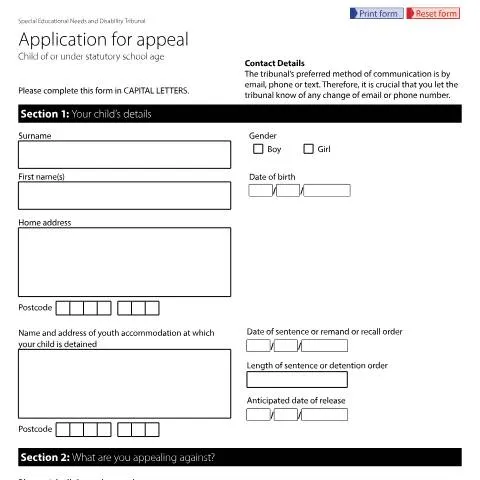
Section 1: Child’s Details
This section requires basic identification information about the child, including:
- Surname and first names
- Date of birth
- Gender
- Home address and postcode
- Details of the youth accommodation where the child is detained
- Date of sentence or remand
- Length of sentence or detention order
- Anticipated date of release
Accuracy in this section is paramount, as any discrepancies may delay the appeal process.
Section 2: Grounds for Appeal
In this section, you will indicate the specific decisions made by the local authority that you are appealing against. You may select multiple options, including:
- Refusal to secure an EHC needs assessment
- Refusal to make an EHC plan
- Disagreements regarding the contents of the EHC plan
Be prepared to elaborate on each selection, providing details that clearly articulate your concerns.
Section 3: Your Appeal
Here, you must identify the local authority that made the decision being challenged and the date when you received that decision. This section also includes questions about whether you agree to the appeal being determined on written evidence alone, which is essential for expediting the process.
Section 4: Contact Details
This section requires you to provide contact information for yourself and any other parties involved. It is vital to ensure that all details are current and that you specify who should receive communications regarding the appeal. Typically, you may choose to have your legal representative receive updates.
Section 5: Witnesses
If applicable, include details of any witnesses who can support your appeal. This may involve teachers or professionals who can testify to your child's needs and the provisions that should be made for them.
Section 6: Hearing Needs and Requirements
In this section, inform the tribunal of any special needs you may have for the hearing, such as accessibility requirements or the need for an interpreter. This is crucial for ensuring that the hearing process is accessible to all parties involved.
Section 7: Documentation Checklist
A checklist is included in the SEND28 form to help ensure that all necessary documentation is attached before submission. This section helps to prevent delays caused by missing information. Essential documents include:
- A local authority decision letter
- A mediation certificate, if applicable
- Your reasons for appeal
- A copy of the child's EHC plan
Section 8: Signatures
Finally, ensure that the appeal form is signed and dated by all relevant parties, as failure to do so could result in rejection of the appeal.
Submission Process: From Completion to Consideration
Once the SEND28 form is completed, the submission process kicks in, which has its own set of procedures and timelines:
Where to Send the Completed Form
The completed SEND28 form must be sent to the appropriate tribunal office. Ensure that you have the correct address for the HM Courts & Tribunals Service relevant to your location. Contacting the tribunal office beforehand can clarify any uncertainties regarding submission addresses or requirements.
Timelines for Submission
It is essential to submit the SEND28 form within the stipulated timeframes. Generally, the appeal must be lodged within two months of receiving the local authority's decision letter. Delays can jeopardize the appeal, so timely submission is critical.
Following Your Application
After submitting the SEND28, it is vital to keep track of your application. You may contact the tribunal for updates through their preferred communication methods, typically email or phone. Remember that clear communication with the tribunal can help expedite your case.
What Happens Next? Understanding the Tribunal Process
Once the SEND28 form is submitted, the appeal enters the consideration phase, where several outcomes can arise:
The Hearing
The tribunal will schedule a hearing, either in person or virtually, depending on the circumstances and preferences of those involved. Parents should prepare to present their case, focusing on the specific grounds of the appeal outlined in the SEND28 form.
Possible Outcomes
- Decision in Favor of the Appellant: If the tribunal agrees with the appeal, the local authority will be required to rectify its previous decision, which may involve creating or amending an EHC plan.
- Decision Against the Appellant: Should the tribunal reject the appeal, it is important to understand the reasoning behind the decision. This can provide insight into any shortcomings in the appeal that can inform future actions.
- Recommendations for Further Action: In some instances, the tribunal may suggest measures or adjustments that the local authority should consider, even if the appeal is not fully granted.
Key Considerations for Parents: Rights and Responsibilities
Filing an appeal using the SEND28 form carries with it both rights and responsibilities that parents must acknowledge:
Rights
- The right to appeal decisions made by local authorities regarding educational needs.
- The right to representation during tribunal hearings.
- The right to access documentation used in the decision-making process.
Responsibilities
- The responsibility to provide complete and accurate information on the SEND28 form.
- The responsibility to communicate any changes in circumstances or contact details to the tribunal.
- The responsibility to adhere to timelines and procedural regulations throughout the appeal process.
Final Thoughts: Navigating the Appeal Landscape
The SEND28 form is a critical component of the appeal process for parents and guardians of children detained in youth accommodation. Understanding the intricacies of the form, the rights of the individuals involved, and the procedures for submission and follow-up are fundamental for successfully navigating this administrative landscape. By ensuring accurate completion and timely submission of the SEND28 form, parents can play a pivotal role in advocating for their child’s educational needs and securing vital support during a challenging period.
Ultimately, the appeal process is not merely a bureaucratic hurdle; it is a vital opportunity for children and families to assert their rights and ensure that their educational needs are met, even in the face of adversity.
Understanding the SEND28 Appeal Process
When a child is detained in youth accommodation, the SEND28 appeal form becomes a crucial instrument for parents or guardians wishing to contest the decision regarding their placement. This form is specifically designed to review cases where it is believed that the decision to detain a child does not adequately serve their best interests or violates their rights. Understanding the specific steps and requirements involved in this appeal process is essential for ensuring that the child’s voice is heard and their situation is properly evaluated.
Firstly, the SEND28 form must be filled out correctly and submitted within a specific timeframe. Typically, the appeal must be lodged within 28 days of the decision being made. This is a strict deadline, and any late submissions may not be considered, which could result in significant consequences for the child’s living situation. It is advisable to thoroughly review the guidance notes accompanying the SEND28 form, which provide detailed instructions on what information needs to be included and how to present your case effectively.
In addition to completing the SEND28 form, it is often beneficial to gather supporting documentation. This may include reports from social workers, psychological evaluations, and any other relevant information that can help substantiate the appeal. The more comprehensive the evidence provided, the stronger the case will be when reviewed by the appropriate tribunal. It's important to remember that this appeal is not merely a formality; it is a legal process that can significantly impact the child's future.
Common Grounds for Appeal with SEND28
Understanding the grounds on which an appeal can be made using the SEND28 form is crucial for parents and guardians navigating this challenging terrain. The appeal may focus on a range of factors, including issues of legality, procedural fairness, and the substantial evidence supporting the initial decision. Below are some common grounds for appeal that individuals frequently cite:
- Best Interests of the Child: The primary consideration in any appeal is whether the decision serves the best interests of the child. Parents may argue that the decision to detain the child in youth accommodation does not reflect their needs, potential for rehabilitation, or overall well-being.
- Procedural Errors: If there were any inaccuracies in the decision-making process, such as failure to consider relevant evidence or failure to follow proper procedures, these can be valid grounds for appeal. It is crucial to highlight these errors clearly in the form.
- Change in Circumstances: If circumstances have significantly changed since the decision was made—such as the availability of alternative placements or new information regarding the child’s behaviour—this may warrant a reconsideration of the decision.
- Disproportionate Response: Parents may argue that the decision to detain the child was overly harsh given the nature of the offence or behaviour that led to the detention. Highlighting the specifics of the child’s situation can support this argument effectively.
It is important to note that compiling a strong appeal based on these grounds requires a thorough understanding of both the legal framework surrounding youth detention and the specific details of the child's case. Seeking legal advice or assistance from organisations that specialise in children's rights and legal advocacy can be invaluable in this process.
What Happens After Submitting the SEND28 Appeal?
Once the SEND28 appeal form has been submitted, several steps follow in the appeal process that are essential for parents and guardians to understand. Firstly, upon receipt of the form, the relevant tribunal will review it to determine if the appeal meets the necessary criteria for consideration. If accepted, a hearing date will be scheduled, and both parties will be notified.
During the hearing, parents or guardians will have the opportunity to present their case, supported by any evidence gathered. It’s vital to prepare adequately for this stage, which may involve rehearsing key points, understanding the legal framework, and anticipating questions from the tribunal members. Engaging the services of a legal representative at this stage can be beneficial, as they can provide insights and guidance on how to navigate the hearing effectively.
Furthermore, the tribunal's decision will typically be communicated to the parties involved within a specified timeframe. If the appeal is upheld, the tribunal may recommend that a review of the detention decision occurs, ensuring the child's needs are prioritised moving forward. Conversely, if the appeal is dismissed, parents may have the option to seek further legal advice on potential next steps, such as judicial review, depending on the circumstances surrounding the case.
Overall, understanding what happens after submitting the SEND28 appeal provides essential clarity for parents navigating this complex landscape, ensuring they remain proactive in advocating for their child's rights and well-being.