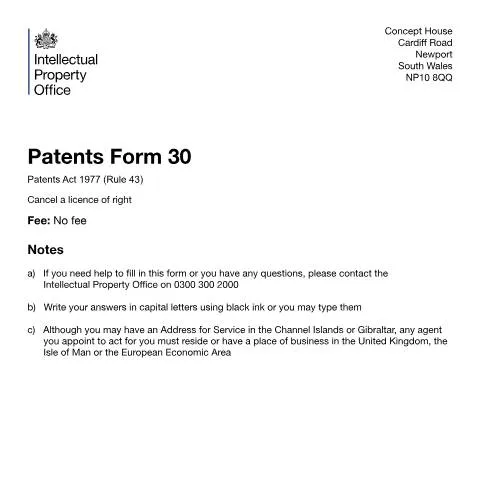
Understanding the Importance of Cancelling a Licence of Right
When navigating the complex landscape of intellectual property, the decision to cancel a licence of right is a significant step for patent owners. Whether due to changes in business strategy, market conditions, or other personal considerations, cancelling a licence requires careful attention to processes and regulations. This document, formally known as the Cancel a Licence of Right form, is essential for patent holders wishing to revoke a previously granted right to use their patent by third parties.
The Role of the Intellectual Property Office in Patent Management
The Intellectual Property Office (IPO), the official government body responsible for intellectual property rights in the UK, plays a pivotal role in patent administration. This institution ensures that the rights of patent owners are protected while facilitating clear and efficient pathways for modifications, such as cancellations of licences. By cancelling a licence of right, the patent owner asserts their control over their invention, reinstating exclusivity and potentially redirecting their commercial strategy.
Who Should Complete This Form?
Understanding the appropriate parties involved in this process is crucial. Typically, this form is completed by:
- The patent owner, who holds the rights to the invention.
- An appointed representative or agent, provided they are located in the UK, Isle of Man, or European Economic Area (EEA).
It is imperative that the representative has the legal authority to act on behalf of the patent owner to ensure a smooth cancellation process.
Assessing the Requirement for Cancellation
Before proceeding, patent owners should assess whether cancellation is indeed necessary. This may involve considering:
- The status of current licensees and whether they consent to the cancellation.
- The potential financial implications of revoking rights previously granted.
- Any contractual obligations that may influence the decision to cancel.
Proper due diligence can avoid potential disputes or financial repercussions associated with this action.
Deciphering the Form: A Step-by-Step Guide
The Cancel a Licence of Right form may appear straightforward, but each section demands careful consideration. Below, we elaborate on each component to aid in accurate completion.
1. Reference and Patent Number
The first section requires your reference and the patent number. While providing a reference is optional, it is advisable for tracking purposes. The patent number is crucial as it directly links the cancellation request to the specific patent in question.
2. Owner Information
Next, the form requires the full name and address of each patent owner. Ensure this information is up-to-date and accurately reflects the current ownership to avoid processing delays. If there are multiple owners, list each owner clearly and separately.
3. Representation Details
If you are appointing a representative, include their name and contact details. Remember, the representative must have a registered address in the UK, Gibraltar, or the Channel Islands. This step is essential for ensuring all correspondence regarding the cancellation is directed appropriately.
4. Confirmation of Intent to Cancel
In this section, you will state your desire to cancel the licence. This part also requires you to confirm that any licensees consent to the cancellation. It is advisable to obtain written confirmation from all parties involved to avoid complications later on.
5. Contact Information
Finally, provide your contact details, including a telephone number and/or email address. This is necessary for any follow-ups or clarifications regarding your application. Ensure the information is accurate to facilitate effective communication.
Submission Pathways: Online vs. Postal Submission
Once the form is completed, you have two primary options to submit your cancellation request:
Online Submission
The online submission process is typically more efficient. To submit online:
- Save your completed form in a suitable format.
- Log into your Intellectual Property account or create a new one if necessary.
- Select the correct service for uploading your completed form.
Postal Submission
Should you prefer or require postal submission, follow these steps:
- Print the completed form.
- Mail it to the IPO at the address provided:
Intellectual Property Office Concept House Cardiff Road Newport, South Wales NP10 8QQ
The Timing of Your Cancellation Request
Understanding the timeline associated with your cancellation is essential. After submission, there are a series of processes that unfold:
Initial Processing
The IPO will first acknowledge receipt of your cancellation request. This acknowledgment does not imply that the cancellation has been processed; rather, it confirms that your request is in the queue for review.
Follow-Up Communication
Depending on the complexity of your case, the IPO may contact you for additional information or clarification. This stage is critical; timely responses can expedite the process.
Final Decision and Notification
Once all necessary information is gathered, and if all conditions are met, the IPO will process the cancellation. You will receive a formal notification confirming the cancellation of the licence of right. Keep this document for your records, as it serves as proof of the change in rights.
Potential Complications and Special Cases
While many may proceed with a straightforward cancellation, some circumstances may complicate matters. Here are a few scenarios to be aware of:
Non-Consent from Licensees
If any current licensees do not consent to the cancellation, it may prevent the processing of your request. Ensure to engage with all licensees and obtain consent before submitting the form.
International Patent Owners
For patent owners based outside of the UK, the process remains largely the same, but additional considerations regarding representation may apply. Ensure your representative meets UK residency requirements, as mentioned above.
Urgent Cancellations
In cases where immediate cancellation is necessary due to legal or commercial pressures, consider contacting the IPO directly. While there is no expedited process explicitly outlined, discussing your situation with an IPO representative can provide guidance tailored to your needs.
Maintaining Compliance with Data Protection Regulations
Throughout the cancellation process, it is essential to be mindful of the Data Protection Act 2018 and UK GDPR regulations. Personal data collected through this form will be processed in accordance with these laws to ensure your privacy and rights are protected.
For further information on how your data will be handled, refer to the IPO's privacy notice found on their official website. This will give you clarity on how your information is used and what rights you have regarding your personal data.
Final Considerations Before Submitting Your Request
Before you send off the cancellation form, take a moment to review your submission. Double-check all provided information for accuracy, ensure that all required consents are in place, and verify that you have followed the correct submission pathway. A thorough review can significantly reduce the likelihood of delays or complications.
Record Keeping
It is advisable to maintain comprehensive records of all communications, versions of the form submitted, and acknowledgements from the IPO. This documentation can be invaluable in the event of disputes or inquiries regarding the status of your patent.
Conclusion: Empowering Your Intellectual Property Journey
Canceling a licence of right is a decisive action that can reshape your intellectual property landscape. By understanding the intricacies of the process, from filling out the cancellation form to maintaining compliance with data regulations, patent owners can navigate this path with confidence. The Intellectual Property Office remains a central resource in this journey, ready to assist and guide you throughout the process.
Understanding the Grounds for Cancelling a Licence of Right
In the UK, a Licence of Right can be cancelled under specific circumstances. It is crucial to understand these grounds to ensure compliance and to mitigate potential disputes. A common reason for cancellation is the failure to meet the conditions outlined in the original licensing agreement. For instance, if the licensee does not use the licensed property as per the terms agreed upon, the licensor may seek cancellation. Another significant ground for cancellation is the breach of statutory obligations. If the licensee fails to adhere to environmental regulations or health and safety standards, this could serve as grounds for the licensor to invoke cancellation.
Moreover, a Licence of Right may also be cancelled due to a change in ownership or management that the licensor finds unacceptable. In such cases, the original terms of the licence may no longer align with the licensor's objectives or policies. Therefore, staying compliant with the licence terms and proactively communicating with the licensor when changes occur is essential.
The Process for Cancelling a Licence of Right
When it comes to cancelling a Licence of Right, the process can vary slightly depending on the specific terms laid out in the licence agreement. However, a standard procedure generally includes notifying the other party formally. This notification should ideally be in writing and should specify the reasons for the proposed cancellation. The Data Protection Act 2018 and UK GDPR govern how personal data should be handled during this process, ensuring that any information shared does not breach privacy regulations.
Following the notification of cancellation, relevant parties should allow a reasonable period for the licensee to respond. This response time is not only a matter of courtesy but also a legal safeguard, allowing the licensee to address any misunderstandings or compliance issues before any final decision is made. Should the matter escalate, it may involve mediation or arbitration, where a neutral third party helps facilitate a resolution. If unresolved, the matter may have to be taken to a court. Therefore, it is advisable to seek legal advice throughout this process to ensure that all actions taken are within legal frameworks and that rights are not inadvertently waived.
Post-Cancellation Considerations and Consequences
Once a Licence of Right is cancelled, both parties must consider the implications of the cancellation. The cancellation does not automatically mean the end of any obligations that were in place before the cancellation. For example, if there were any outstanding payments or responsibilities that accrued during the period of the licence, these still need to be addressed. The terms of the original licence may stipulate what should happen regarding assets or property post-cancellation, so reviewing these terms carefully is crucial.
Additionally, it is important to understand the implications regarding intellectual property rights if the Licence of Right pertained to proprietary content or inventions. The cancellation of such a licence could lead to disputes over ownership or rights to use the material in question. Parties involved should be clear about the ownership status following cancellation to prevent future legal complications.
Moreover, stakeholders should remain aware of any reputational impacts that may arise from the cancellation. A cancellation can sometimes reflect poorly on a party, especially in business environments where partnership and collaboration are valued. Open communication about the reasons for cancellation can mitigate negative perceptions and pave the way for future relationships.