Navigating the Landscape of Intellectual Property: The Licence of Right Application
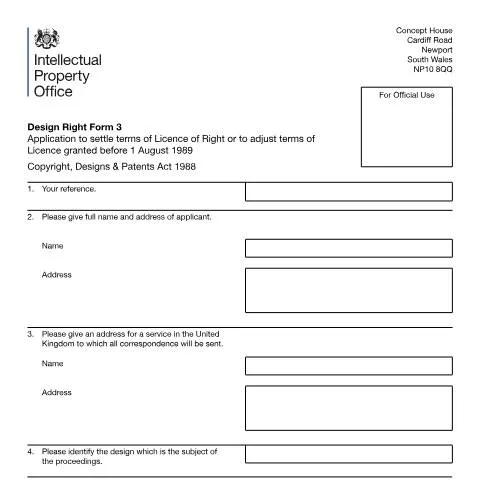
The process of managing intellectual property is intricate, particularly when dealing with designs that were licensed before the significant legislative changes of 1989. The Apply to settle/adjust licence of right terms pre-August 1989 form, officially managed by the Intellectual Property Office (IPO), plays a pivotal role for those looking to clarify or adjust licensing terms for designs that are still governed by earlier laws. Understanding the nuances of this form is paramount for creators, designers, and businesses navigating their rights and obligations under the Copyright, Designs and Patents Act 1988.
What Sets This Form Apart: Distinguishing Licensing Requests
First and foremost, the DRF3 form is distinctively tailored for those wishing to settle or modify the terms of a 'Licence of Right' for designs pre-dating 1 August 1989. This specific focus differentiates it from other standard copyright and design rights forms, such as the applications for registration or assignment of rights.
- Designs Registered Post-1989: Applications for designs registered after this date follow a different process, primarily influenced by updated regulations under the EPC.
- Scope of Usage: The DRF3 form is exclusive to those who have identified issues with existing licensing arrangements and need to formalise changes.
Applicants must demonstrate an understanding of the historical context of their design rights, as the legal framework governing these designs significantly impacts the terms that can be settled or adjusted.
The Regulatory Framework: A Brief Historical Context
To grasp the significance of the DRF3 form, one must appreciate the evolution of design rights in the UK. The Copyright, Designs and Patents Act 1988 was a watershed moment in UK intellectual property law. Prior to this, any licensing arrangements were often governed by more ambiguous legal principles.
The specific sections referenced in the DRF3 form, particularly Section 237 and Section 238, are key to understanding the rights available to designers:
- Section 237: This section allows for designs to be licensed to any third party, provided that the original owner is compensated.
- Section 238: This gives the court the power to make an order adjusting terms where the original terms are deemed unreasonable or outdated.
This historical perspective is not only vital for applicants but also provides the IPO with a framework to assess applications effectively, ensuring compliance with established laws.
Preparing Your Submission: Required Documents and Their Importance
Completing the DRF3 form is not merely a matter of filling out required fields; it necessitates a comprehensive understanding of the necessary documentation. Each section of the form must be completed thoroughly to avoid complications. Here’s a breakdown of critical documentation:
| Document | Purpose | Preparation Tips |
|---|---|---|
| Statement of Terms | Outlines the changes sought for the existing licensing agreement. | Ensure it's clear, concise, and justifiable based on current market conditions. |
| Evidence of Inquiries | Details your efforts to identify the design right or copyright owner. | Document each step taken, including names and contact methods. |
| Design Identification Materials | Helps to substantiate your claim regarding the particular design. | Provide high-quality images and detailed descriptions. |
These documents are essential for establishing the validity of your claims and ensuring that the IPO can act on your application without delays. Missing or incomplete information can lead to a rejection or a prolonged assessment process.
Timelines to Keep in Mind: When to Apply and What Follows
Understanding the timeline associated with the DRF3 form is crucial for effective planning. Generally, there is no strict deadline for submitting this application, but there are timelines for processing and responding:
- Submission of Application: As soon as you identify the need for a licence adjustment, begin your application.
- IPO Processing Time: Typically, processing can take several weeks, depending on case complexity and completeness of application.
- Response Timeline: Following the assessment, the IPO may issue a decision, request further information, or hold a hearing.
Applicants are advised to follow up with the IPO after submission to ensure their application is on track. The longer the wait, the more critical it is to stay engaged with the process to secure a timely resolution.
Real-World Implications: Rights, Obligations, and the Risks of Inaction
Submitting the DRF3 form does more than address licensing terms; it opens up essential rights and responsibilities:
- Clarification of Usage Rights: Successfully settling the licensing terms can clearly define how a design may be used by others, which is pivotal for income generation.
- Obligations to Original Owners: If adjustments to terms are made, it could obligate the applicant to compensate the original designer or rights holder.
- Consequences of Non-Submission: Failing to address outdated licensing terms can lead to potential liabilities, including unintentional infringement of rights, which may result in legal disputes.
Thus, it is essential for applicants to approach this form with careful consideration and intent, as the implications of the outcome can resonate throughout their business dealings.
Submission Channels: Online vs. Paper Applications
When it comes to submitting the DRF3 form, applicants have a choice between online and traditional paper methods. Each channel has its pros and cons:
| Submission Method | Advantages | Disadvantages |
|---|---|---|
| Online Submission | Instant confirmation, faster processing time, and reduced risk of loss. | Requires internet access and familiarity with online payment systems. |
| Paper Submission | Can be more accessible for those less comfortable with technology. | Longer processing times and higher risk of documents being misplaced in transit. |
Considering these factors, applicants should choose the method that aligns best with their capabilities and urgency of their licensing needs. However, it is worth noting that online submissions are generally encouraged due to their efficiency.
Identifying Stakeholders: Who Should Consider This Application?
The DRF3 form is not restricted to any single group; it is relevant to a variety of stakeholders in the design and creative industries. Here’s a deeper dive into who may be involved:
- Individual Designers: Creators seeking to adjust the terms of their licensing agreements to better reflect market realities.
- Businesses: Companies that have acquired design rights and need clarity on licensing terms for usage in products.
- Legal Representatives: Professionals assisting clients in navigating the complexities of design rights and licensing.
Understanding the specific circumstances of each group can help tailor the submission, ensuring that all relevant terms and conditions are adequately addressed in the application.
Next Steps: After Submission and Moving Forward
Once submitted, the DRF3 form is only the beginning of the journey. Applicants should be prepared for the subsequent steps:
- Awaiting Determination: The IPO will review the application and may seek additional information or clarification.
- Possible Hearings: In cases where adjustments are contested, a hearing may be held to discuss the terms in detail.
- Implementation of New Terms: Upon approval, the new licensing terms will need to be formally adopted in contracts and adhered to moving forward.
Maintaining clear lines of communication with the IPO during this period is crucial to staying informed about the status of your application and understanding any further obligations that arise.
In summary, the process surrounding the DRF3 form is intricate and requires careful navigation. By thoroughly understanding the requirements, preparing the necessary documentation, and actively engaging with the Intellectual Property Office, applicants can effectively manage their design rights and ensure their interests are adequately protected.
Understanding the Licensing Framework for Rights Holders
When considering adjustments to licensing rights established before August 1989, it's vital to grasp how the UK's licensing framework has evolved and how it impacts rights holders today. The licensing landscape is governed mainly by the Copyright, Designs and Patents Act 1988 (CDPA), which introduced legislation that significantly altered the way rights are assigned and managed. Although the CDPA came into effect in 1989, it holds implications for rights that were initially licensed prior to this date.
The first step in understanding your rights is to determine the nature of your existing agreements. If you hold a licence agreement from before August 1989, you'll need to identify whether this agreement still conforms to current legal standards or if it requires formal adjustment to comply with the newer regulations. You might want to consult the Intellectual Property Office (IPO) for guidance on your current licensing status and any potential conflicts with the CDPA.
Furthermore, it's essential to evaluate the terms specified in your original agreement. Are they still relevant? Do they align with your current business model? If you're looking to amend these terms, a well-documented case that articulates why the adjustment is warranted can be beneficial. This may include changes in the market environment, technological advancements, or alterations in how your works are consumed.
Additionally, pay attention to the rights associated with moral and economic interests, which were introduced or clarified by the CDPA. Rights holders post-August 1989 gained greater control over their works, which may not have been the case prior. If your original agreement does not recognise these rights, you should explore the paths available for renegotiating or adjusting your licence to ensure that your current and future rights are protected.
Filing for Adjustments: Steps to Take
Navigating the process of applying for a licence adjustment due to changes in rights can be intricate. Below are some practical steps to guide you through the submission process, tailored specifically for those dealing with rights established prior to August 1989.
Gather Documentation: Collect all pertinent documents related to your original licensing agreement. This includes any correspondence, the initial agreement itself, and any subsequent amendments or communications. Ensure you have records of any public engagements or distributions that pertain to the work in question.
Consult with Legal Experts: Before proceeding, it's advisable to consult with a legal expert specializing in intellectual property rights. They can provide insights into the nuances of your case and help identify any legal precedents that may support your application for adjustment. Their expertise will be particularly valuable in interpreting the implications of the CDPA as it pertains to historical agreements.
Prepare Your Application: When ready to file, your application should clearly outline the reasons for the adjustment. Be specific about how the original licence terms are no longer adequate and what changes you propose. It can be beneficial to include any market research or data that supports your request.
Submit to the Appropriate Authority: In most cases, you will need to submit your application to the Intellectual Property Office. Ensure that you follow their guidelines carefully, paying close attention to necessary forms and submission methods. You might also want to consider whether your case would benefit from mediation or an alternative dispute resolution process if contested by the other party involved.
Monitor Progress: After submission, keep track of your application status. Be prepared to respond to any queries or requests for additional information from the IPO. Effective communication during this phase can often lead to quicker resolutions.
Consider Potential Outcomes: Lastly, be aware that adjustments may not always be granted as requested. It’s prudent to be prepared for various outcomes and to have contingency plans in place for how to proceed should your request be partially or wholly denied.
Impact of Data Protection and Privacy Considerations
In the current landscape, any application for adjusting a licence must also take into account data protection regulations, specifically the Data Protection Act 2018 and the UK General Data Protection Regulation (GDPR). Given that personal data processing is essential for many licensing agreements, understanding these regulations is critical.
First, ensure that your application respects the privacy rights of all individuals mentioned in the original licensing agreement. If your existing agreement contains personal data (such as names and contact details of contributors or stakeholders), you must verify compliance with data protection standards. As a rights holder, it's your responsibility to ensure that such data is processed lawfully, fairly, and transparently.
When submitting your application, include a data protection impact assessment (DPIA) if necessary. This assessment should articulate how you intend to manage any personal data connected to the adjustment process, ensuring that you safeguard the rights of the individuals involved while pursuing your application.
Moreover, should you need to engage with stakeholders to seek their consent or input regarding your licence adjustment, it's important to communicate openly about how their data will be used. This proactive approach can enhance trust and facilitate smoother negotiations.
In summary, the intersection of licence adjustments and data privacy is a critical aspect that must be integrated into your application process. Failing to comply with these regulations can not only jeopardize your application but could also lead to legal repercussions, affecting your rights as a holder and potentially undermining your commercial interests.