Understanding the COP1D Form: Applying to Make Decisions on Behalf of Someone Else in the UK
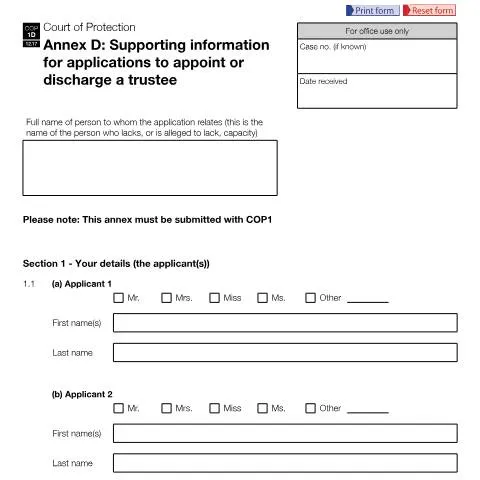
The COP1D form is an official document used within the legal framework of the Court of Protection in the United Kingdom. Its primary purpose is to facilitate applications related to the appointment or discharge of trustees for individuals who lack the capacity to manage their property and financial affairs. This guide aims to clarify the purpose, scope, and key procedures associated with the COP1D form, providing a comprehensive overview for applicants and interested parties.
Purpose and Scope of the COP1D Form
The COP1D form is designed for use by individuals or entities seeking the court’s approval to appoint or remove a trustee on behalf of a person who is deemed to lack the mental capacity to manage their financial matters. This process is critical in ensuring that the interests of vulnerable individuals are protected through proper legal oversight. The form is applicable in cases involving trusts of property, land, or other assets, and it supports the legal transition of trustee responsibilities to suitable persons or organizations.
Applicants may include family members, legal representatives, or other parties involved in managing the affairs of the individual lacking capacity. The form also covers applications to discharge existing trustees, ensuring that the management of the person’s estate remains appropriate and legally compliant.
Key Components and Requirements of the Application
1. Applicant Details
The form requires detailed information about the applicant(s), including full names, contact details, and their relationship to the individual concerned. If the application involves a deputy appointed under a court order or a registered power of attorney, supporting documentation such as the relevant order or the power of attorney must be attached.
2. Supporting Evidence and Documentation
Applicants must provide comprehensive evidence supporting their application. This includes:
- Copies of land registry entries or trust instruments for property-related trusts.
- Legal documents such as wills, grants of representation, or notices of severance, where applicable.
- Statements confirming the capacity of existing trustees or deputies, particularly if they have enduring powers of attorney for property and financial affairs.
- Additional information about the property or assets involved, including addresses and registration details.
3. Proposed Trustees and Discharge Details
The application must specify the proposed new trustees, including their names, addresses, relationship to the individual, and date of birth. If the application involves discharging current trustees, evidence must support their capacity to continue or their need to be replaced.
Legal and Procedural Considerations
Completing the COP1D form requires careful adherence to legal procedures outlined in Practice Direction 9F and related court guidance. All relevant supporting documents must be submitted alongside the application, and the applicant must sign a statement of truth affirming the accuracy of the information provided.
Once completed, the application, along with any applicable fees, must be sent to the Court of Protection. The court will review the application to ensure it complies with legal standards and that the proposed decisions serve the best interests of the individual lacking capacity.
Fill in your form directly online
No printing: type your details into the boxes of the official form, tick, then download the PDF ready to send.
- 1Type into the form boxes
- 2Tick in one click
- 3Save and download the PDF
Implications for Applicants and the Public
The COP1D form streamlines the process of appointing or removing trustees in sensitive cases involving individuals who cannot manage their affairs. It provides a structured legal pathway that safeguards the interests of vulnerable persons while ensuring that decisions are made transparently and with proper oversight.
Applicants should be aware that the Court of Protection cannot provide legal advice. Therefore, it is advisable to consult a solicitor or legal expert specializing in mental capacity and trust law when preparing and submitting this form. Proper completion and supporting documentation are essential to facilitate a smooth application process and to uphold the legal protections afforded to individuals lacking capacity.
Conclusion
The COP1D form plays a vital role in the administration of trusts and the management of property for individuals who lack the capacity to do so themselves. By understanding its purpose, requirements, and procedural steps, applicants can ensure that their applications are complete, accurate, and compliant with UK legal standards, ultimately helping to protect the interests of vulnerable persons within the legal framework of the Court of Protection.