Understanding the Appeal Process for Decisions Made by the Office for Students under the Higher Education and Research Act 2017
The HM Courts & Tribunals Service provides a structured legal avenue for higher education providers to challenge certain decisions made by the Office for Students (OfS). This process is formalized through the Form CSTOF1, which is utilized to appeal decisions that significantly impact the provider's registration status, degree awarding powers, or use of the 'university' title. This guide aims to clarify the scope, procedures, and implications of lodging such an appeal, assisting providers in understanding their rights and obligations under the relevant legal framework.
Scope of the Appeal and Applicable Decisions
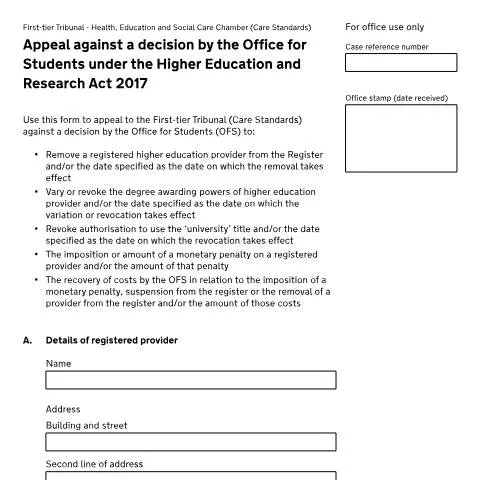
The appeal process through the First-tier Tribunal (Care Standards) is specifically designed to address decisions by the OfS that relate to:
- Removal of a higher education provider from the official Register of providers.
- Variation or revocation of degree awarding powers (DAPs).
- Revocation of the authority to use the 'university' title.
- Imposition or the amount of monetary penalties on registered providers.
- Recovery of costs associated with penalties, registration suspensions, or removals.
These decisions are typically made under the powers granted by the Higher Education and Research Act 2017 and can have profound effects on a provider’s legal standing, reputation, and operational capacity.
Procedural Aspects of the Appeal
Filing the Appeal
The appeal must be initiated using the official Form CSTOF1. The form requires detailed information about the provider, including its registered name, address, and case reference number. If a representative is involved, their details must also be provided. The appeal must be submitted within 28 days of receiving the decision notice from the OfS, although extensions may be requested if the deadline cannot be met.
Grounds for Appeal
The grounds for challenging a decision depend on the nature of the decision:
- For decisions on deregistration, penalties, or revocation of powers or titles, the appeal can be based on errors of fact, legal errors, or unreasonableness.
- In cases of revoking degree awarding powers or university titles, the Tribunal considers the decision afresh, taking into account new evidence not previously available to the OfS.
Evidence and Hearing
Applicants must submit any supporting evidence with their appeal. The Tribunal may decide to resolve the case based on written evidence alone or hold an oral hearing, depending on whether all parties agree.
Legal and Administrative Considerations
The appeal process is governed by the relevant legal provisions, including the Data Protection Act 2018 and UK GDPR, which ensure the confidentiality and proper handling of personal data involved in the case. Both parties must declare that the facts presented are true, and the appeal must be signed and submitted in accordance with official procedures.
Implications for Higher Education Providers
Engaging in an appeal provides providers with a formal opportunity to contest decisions that could affect their legal status and operational capabilities. Successful appeals can result in the overturning or modification of adverse decisions, thereby allowing providers to maintain or restore their registration, powers, or titles.
However, providers should carefully prepare their case, ensuring all relevant evidence and legal grounds are clearly articulated. Consulting legal experts or specialized advisors familiar with higher education regulation can be beneficial in navigating this complex process.
Additional Resources and Contact Information
For more detailed guidance on submitting an appeal, the official Care Standards Tribunal provides comprehensive instructions and contact details. Appeals are to be sent to:
HM Courts & Tribunals Service Care Standards 1st Floor, Darlington Magistrates’ Court Parkgate, Darlington DL1 1RU Email: [email protected] Phone: 01325 289350
Understanding and properly navigating the appeal process is crucial for higher education providers seeking to uphold their rights and ensure compliance with regulatory standards under UK law.