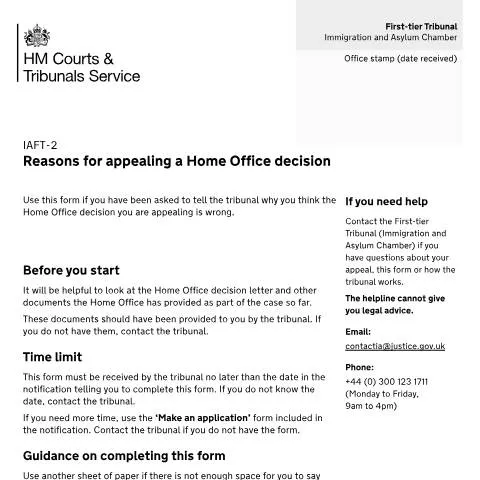
Understanding the Purpose and Application of Form IAFT-2
The Form IAFT-2 is an official document issued by the First-tier Tribunal (Immigration and Asylum Chamber) in the United Kingdom. Its primary purpose is to provide individuals with a structured means to present their reasons for contesting a decision made by the Home Office. When the Home Office refuses an application—be it for asylum, visas, or other immigration-related matters—appellants can use this form to formally communicate why they believe the decision was incorrect and should be overturned.
Scope and Context of the Form
This form is specifically designed for individuals who have already received a decision from the Home Office and are now seeking to challenge that decision through the tribunal process. It is an integral part of the appeal procedure within the UK immigration system, ensuring that appellants have an opportunity to explain why they think the decision was wrong and to submit supporting evidence.
The form is applicable to a range of immigration decisions, including refusals of visa applications, asylum claims, or deportation orders. It is crucial that appellants understand that the form must be submitted within a specified timeframe, as indicated in the tribunal's notification. Missing this deadline could result in the dismissal of the appeal.
Key Sections and Their Significance
Section 1: Your Personal Details and Appeal Reference
This section requires the appellant to provide identifying information such as their full name, date of birth, and the unique appeal reference number. Accurate completion of these details ensures that the tribunal can correctly identify and process the case.
Section 2: Articulating Your Reasons for Appeal
The core of the form lies in this section, where the appellant must clearly explain why they believe the Home Office decision was incorrect. It is recommended to carefully review the decision letter and any accompanying documents to identify specific reasons for disagreement. The appellant should respond to each reason the Home Office provided, providing detailed explanations and supporting evidence where available.
Section 3: Supporting Evidence
In this part, applicants can list and describe any evidence they are submitting to support their appeal. This may include documents, photographs, medical reports, or statements. If the evidence is not in English, a certified translation must be provided. Additionally, if the appellant has evidence they are currently trying to obtain, they should specify what it is and when they expect to acquire it.
Procedural Considerations and Submission
Once completed, the form can be submitted either by email or post. The email address designated for submissions is [email protected], with the appeal reference number included in the subject line. The postal address is the First-tier Tribunal (Immigration and Asylum Chamber), PO Box 11205, Loughborough, LE11 9PS, United Kingdom.
It is essential to adhere to the deadline specified in the tribunal's notification to ensure that the appeal is considered. If additional time is needed, applicants can request an extension using the appropriate application form included in the notification letter.
Fill in your form directly online
No printing: type your details into the boxes of the official form, tick, then download the PDF ready to send.
- 1Type into the form boxes
- 2Tick in one click
- 3Save and download the PDF
Next Steps After Submission
Following receipt of the appeal, the tribunal will review the submitted form and supporting evidence. They may contact the appellant if further information or clarification is necessary. If no additional information is required, the tribunal will inform the appellant of the next steps in the appeal process, which may include a hearing or written decision.
Additional Resources and Support
For further information about the appeal process, including detailed guidance and updates, individuals can consult the official government website dedicated to immigration and asylum tribunals. It is also advisable to seek legal advice or assistance from authorized organizations to ensure that the appeal is properly prepared and submitted.
Understanding and correctly completing Form IAFT-2 is a vital step for anyone challenging a Home Office decision, providing a clear pathway to present their case and seek a fair review of their immigration situation.