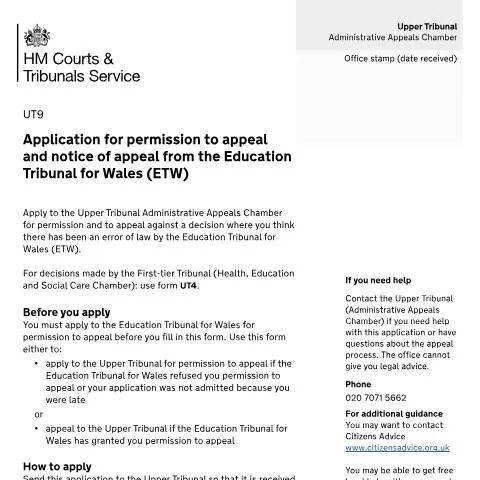
Understanding the Appeal Process for Education Tribunal Decisions in Wales: The Role of Form UT9
The Education Tribunal for Wales (ETW) is responsible for resolving disputes related to education matters involving children and young people. When a party is dissatisfied with a decision made by the ETW, they may seek to challenge that decision through an appeal process. The official form used for this purpose is known as Form UT9. This guide provides a comprehensive overview of the purpose, scope, and procedural steps associated with Form UT9, helping appellants navigate the process effectively.
Purpose and Scope of Form UT9
Form UT9 is an official document issued by the Upper Tribunal's Administrative Appeals Chamber. Its primary function is to serve as the formal application for permission to appeal a decision made by the Education Tribunal for Wales. The form is also used to submit the notice of appeal once permission has been granted. Importantly, it applies specifically to cases where the appellant believes there has been an error of law in the original tribunal decision.
The form is intended for parties who have already sought permission to appeal from the ETW but were either refused or their application was deemed late. It is also used by those who have received permission to appeal and now wish to proceed to the next stage of the appeal process.
Legal and Procedural Context
The appeal process governed by Form UT9 is subject to strict legal and procedural rules. An appellant must submit their application within a specified timeframe—no later than one calendar month after receiving the ETW decision. The timeframe is crucial; late submissions may be rejected unless an extension is explicitly requested and granted in Section 7 of the form.
Applicants are advised to contact the Upper Tribunal's office for guidance if they require assistance with completing the form or understanding the appeal process. However, it is important to note that the office cannot provide legal advice, and appellants seeking legal assistance should consider consulting qualified legal professionals or organizations such as Citizens Advice.
Key Sections of Form UT9
Part 1: Appellant’s Information
This section gathers details about the individual or entity filing the appeal, including the Education Tribunal reference number, the date of the tribunal decision, and the location of the hearing. The appellant must specify whether they are a child or young person, a parent or guardian, a case friend, or a responsible authority.
Part 2: Child or Young Person’s Details
Information about the child or young person involved in the case is required here, including their name, date of birth, gender, and contact details. This section ensures that the appeal is accurately linked to the correct individual.
Part 3: Parental or Responsible Person Details
If applicable, details of the parent or person with parental responsibility are provided, including their contact information. The form also accommodates details of any other parent or responsible individual involved in the case.
Part 4: Case Friend Details (if applicable)
In cases where a case friend has been appointed to act on behalf of a child who lacks capacity, their details—including relationship to the child—must be included. This ensures that the tribunal recognizes the legal representation involved in the appeal.
Fill in your form directly online
No printing: type your details into the boxes of the official form, tick, then download the PDF ready to send.
- 1Type into the form boxes
- 2Tick in one click
- 3Save and download the PDF
Next Steps and Additional Guidance
Once the form is completed and submitted within the stipulated timeframe, the Upper Tribunal will review the application for permission to appeal. If permission is granted, the appellant will be notified and can proceed to submit the full grounds of appeal.
For further assistance, appellants are encouraged to contact the Upper Tribunal (Administrative Appeals Chamber) directly via their contact details. Additionally, seeking advice from legal professionals or organizations such as Citizens Advice can provide valuable support, particularly for understanding legal rights and obligations during the appeal process.
Conclusion
Form UT9 plays a vital role in the appeals process against decisions made by the Education Tribunal for Wales. It ensures that appellants formally request permission to challenge decisions they believe involve legal errors. By understanding the purpose, procedural requirements, and key components of this form, individuals can better navigate the complex landscape of education-related legal disputes in Wales.