Understanding the Appeal Process for Information Rights Decisions in the UK
This guide provides an overview of the procedures involved in appealing a decision made by the First-tier Tribunal (General Regulatory Chamber) concerning information rights, as managed by the HM Courts & Tribunals Service. If you are dissatisfied with a tribunal decision related to your information rights, this document explains the steps you need to follow to challenge that decision effectively.
Scope and Purpose of Form UT13
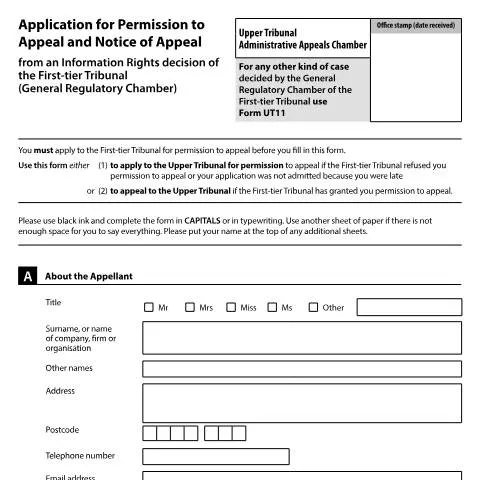
Form UT13 is the official document used to apply for permission to appeal or to lodge an appeal to the Upper Tribunal against a decision made by the First-tier Tribunal in the context of information rights cases. These cases often involve disputes over access to personal data, data protection issues, or other related information rights under UK law.
It is essential to understand that this form is not for initiating a new case but for seeking permission to challenge a previous decision. The process ensures that only cases with significant legal points or errors are escalated to the Upper Tribunal, maintaining judicial efficiency and clarity.
Who Can Use Form UT13?
This form is intended for individuals or organisations who:
- Have received a decision from the First-tier Tribunal regarding an information rights matter.
- Wish to appeal that decision to the Upper Tribunal.
- Were refused permission to appeal by the First-tier Tribunal or believe their application was rejected due to procedural delays.
Applicants can include data subjects, data controllers, or representatives acting on their behalf, such as legal advisors or advocates.
Key Steps in the Appeal Process
1. Confirm the Need for Permission to Appeal
Before submitting Form UT13, the appellant must seek permission from the First-tier Tribunal. Only after a refusal or if the tribunal has granted permission can the appeal proceed to the Upper Tribunal using this form.
2. Completing the Form
The form requires detailed information about the appellant, the respondent(s), and the tribunal case. Essential details include:
- Personal or organisational details of the appellant and their representative, if any.
- Information about the respondent(s) involved in the original case.
- Details of the tribunal decision, including the date and reference number.
- The grounds for appeal, focusing on legal errors made by the First-tier Tribunal.
3. Grounds for Appeal
Appeals are only permitted if the appellant believes the tribunal decision was legally incorrect. The grounds should specify the points of law that were misapplied or overlooked, supported by relevant legal arguments.
4. Requesting an Oral Hearing
Applicants can request an oral hearing before the Upper Tribunal, providing reasons for their preference. The tribunal considers these requests based on the specifics of each case.
Submitting the Application
Once completed, the form can be submitted via the HM Courts & Tribunals Service E-Filing portal, which is the preferred method for legal representatives and government bodies. For unrepresented parties, the form can be sent by email or postal mail to the appropriate address:
| Location | Address | |
|---|---|---|
| England (if the hearing was in England) | The Upper Tribunal Office, 5th Floor Rolls Building, 7 Rolls Buildings, Fetter Lane, London, EC4A 1NL | [email protected] |
| Wales (if the hearing was in Wales or the appellant resides in Wales) | Same as above or the specific address provided by the tribunal | Same as above or the designated email |
Important Considerations
Applicants should be aware of the deadlines associated with the appeal process. The appeal must be lodged within a specific timeframe after the tribunal's decision, typically within one month, unless an extension has been granted.
Fill in your form directly online
No printing: type your details into the boxes of the official form, tick, then download the PDF ready to send.
- 1Type into the form boxes
- 2Tick in one click
- 3Save and download the PDF
If the appellant was late in submitting their application or if the tribunal refused permission due to procedural reasons, they may need to apply for an extension of time, providing valid reasons for the delay.
Legal and Procedural References
Appeals under this process are governed by the relevant legal frameworks, including the Data Protection Act 2018 and UK GDPR, which establish individuals' rights to access information and challenge decisions affecting their data rights. The procedures are designed to ensure that decisions are fair, lawful, and transparent.
For detailed legal guidance, applicants are advised to consult the official resources provided by the HM Courts & Tribunals Service and seek legal advice if necessary to ensure compliance with all procedural requirements.
Conclusion
Appealing a decision related to information rights in the UK involves careful preparation and understanding of the legal grounds for challenge. Using Form UT13 correctly is crucial to ensure that your appeal is considered properly by the Upper Tribunal. Always adhere to deadlines and provide comprehensive grounds for your appeal to improve your chances of success.