Understanding the Appeal Process for a Gangmaster's Licence Decision in the UK
The HM Courts & Tribunals Service oversees various legal proceedings, including appeals related to decisions made under the Gangmasters (Appeals) Regulations 2006. If you have received a decision regarding a full or provisional gangmaster's licence that you believe is unjust or incorrect, you have the right to challenge this decision through a formal appeal process. This guide provides an overview of the key steps and requirements involved in lodging an appeal using the official Form GMappeal1.
Scope and Purpose of Form GMappeal1
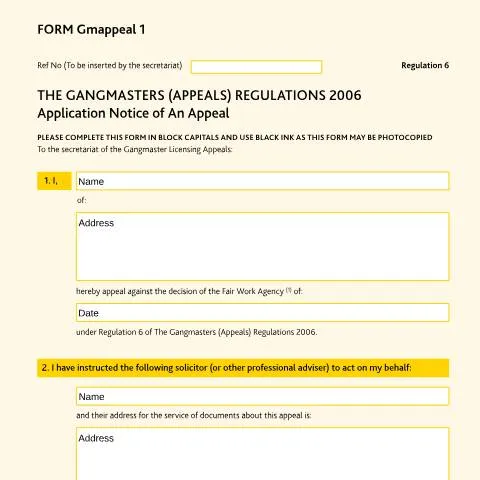
The Form GMappeal1 is an official document used to initiate an appeal against a decision made by the Fair Work Agency concerning a gangmaster's licence. This form is designed to ensure that appellants clearly present their grounds for appeal and provide all necessary supporting documentation. It is applicable to both full and provisional licence decisions, offering a structured process for individuals or organisations wishing to challenge licensing outcomes.
Who Can Use This Form?
This appeal process is primarily intended for applicants or licensees who have received a decision from the Fair Work Agency that they wish to contest. This includes:
- Individuals or companies holding or applying for a gangmaster's licence
- Legal representatives acting on behalf of the appellant
It is essential that the appellant or their authorized representative completes and submits the form within the specified deadlines to ensure the validity of the appeal.
Key Requirements and Deadlines
To be valid, the Form GMappeal1 must be sent to the designated secretariat within the statutory timeframe:
- Not later than 20 working days following the date of the decision document, or
- In cases where the decision takes immediate effect, within 10 working days of the decision date.
Failure to meet these deadlines may result in the rejection of the appeal.
Completing the Form
Essential Information to Provide
- Applicant details: Name, address, and contact information
- Legal representation: If applicable, details of the solicitor or adviser authorized to act on your behalf
- Decision details: Reference number and date of the decision being appealed
- Grounds of appeal: Clear statement of the reasons why you believe the decision was incorrect or unfair
- Supporting documents: Two copies of relevant documents that substantiate your appeal
Submission Process
The completed form must be sent to the secretariat address specified in the accompanying guide. Both the original and a copy of the form, along with supporting documents, should be submitted to facilitate processing. Electronic submission options may also be available, as per the guidance provided in the official instructions.
Legal and Procedural Considerations
Under the Regulation 6 of The Gangmasters (Appeals) Regulations 2006, the appeal process is formal and governed by specific legal provisions. The appellant must ensure that the appeal is lodged in a timely manner and that the grounds for appeal are clearly articulated. The decision of the tribunal following the appeal can uphold, overturn, or modify the original licensing decision.
Implications for the Appellant
Filing an appeal can potentially change the outcome of a licensing decision, impacting the ability to operate legally as a gangmaster. It is advisable to seek legal advice or assistance from a qualified professional to ensure that the appeal is properly prepared and submitted. The process provides an important safeguard for individuals and businesses to contest decisions they believe are unjust, ensuring transparency and fairness within the licensing framework.
Conclusion
The Form GMappeal1 offers a structured and legally regulated pathway for challenging decisions related to gangmaster licensing. By understanding the procedural requirements and deadlines, appellants can effectively exercise their rights within the UK legal system. For detailed guidance and support, it is recommended to consult the official instructions accompanying the form or seek advice from a legal professional familiar with employment and licensing law.