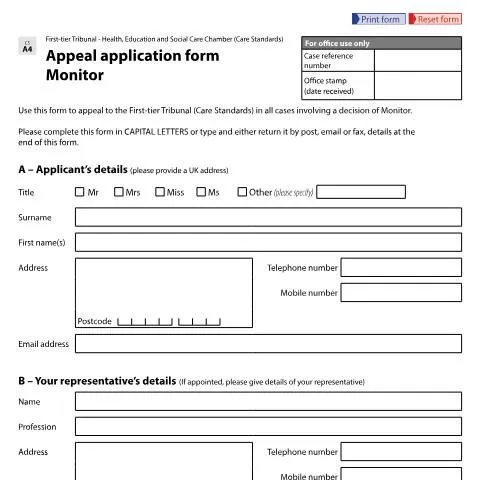
Navigating the Appeal Process: Understanding Form CS A4
In the complex landscape of regulatory decisions, receiving a notification from Monitor can feel daunting. For individuals and organisations affected by such decisions, the Appeal application in cases involving Monitor—Form CS A4—serves as a pivotal document. This form allows applicants to contest decisions regarding licenses related to regulated activities, which are often critical for service provision in health, education, and social care. Understanding how to efficiently navigate this form can be the key to successfully challenging a decision made by Monitor.
Triggering the Appeal: When and Why to Use Form CS A4
When a decision from Monitor impacts your ability to operate within regulated activities, such as care services, education settings, or health care, it is crucial to understand the timeline and grounds for appeal. The primary triggers for submitting Form CS A4 include:
- Refusal to Issue a License: If Monitor denies your application for a license, you may appeal this decision.
- Revocation of a License: If Monitor revokes an existing license, you have the right to contest the revocation.
The appeal must be submitted within specific time limits, typically within 28 days from the date of the notification of the decision. Delaying may result in dismissal of your appeal, so understanding the urgency is paramount.
Unpacking the Details: Sections of Form CS A4
Form CS A4 is structured to gather comprehensive information about the applicant and the appeal. Here’s a breakdown of its critical components and essential considerations:
A – Applicant’s Details
This section requires personal information including title, name, address, and contact details. It is essential to provide a UK address as this will be the primary correspondence point. Ensure that all information is accurate to avoid delays.
B – Representative’s Details
If you have appointed a representative, include their details. Be aware that communications regarding the appeal will be directed to the chosen contact—either you or your representative—unless otherwise specified. Make your selection carefully.
C – Nature of the Regulated Activity
Clarifying the type of regulated activity and the specific decision being contested is crucial. You must indicate whether you are appealing a refusal or revocation of a license. Ensure you attach a copy of the decision letter; failure to do so without a valid reason can jeopardise your appeal.
D – Type of Hearing
This section allows you to express your preference for how the hearing will proceed. You may opt for an oral hearing, where both parties present their case in person, or a paper-based hearing, which relies solely on the written submissions. Be mindful that some cases may not be suitable for a paper hearing, particularly where factual disputes arise.
E – Interpreter Needs
If you or any witnesses require an interpreter, indicate the language needed. This is essential for ensuring that all parties fully understand the proceedings, and arrangements can be made in advance.
F – Timeliness of the Appeal
Reiterating the importance of adhering to deadlines, this section assesses whether your appeal is submitted within the required timeframe. If late, you must provide justification for the delay, which may not always be accepted. Consulting the guidance provided can help clarify your standing.
Specific Situations: Complex Cases and Their Management
There are several unique scenarios that may arise when filling out Form CS A4:
International Applicants
For applicants residing outside the UK, it is vital to provide a valid UK address for correspondence. Legal representatives may also be involved to navigate the nuances of UK regulations effectively.
Minors and Vulnerable Individuals
In instances where the applicant is a minor or a vulnerable adult, consider appointing a legal representative to ensure their interests are effectively represented. This may entail additional documentation regarding the representative’s credentials.
Urgent Appeals
If your situation demands expedited consideration, clearly specify this in your appeal. Justifications may include significant impact on service provision or health risks. However, the Tribunal’s acceptance of such requests is discretionary.
Common Pitfalls: What to Avoid When Completing Form CS A4
Filling out Form CS A4 can be intricate, and several common mistakes can derail your appeal. Keep these considerations in mind:
- Incomplete Sections: Ensure all applicable sections of the form are completed. Missing information can lead to rejection of your appeal.
- Incorrect Appeals Basis: Clearly articulate the reasons for your appeal. General statements without specific context may weaken your case.
- Failure to Attach Required Documents: Always attach necessary documents, including the decision letter and any supporting evidence. Ignoring this requirement can result in your appeal being dismissed.
Submission Channels: How to Submit Form CS A4
Understanding the various channels through which Form CS A4 can be submitted is crucial. You can choose from:
- Postal Submission: Mail your completed form and documents to HM Courts & Tribunals Service at the specified address.
- Email Submission: Certain instances may allow for electronic submission, which can expedite the process. Ensure that you follow the guidelines for electronic submissions.
- Fax Submission: While less common today, faxing is still an option, but ensure that all documents are legible and properly formatted.
After Submission: Tracking Your Appeal
Once Form CS A4 is submitted, there are several subsequent steps that will unfold:
- Acknowledgment of Receipt: You should receive confirmation that your appeal has been registered.
- Case Management Hearing (CMH): A preliminary hearing may be scheduled to discuss directions and timelines.
- Main Hearing: Ultimately, your appeal will be heard, and a decision issued. This process could take several weeks, so patience is vital.
What Lies Ahead: Handling Outcomes
The outcome of your appeal can diverge in various ways. If the Tribunal is in your favour, you may have your license reinstated or granted. Conversely, if the appeal is unsuccessful:
- Seek Further Guidance: Consult legal representatives for advice on potential next steps, including judicial review options.
- Review the Decision: Understanding the reasons behind your rejection can aid in addressing future applications effectively.
Final Considerations for Form CS A4
Filling out Form CS A4 can be a straightforward yet nuanced process. Each section of the form serves a significant purpose in articulating your case against the Monitor's decision. By ensuring meticulous attention to detail, adhering to timelines, and understanding the procedural requirements, you are better equipped to navigate this complex landscape. Engaging with legal professionals familiar with the Tribunal processes can also enhance your chances of a successful appeal. Keeping these insights at the forefront will empower you as you challenge decisions that directly affect your operational capabilities within regulated activities.