Understanding the Official Process for Appealing a Decision in Special Educational Needs and Disability Cases in the UK
The HM Courts & Tribunals Service provides a structured legal framework for individuals seeking to challenge decisions made by the First-tier Tribunal related to Special Educational Needs (SEN), Education, Health and Care (EHC) Plans, and Disability Discrimination in Schools. This guide explains the purpose of the official form UT4, who should consider using it, and the steps involved in the appeal process.
Scope and Purpose of Form UT4
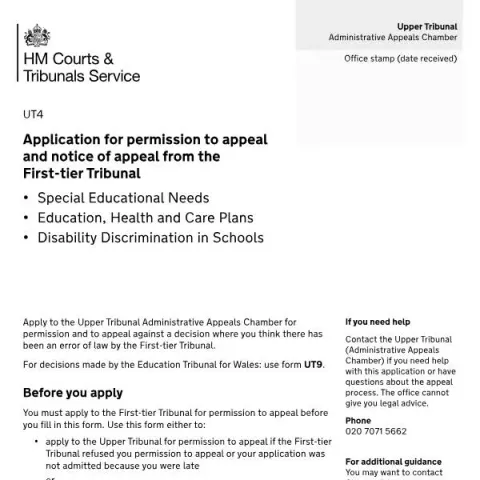
Form UT4 is an official document used in the UK legal system to request permission to appeal a decision made by the First-tier Tribunal (Special Educational Needs and Disability). It also serves as a notice of appeal should permission be granted. The form is specifically designed for cases concerning:
- Decisions related to Special Educational Needs and Disabilities
- Education, Health and Care Plans (EHCPs)
- Disability Discrimination in Schools
Appeals can be made when an individual believes that the Tribunal has made an error of law in its decision. The process involves two stages:
- Applying for permission to appeal if the Tribunal initially refused permission or if the application was late.
- Filing the appeal if permission has been granted.
Who Should Use Form UT4?
This form is intended for:
- Parents or individuals with parental responsibility who wish to challenge a Tribunal decision affecting a child or young person.
- Local authorities or responsible bodies seeking to appeal a decision that impacts their responsibilities.
- Young persons acting on their own behalf, provided they have the capacity to do so.
Before submitting the appeal, applicants must have applied to the First-tier Tribunal for permission to appeal. If permission is refused or not granted within the required timeframe, the applicant can then proceed with the UT4 form to seek permission from the Upper Tribunal.
Key Details Required for the Application
The form gathers essential information, including:
- The reference number of the original Tribunal decision.
- The date of the decision.
- The location of the Tribunal hearing.
- Details of the appellant, whether acting as a parent, responsible person, or young person.
- Information about the child or young person involved, such as name, date of birth, and contact details.
- Contact details of the parent(s) or responsible person(s).
- If applicable, details of any other person acting on behalf of the young person.
Important Considerations and Deadlines
Applicants must ensure that the application reaches the Upper Tribunal within one calendar month of receiving the decision from the First-tier Tribunal. If additional time is necessary, this can be requested in the relevant section of the form.
It is crucial to complete the form accurately and in capital letters if hand-written. Supporting documents or additional sheets should include the appellant’s name and the reference number of the original decision.
Fill in your form directly online
No printing: type your details into the boxes of the official form, tick, then download the PDF ready to send.
- 1Type into the form boxes
- 2Tick in one click
- 3Save and download the PDF
Seeking Assistance and Legal Advice
While the office handling the appeal cannot provide legal advice, individuals are encouraged to seek support from organizations such as Citizens Advice or legal aid services. These resources can help determine eligibility for free legal assistance and guide applicants through the process.
References and Contact Information
For further guidance, applicants can contact the Upper Tribunal (Administrative Appeals Chamber) directly by phone. The official website also offers detailed information on the appeal process and eligibility criteria.
Understanding the formal procedures involved in appealing SEN and disability decisions ensures that individuals can effectively challenge decisions they believe are incorrect or unfair, safeguarding their rights and those of children and young persons involved.