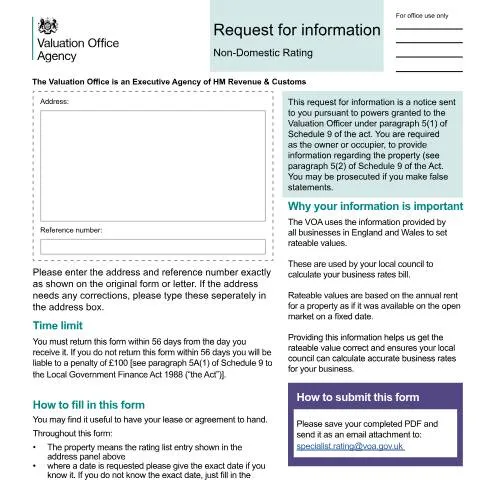
Navigating the VO 6012: Your Essential Guide to Rental Information Requests
As a business owner, particularly in the hospitality sector—such as pubs, licensed restaurants, and wine bars—understanding the nuances of the VO 6012 request for rental information is crucial. This form, issued by the Valuation Office Agency (VOA), plays an integral role in determining your business rates obligations. It is not just a piece of paper; it can affect your financial landscape significantly.
The Stakeholders: Who Is Affected by the VO 6012?
Understanding who needs to complete the VO 6012 form starts with identifying the key stakeholders involved:
- Property Owners: If you own the premises, you are required to submit this form to provide information regarding how the property is utilized.
- Occupiers: Tenants who run a business from the property are equally obliged to fill out the form, especially if they have a lease or any form of agreement with the landlord.
- Landlords: While they are not the primary submitters, landlords must ensure that their tenants are aware of their responsibilities concerning this form.
Let's break down specific scenarios:
Case 1: A Pub Owner
If you own a pub operating under a franchise agreement, you will need to provide detailed information about catering receipts and other operational sources to establish a fair rateable value.
Case 2: A Tenant in a Licensed Restaurant
As a tenant, your obligation is to report the financial details of your business accurately. Failing to do so could result in penalties.
Setting the Scene: How the VO 6012 Intersects with Business Rates
The VO 6012 is designed to gather essential data that the Valuation Office uses to set rateable values for properties. These values directly influence the business rates calculated by local councils.
Rateable values are determined based on the annual rent of a property assuming it was available on the open market at a specific date. This alignment is essential for ensuring local councils can levy appropriate business rates. Thus, the information you provide in the VO 6012 directly impacts your financial obligations as a business owner.
Key Differences from Similar Forms
It's important to distinguish the VO 6012 from other forms related to business rates. For example:
| Form | Purpose | Who Submits |
|---|---|---|
| VO 6012 | Request for rental information for pubs and restaurants | Owners or occupiers |
| SA100 | Income tax self-assessment for individuals | Individuals |
| VR1 | Application for rating list alterations | Landlords |
Each of these forms serves a different purpose and involves distinct processes, so it is paramount to understand which form applies to your situation.
Understanding Your Obligations: Completing the VO 6012
The completion of the VO 6012 is not merely administrative; it carries significant implications for your business. You are expected to provide accurate and comprehensive information, including:
- Total receipts from catering and accommodation, excluding VAT
- Details of any payments made to landlords or other parties
- Historical financial data that reflects the operation of your business over the last three years
Completing the form requires diligence. It is suggested to have your lease or rental agreement on hand to ensure you provide accurate information regarding:
1. Catering Operations
Indicate whether total receipts from all catering sources are declared in your main business accounts.
2. Letting Accommodation
Report your total renting income from accommodations, ensuring all figures align with your financial statements.
3. Other Activities
Be transparent about any additional income sources that may not be captured in your primary business accounts.
Timing Is Everything: Submission Deadlines
Once you receive the VO 6012 request, you are obligated to return the completed form within 56 days. Failure to comply with this deadline may result in a penalty of £100, as stipulated under paragraph 5A(1) of Schedule 9 of the Local Government Finance Act 1988.
Here is an actionable timeline:
- Receive the VO 6012 - Day 0
- Complete the required sections within two weeks
- Review all submitted data for accuracy
- Submit the form by Day 56 to avoid penalties
Submission Channels: Navigating Your Options
The method of submission for the VO 6012 can vary based on your preference and circumstances:
- Online Submission: For a faster and more efficient process, you can complete and submit the form electronically as a PDF via email to [email protected].
- Paper Submission: While less common, you can opt to send a printed version of the completed form via postal service. Ensure you retain proof of postage for your records.
- In-Person Submission: If desired, you may visit your local VOA office to submit the form directly, although this method is less utilized.
Each submission method has its pros and cons, but online submission is often the most efficient.
From Submission to Review: The Administrative Process
Once your form is submitted, it undergoes an administrative review process:
- Initial Assessment: The VOA evaluates the information to ascertain its completeness and accuracy. They may reach out for clarification if necessary.
- Rateable Value Determination: Based on the data provided, the VOA will set or adjust the rateable value of your property.
- Notification: You will receive a formal notification regarding the outcome, along with any changes to your business rates.
It is essential to track this process and ensure your contact details are up to date, as any missed communications can lead to complications down the line.
Implications of Non-Compliance: The Consequences of an Omitted Submission
Failure to submit the VO 6012 on time can lead to serious repercussions. The £100 penalty is just the beginning:
- Legal Consequences: There is a possibility of prosecution for providing false information. This highlights the importance of accuracy when filling out the form.
- Business Rates Adjustments: An inaccurate or missing submission may result in an incorrect rateable value, affecting your business rates and financial planning.
- Trust Issues: Continuing discrepancies can lead to a loss of trust with local councils and potential impacts on future negotiations.
Thus, adherence to the VO 6012 requirements is not merely a bureaucratic obligation but a crucial step in maintaining a healthy business operation.
Final Thoughts: The Importance of Being Proactive
In conclusion, the VO 6012 request for rental information is a pivotal element in the administration of business rates for pubs, licensed restaurants, and wine bars. Understanding the implications, requirements, and processes associated with this form empowers you to manage your obligations more effectively.
By staying informed and proactive, you can ensure that your submissions are timely and accurate, allowing your business to thrive without the burden of bureaucratic complications.
Understanding the VO 6012 Form: Purpose and Relevance
The VO 6012 form serves as a pivotal document in the context of rental information requests for businesses such as pubs, licensed restaurants, and wine bars in the UK. This form is primarily utilized by local councils and the Valuation Office Agency (VOA) to gather essential information about the rental values of properties that are subject to business rates. Understanding the purpose of this form is critical for property owners, especially those operating within the hospitality sector.
When a local authority requires detailed information about rental agreements, they may issue a VO 6012 request. This request can elicit information regarding current rental agreements, the terms of these agreements, and any relevant lease conditions. This data is instrumental in establishing an accurate rateable value for the property in question, which ultimately affects the business rates that the owner will need to pay.
One key aspect to consider is that landlords are legally obligated to respond to a VO 6012 request within 21 days of receipt. Failure to provide the required information can result in penalties and complications regarding business rates assessments. Thus, it’s not merely a bureaucratic process but a crucial one that demands timely compliance to avoid adverse financial implications.
Implications of Non-Compliance with VO 6012 Requests
Non-compliance with a VO 6012 request can lead to various consequences, highlighting the significance of adhering to these requests. If a landlord fails to provide the necessary information within the stipulated 21-day time frame, local authorities may estimate the rateable value of the property based on their own investigations. This estimated value can often be higher than the actual market rent, resulting in inflated business rates and unnecessary financial strain on the business.
Moreover, the Valuation Office Agency has the authority to use the information from such estimates to reassess business rates for the entire property portfolio of the landlord, potentially leading to broader financial repercussions. Crucially, landlords should be aware that the refusal to comply or deliberate delay in response can also lead to increased scrutiny from local councils and the possibility of additional investigations into business practices.
Another important aspect to note is that non-compliance can affect future applications for reliefs or exemptions from business rates. For example, if a business is seeking Small Business Rate Relief, a history of non-compliance with VO 6012 requests may raise red flags during the assessment process. Therefore, it is advisable for landlords to maintain accurate records and respond promptly to ensure that their business remains in good standing with local authorities.
How to Prepare for a VO 6012 Request
Preparation is key when anticipating a VO 6012 request. By taking proactive steps, landlords can ensure a swift and comprehensive response, thereby mitigating the risk of non-compliance. Here are a few practical tips to help business owners prepare:
- Maintain Accurate Records: Keep an up-to-date file of all rental agreements associated with the property. This should include the terms of the lease, rental amounts, and any variations made over time. It’s beneficial to have copies readily accessible to facilitate a quicker response to any VO 6012 requests.
- Understand Market Trends: Familiarize yourself with the current market conditions in your locality. Having knowledge of comparable properties and their rental values can help form a strong basis for the information provided in response to the request.
- Consult Legal Guidance: If there are uncertainties regarding the information requested or how to interpret the form, seeking advice from a legal adviser specializing in property law can be invaluable. They can provide clarity on the obligations and any potential implications of the information provided.
- Timely Communication: If you anticipate challenges in meeting the 21-day deadline, communicate proactively with the Valuation Office Agency. They may grant extensions in certain circumstances, particularly if you provide valid reasons.
- Document Everything: Keep detailed records of all communications regarding the VO 6012 request and any responses submitted. This documentation can prove essential should any disputes arise in the future concerning the rateable value or compliance.
By implementing these strategies, landlords of pubs, licensed restaurants, and wine bars can not only ensure compliance with the VO 6012 request but also gain a better understanding of their business's financial landscape in relation to business rates.