Understanding the Urgency of Measles Testing
When a medical professional identifies a potential case of measles, the urgency of confirming this diagnosis cannot be overstated. The UK Health Security Agency (UKHSA) plays a critical role in the management of infectious diseases in the UK. Measles, despite its vaccination status among children, can still occur and may sometimes be confused with other illnesses. In this context, the document titled Measles Urgent Testing: Forms and Instructions serves as a crucial guideline for healthcare providers, parents, and guardians.
The Importance of Prompt Testing
Immediate testing for measles is vital for several reasons:
- Preventing Outbreaks: Quick identification of measles cases allows public health officials to implement measures to prevent further spread.
- Appropriate Medical Care: Timely diagnosis ensures that affected individuals receive the right treatment and care.
- Informed Decision-Making: Accurate test results can guide parents and healthcare professionals in making informed decisions regarding vaccinations and public health measures.
Key Concepts for Effective Use of the Document
This guidance document provides essential information regarding the testing process and the context surrounding measles testing:
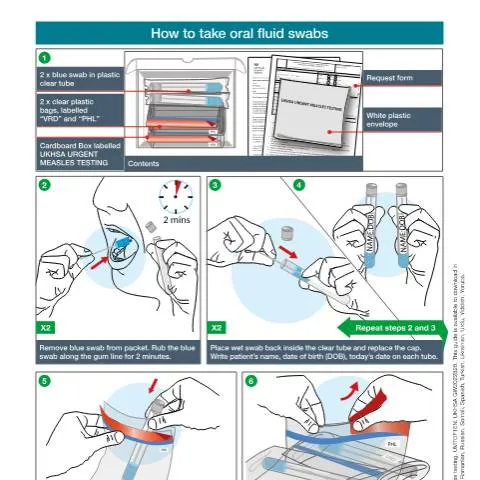
- Understanding Sample Collection: The document explains how to collect samples using a sponge swab, which is painless and suitable for all age groups.
- Two Sample Requirements: It specifies that two identical samples should be taken; one for local testing and another for national reference.
- Patient Autonomy: Importantly, it clarifies that choosing not to participate in testing will not impact the care received from healthcare providers.
Contents of the Document and Its Application
The Measles Urgent Testing: Forms and Instructions document includes several components that guide the testing process:
- Introduction & Purpose: It outlines the situation leading to the need for urgent testing after notification from a healthcare provider.
- Instructions for Sample Collection: This section describes the procedure for taking saliva samples, which involves brushing the gums and teeth with a sponge swab.
- Safety and Hygiene Protocols: Emphasis is placed on hygiene during sample collection to prevent contamination.
- Follow-up Procedures: Guidance on what to expect in terms of result reporting and further steps for healthcare professionals.
Step-by-Step Guide to Using the Document Effectively
To ensure that the testing is conducted efficiently, it is important to follow the document’s instructions methodically. Here’s a clearer breakdown:
1. Sample Collection
Begin by preparing the collection area. Follow these steps:
- Open the swab package carefully to avoid contamination.
- Use the swab to collect saliva from the gums and teeth.
- Store the swab in the provided clear tube immediately after collection.
2. Packaging the Samples
Proper packaging is crucial to ensure that samples are preserved during transportation:
- Label the tubes clearly with patient information.
- Seal the tubes in their respective self-adhesive bags.
- Place all materials back into the cardboard box provided.
3. Courier Instructions
Arrange for immediate pick-up by a courier to reduce delays in testing:
- Ensure the box is sealed and ready for transport.
- Confirm that all required documents are included in the package.
Common Misinterpretations and Clarifications
While the document is straightforward, several points often lead to confusion:
- Sample Collection Method: Some parents might worry about the procedure being painful. It is essential to reassure them that the sponge swab method is designed to be gentle.
- Two Samples Required: Parents may question why two samples are needed. The first is for local testing, while the second is sent to a national laboratory for reference.
- Voluntary Testing: Clarifying that participation in testing is not obligatory can alleviate pressure on families.
Connection with Other Public Health Guidelines
This document should not be viewed in isolation. It connects to broader public health initiatives and documentation:
- Vaccination Information: Parents are encouraged to review vaccination schedules to understand the significance of MMR (Measles, Mumps, Rubella) vaccinations.
- Public Health Alerts: Additional guidance materials often accompany this document, especially during outbreaks or increased incidence rates.
Understanding these connections fosters a comprehensive approach to public health management and reinforces the importance of vaccination.
Frequently Encountered Questions in Context
When navigating the procedures surrounding measles testing, several pertinent questions arise:
- What if the sample is lost or damaged? If this happens, it is recommended to contact the health protection team immediately for alternative arrangements.
- How long does it take to receive the results? While the document states results should be available within several weeks, variations may occur based on lab capacity.
- Should additional tests be considered? Healthcare professionals will evaluate the need for further tests based on initial results and patient symptoms.
Real-World Implications of Timely Testing
The importance of timely testing stretches beyond individual cases; it has significant implications for community health:
- Community Protection: Quick identification and isolation of cases help protect unvaccinated individuals, especially infants and those with compromised immune systems.
- Policy Development: Data from testing contribute to evidence-based public health policies, enhancing future preparedness for outbreaks.
Resources for Further Information
For more detailed information, the UKHSA provides various resources that can be accessed online:
- MMR Vaccination Guidelines: Comprehensive information regarding vaccinations and guidelines for parents.
- Public Health Data: Up-to-date statistics and analysis on infectious diseases, including measles.
Contacting the Health Protection Team
For any inquiries about the measles testing process or health concerns, it is crucial to reach out to the Health Protection Team. They can provide specific guidance tailored to individual situations and are available during business hours at their designated contact number.
Understanding Measles Testing: When and Why It’s Necessary
Measles testing is crucial for early detection and effective management of the disease. If you suspect you have been exposed to the measles virus, or exhibit symptoms such as high fever, cough, runny nose, and distinctive red rash, it’s imperative to seek medical advice promptly. The UK Health Security Agency recommends testing especially in certain situations:
- Recent Travel: If you have traveled to regions with known measles outbreaks, testing is highly advised.
- Exposure in the Community: If you have been in close contact with someone diagnosed with measles, testing is necessary, especially for those who are unvaccinated.
- Immunocompromised Individuals: Those with weakened immune systems should get tested if they show any symptoms or have been exposed, due to higher risks of complications.
It’s important to note that early detection of measles can prevent further transmission, particularly in community settings like schools or healthcare facilities. If a test is required, individuals should be aware of the documentation needed for testing, which may include personal identification and vaccination records.
Navigating the Measles Testing Forms: A Step-by-Step Guide
The process of obtaining a measles test can seem daunting, particularly with the forms involved. Here’s a detailed guide to help you navigate through the necessary documentation:
- Contact Your GP: Start by calling your general practitioner (GP) or local health service. Some areas may have specific clinics designated for measles testing.
- Complete the Initial Assessment: You'll typically need to fill out an assessment form, detailing any symptoms, exposure history, and vaccination status. This form may often be referred to as the Measles Assessment Form (MAF).
- Provide Identification: You may be required to present personal identification, such as your National Insurance number or NHS number, alongside your vaccination history.
- Await Instructions: After the initial assessment, healthcare providers may give you instructions on how to proceed, depending on your symptoms and test eligibility.
In some cases, a blood test for measles antibodies may be needed to confirm immunity or infection. The results will typically take a few days, and you'll be advised on the next steps based on those results.
Post-Testing: Understanding Your Results and Next Steps
After undergoing testing for measles, receiving your results is a critical step in managing your health and potential risk to others. Here’s what to expect and how to respond based on the outcomes:
- Positive Test Result: If your test indicates that you have contracted measles, it’s crucial to follow public health advice. You will be advised to self-isolate for at least four days after the rash appears to prevent spreading the virus to others. You should also inform anyone you’ve been in close contact with.
- Negative Test Result: If the test shows no measles infection, but you are experiencing symptoms, further evaluation may be necessary, as your symptoms could indicate another illness.
- Indeterminate Results: In rare cases, the test results might be inconclusive. You may be asked to repeat the test or undergo additional assessments. Stay in contact with your healthcare provider for guidance.
Regardless of the outcome, maintaining good hygiene practices, such as regular handwashing and avoiding close contact with vulnerable individuals, remains essential in preventing the spread of infections.