When Laboratory Confirmation Becomes Essential: Understanding Pertussis Diagnostic Pathways
The UK Health Security Agency's pertussis oral fluid laboratory request form represents a critical diagnostic tool in managing suspected whooping cough cases across England. Unlike routine GP consultations where clinical assessment might suffice, certain scenarios demand laboratory confirmation to guide public health responses, protect vulnerable populations, and ensure appropriate treatment protocols.
Healthcare professionals typically deploy this oral fluid testing approach when dealing with outbreak investigations in schools or nurseries, cases involving pregnant women or infants under six months, or when clinical presentation remains ambiguous despite characteristic symptoms. The oral fluid method offers distinct advantages over traditional nasopharyngeal swabs, particularly for community-based surveillance and situations where invasive sampling proves challenging.
The accompanying instructions guide both healthcare workers and patients through a standardised collection process designed to maximise diagnostic yield whilst minimising contamination risks. This non-invasive approach has revolutionised pertussis surveillance, enabling broader testing coverage and improved case detection rates across diverse population groups.
Decoding the Multi-Component Test Kit Architecture
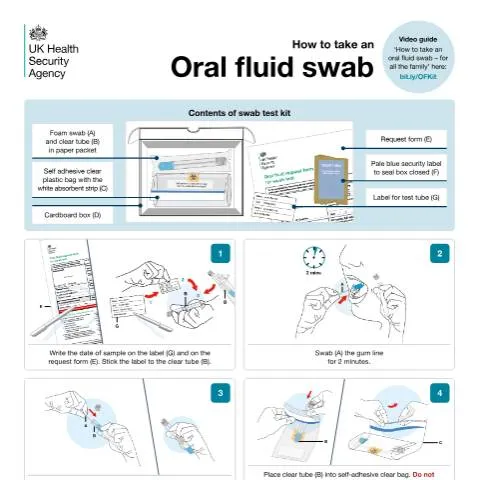
The pertussis oral fluid collection kit comprises seven distinct components, each serving a specific function in the diagnostic chain. Understanding this architecture proves essential for proper specimen handling and laboratory processing.
| Component | Identifier | Primary Function | Critical Requirements |
|---|---|---|---|
| Foam swab and tube | A & B | Sample collection | Two-minute gumline contact |
| Protective bag | C | Containment | Maintain absorbent strip |
| Cardboard shipping box | D | Transport protection | Preserve barcode visibility |
| Request form | E | Patient identification | Complete demographic data |
| Security seal | F | Tamper evidence | Avoid covering postal labels |
| Specimen label | G | Sample tracking | Date synchronisation |
The foam swab design specifically targets Bordetella pertussis antigens present in oral secretions, whilst the protective packaging system ensures specimen integrity during postal transit. The white absorbent strip within the clear bag serves a dual purpose: preventing leakage whilst maintaining optimal moisture levels for laboratory analysis.
Component Interdependencies and Quality Assurance
Each kit component works synergistically to maintain specimen viability from collection through laboratory processing. The clear tube's design prevents cross-contamination whilst allowing visual inspection of sample adequacy. The cardboard box dimensions accommodate Royal Mail standard processing whilst protecting against physical damage during sorting and delivery.
Security labelling requirements reflect both regulatory compliance and practical logistics. The pale blue seal provides tamper evidence without compromising automated postal sorting systems, which rely on barcode scanning for efficient processing. Healthcare providers must balance security requirements with operational efficiency when applying these seals.
Navigating the Two-Minute Collection Protocol
The prescribed two-minute gumline swabbing protocol reflects extensive research into optimal antigen recovery from oral fluid specimens. This duration represents the minimum contact time required to achieve adequate sensitivity for Bordetella pertussis detection whilst remaining practical for patient compliance.
Proper technique involves systematic coverage of the gumline rather than random swabbing motions. The foam swab should maintain gentle but consistent pressure against the junction between teeth and gums, rotating slowly to maximise surface contact. Patients often underestimate the required duration, making timing guidance essential for collection success.
Critical collection considerations include avoiding food or drink consumption for thirty minutes prior to sampling, ensuring the patient hasn't recently brushed their teeth, and maintaining swab integrity throughout the collection period. The foam material's absorbent properties continue working beyond active swabbing, making immediate tube replacement essential to prevent sample loss.
Addressing Collection Challenges in Different Patient Groups
Paediatric patients require modified approaches whilst maintaining protocol integrity. Parents or caregivers often need to assist with collection, requiring clear instruction on proper technique and timing. The foam swab's soft texture generally proves well-tolerated even in young children, though initial resistance to the two-minute duration commonly occurs.
Elderly patients or those with mobility limitations may struggle with manual dexterity requirements. Healthcare providers should consider assisted collection whilst ensuring the patient performs the actual swabbing motion when possible. This maintains sample integrity whilst accommodating physical limitations that might otherwise prevent successful collection.
Laboratory Processing Pathways and Turnaround Expectations
UK Health Security Agency laboratories process pertussis oral fluid specimens using established protocols designed to detect both bacterial DNA and specific antibodies. The dual-target approach increases diagnostic sensitivity compared to culture-based methods whilst providing results compatible with clinical decision-making timelines.
Specimen processing typically commences within 24-48 hours of laboratory receipt, though turnaround times vary based on testing volume and complexity. PCR-based detection usually provides results within 2-3 working days, whilst serological analysis may require additional time depending on antibody titre requirements.
The oral fluid medium offers distinct advantages over traditional respiratory specimens. Unlike nasopharyngeal swabs, which require immediate processing or specialised transport media, oral fluid specimens remain stable for extended periods when properly packaged. This stability enables postal transport without compromising diagnostic accuracy.
Quality Control Measures and Result Interpretation
Laboratory quality assurance encompasses both technical validation and clinical correlation. Each batch undergoes positive and negative control testing to ensure reagent functionality and prevent false results. Specimen adequacy assessment occurs prior to testing, with inadequate samples requiring recollection rather than proceeding to analysis.
Result interpretation requires understanding the relationship between collection timing and disease progression. Early infection may yield negative results despite active symptoms, whilst recent vaccination can influence serological findings. Healthcare providers receive guidance on interpreting results within appropriate clinical contexts.
Integration with Public Health Surveillance Networks
The pertussis oral fluid testing system forms part of broader UK Health Security Agency surveillance initiatives designed to monitor disease patterns and identify outbreak situations. Individual test results contribute to national databases that inform public health policy and intervention strategies.
Outbreak investigation protocols often trigger multiple simultaneous collections from exposed individuals, creating logistical challenges that the oral fluid system addresses through simplified collection and transport procedures. Unlike clinic-based sampling, this approach enables widespread community testing without overwhelming healthcare infrastructure.
Data linkage between laboratory results and epidemiological investigations occurs through the request form information, making accurate completion essential for effective surveillance. Patient demographic data, symptom onset dates, and contact tracing information all contribute to outbreak characterisation and control measure implementation.
Reporting Timelines and Public Health Response
Positive pertussis results trigger automatic notification protocols within the UK Health Security Agency network. Local health protection teams receive immediate alerts enabling rapid contact tracing and outbreak investigation initiation. This rapid response capability depends on accurate specimen labelling and complete request form information.
Healthcare providers receive results through established communication channels, typically including both preliminary and confirmed findings where applicable. The reporting format includes interpretation guidance and recommendations for clinical management, reflecting the integration between laboratory diagnostics and clinical care pathways.
Postal System Integration and Transport Logistics
The kit's design specifically accommodates Royal Mail processing requirements whilst maintaining specimen integrity throughout the postal journey. The cardboard box dimensions conform to standard letter sorting equipment, whilst the protective packaging prevents damage during automated handling.
Barcode preservation requirements reflect the postal service's reliance on automated sorting systems. Healthcare providers must ensure security seals don't obscure these codes, as covered barcodes can result in delayed or misdirected specimens. The pale blue security label's design specifically addresses this requirement through careful adhesive placement guidance.
Transport timeline considerations include Royal Mail collection schedules and weekend processing limitations. Specimens collected late in the week may not reach laboratories until the following Monday, potentially extending overall turnaround times. Healthcare providers should factor these logistics into patient communication and clinical management decisions.
Addressing Transport-Related Complications
Occasionally, specimens may be delayed or damaged during postal transport. The protective packaging system minimises these risks, but healthcare providers should understand replacement procedures for compromised samples. The UK Health Security Agency maintains protocols for addressing transport failures whilst minimising diagnostic delays.
International postal regulations may affect specimens collected from patients travelling abroad or in border regions. Healthcare providers should verify postal service capabilities before deploying oral fluid collection kits in non-standard geographic situations.
Video Resources and Digital Support Integration
The accompanying video guide accessible through the shortened URL provides visual demonstration of proper collection techniques, addressing common procedural questions that written instructions alone cannot fully clarify. This multimedia approach acknowledges different learning preferences whilst ensuring consistent technique across diverse user groups.
Digital resources complement rather than replace written instructions, providing additional support for complex procedures or challenging patient scenarios. The video content specifically addresses timing requirements, proper swabbing technique, and packaging procedures that benefit from visual demonstration.
Healthcare providers often utilise these resources for patient education prior to collection, improving success rates and reducing the need for repeat sampling. The multimedia approach proves particularly valuable for patients with limited literacy or those preferring visual learning methods.
Laboratory Processing Timeline and Result Interpretation
Understanding the laboratory processing timeline is crucial for healthcare providers managing suspected pertussis cases. Once your oral fluid sample reaches the reference laboratory, the testing process typically follows a structured pathway that can vary depending on the laboratory's current workload and the urgency classification you've assigned.
Standard processing times for pertussis oral fluid testing generally range from 5 to 10 working days from receipt of the sample. However, samples marked as urgent—particularly those from vulnerable populations such as infants under 6 months, pregnant women, or immunocompromised patients—may receive priority processing with results available within 2-3 working days. The UK Health Security Agency coordinates with regional laboratories to ensure that high-risk cases receive expedited attention.
The laboratory will typically perform PCR (Polymerase Chain Reaction) testing on oral fluid samples, which detects Bordetella pertussis DNA. This method offers high sensitivity and specificity, though it's important to note that PCR can remain positive for several weeks after symptom onset, even following appropriate antibiotic treatment. Some laboratories may also conduct serology testing if the clinical presentation and timing suggest it would be more appropriate than PCR.
Result interpretation requires careful consideration of the clinical context. A positive PCR result confirms active or recent Bordetella pertussis infection, but the timing of sample collection relative to symptom onset affects the reliability. Samples collected within the first three weeks of cough onset generally yield the highest detection rates. After this period, PCR sensitivity decreases significantly, and alternative testing methods such as serology may be more appropriate.
Negative results require careful interpretation, particularly if collected late in the illness course. A negative PCR doesn't definitively rule out pertussis, especially if the sample was collected more than three weeks after symptom onset, or if the patient has received antibiotics prior to sampling. In such cases, clinical judgment and epidemiological factors become paramount in management decisions.
The laboratory report will typically include not only the test result but also interpretive comments relevant to the timing of sample collection and any limitations. Some reports may include quantitative PCR values, though these aren't routinely used for clinical decision-making. Healthcare providers should always correlate laboratory results with clinical presentation and epidemiological context.
Special Populations and Modified Protocols
Certain patient populations require modified approaches to oral fluid collection and may necessitate additional considerations when completing the laboratory request form. These special circumstances often involve enhanced urgency classifications and may require consultation with specialist services or public health teams.
Pregnant women represent a particularly important group, as pertussis during pregnancy can lead to severe complications in newborns. When submitting samples from pregnant patients, ensure you clearly indicate the gestational stage and any relevant obstetric history on the request form. The timing of infection relative to delivery is crucial for determining infant risk and potential need for enhanced monitoring or prophylactic treatment. Samples from pregnant women typically receive priority processing, and results may trigger immediate public health action including contact tracing and household prophylaxis recommendations.
Infants under 12 months, particularly those under 6 months, face the highest risk of severe pertussis complications including apnoea, pneumonia, and death. For this population, oral fluid collection may be more challenging, and alternative sample types such as nasopharyngeal aspirates might be considered alongside oral fluid testing. When completing request forms for infants, include detailed vaccination history, including exact dates of any pertussis-containing vaccines received. This information helps laboratories and clinicians interpret results in the context of potential vaccine-modified disease.
Immunocompromised patients, including those receiving chemotherapy, organ transplant recipients, or individuals with primary immunodeficiencies, may present with atypical disease courses and prolonged bacterial shedding. For these patients, indicate the specific immunocompromising condition and any relevant medications on the request form. Laboratory interpretation may need to account for potentially prolonged PCR positivity and modified immune responses.
Healthcare workers suspected of having pertussis require prompt investigation due to the risk of nosocomial transmission. When submitting samples from healthcare personnel, include information about their clinical area, patient contact activities, and any potential exposure incidents. Occupational health departments typically coordinate these investigations, and positive results may trigger extensive contact tracing within healthcare facilities.
Care home residents and staff represent another high-risk group where rapid investigation and results are essential. Outbreaks in residential care settings can spread rapidly among vulnerable elderly residents. Request forms should indicate the care setting and any known outbreak context, as this may influence both laboratory processing priorities and public health response measures.
Quality Assurance and Troubleshooting Common Issues
Maintaining high-quality oral fluid sampling and accurate laboratory request completion requires attention to several critical quality assurance elements. Understanding common pitfalls and how to avoid them ensures reliable results and prevents unnecessary delays in diagnosis and patient management.
Sample quality issues represent the most frequent cause of testing delays or invalid results. Insufficient sample volume is a common problem, particularly when collectors are unfamiliar with the oral fluid collection device requirements. Each collection device requires a minimum volume threshold to ensure adequate testing material, and submitting samples below this threshold may result in laboratory rejection or inconclusive results. Always verify that the collection device indicates sufficient sample volume before sealing and dispatching.
Contamination concerns can arise from improper collection technique or storage conditions. Blood contamination from aggressive collection or recent dental procedures can interfere with PCR testing. If visible blood contamination occurs during collection, note this on the request form and consider whether re-collection might be appropriate, depending on clinical urgency. Similarly, food particles or other oral debris can affect sample quality, which is why the recommended pre-collection fasting period should be observed whenever possible.
Temperature excursions during transport represent another significant quality risk. Oral fluid samples for pertussis testing typically require refrigerated transport and should not be frozen unless specifically indicated by laboratory protocols. Extended exposure to ambient temperatures, particularly in warm weather, can degrade bacterial DNA and reduce PCR sensitivity. If temperature excursions are suspected during transport, document this on the request form to help laboratories interpret potentially negative results appropriately.
Incomplete or inaccurate request form completion frequently causes processing delays and may compromise result interpretation. Common errors include missing patient identifiers, incorrect or incomplete clinical information, and failure to indicate urgency appropriately. Double-check that all mandatory fields are completed legibly, and ensure that patient identifiers match exactly between the request form and sample labels.
Timing errors in sample collection relative to symptom onset can significantly impact test sensitivity and result interpretation. If there's uncertainty about symptom onset timing, document this clearly on the request form rather than guessing. Laboratories can provide more appropriate interpretive guidance when they understand the uncertainty around timing parameters.
Communication breakdowns between clinical teams and laboratories can lead to inappropriate test selection or missed urgent results. Ensure that urgent samples are clearly marked and that appropriate contact details for result communication are provided. If results are needed outside normal laboratory hours, verify what arrangements exist for urgent reporting and ensure these are properly documented on the request form.
Electronic versus paper-based request systems each have potential quality issues. Electronic systems may have mandatory field validation that prevents submission of incomplete forms, but technical failures can cause delays. Paper-based systems offer more flexibility but rely heavily on legible handwriting and complete manual data entry. Regardless of the system used, maintain backup documentation and contact information to resolve any processing issues that arise.
Regular audit of your sample collection and request submission processes can identify recurring issues and opportunities for improvement. Many laboratories provide feedback on common problems encountered with submissions from specific clinical areas, and this information can guide targeted training and process improvements to enhance overall diagnostic quality.