When Laboratory Diagnostics Meet Specialist Expertise: The UKHSA Mycology Referral Pathway
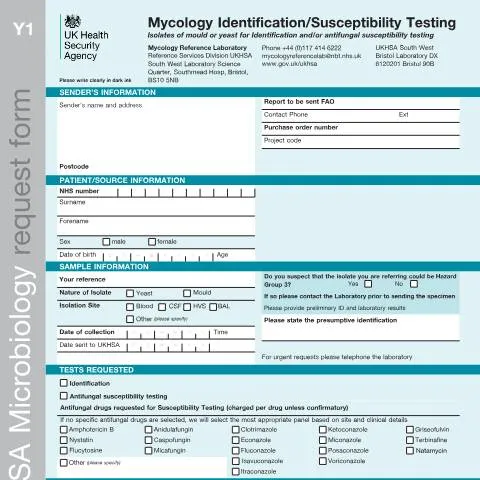
In the complex world of fungal infections, standard laboratory testing often reaches its limits when confronted with unusual yeasts or moulds that resist conventional identification methods. Hospital laboratories across the UK regularly encounter Candida species that don't respond to typical antifungal treatments, or mysterious filamentous fungi isolated from immunocompromised patients that defy standard diagnostic protocols. This is precisely when the Mycology identification and susceptibility testing request form becomes an essential bridge between frontline clinical laboratories and the UK Health Security Agency's specialist mycology expertise.
The form represents far more than a simple referral mechanism—it's the gateway to accessing some of the most sophisticated fungal diagnostic capabilities available in the UK. When a district hospital laboratory isolates what appears to be an atypical Aspergillus species from a lung transplant patient, or when a dermatology clinic encounters a dermatophyte that shows unexpected resistance patterns, this Y1 form initiates a process that can fundamentally alter patient management decisions.
The Clinical Context: Why Standard Laboratory Testing Falls Short
Modern clinical microbiology laboratories are well-equipped to handle routine fungal isolates—the common Candida albicans bloodstream infections, typical Aspergillus fumigatus respiratory isolates, or standard dermatophyte infections. However, the landscape of medical mycology has become increasingly complex due to several converging factors that push routine diagnostics beyond their capabilities.
Emerging resistant species pose particular challenges. The rise of Candida auris, with its propensity for healthcare-associated outbreaks and multidrug resistance, exemplifies how new threats can overwhelm standard identification systems. Similarly, environmental moulds that rarely caused human disease are now being recognised as significant pathogens in immunocompromised populations, yet many lack established identification criteria or susceptibility breakpoints.
The clinical implications extend beyond academic interest. A misidentified Candida species might lead to inappropriate antifungal therapy, potentially contributing to treatment failure or unnecessary toxicity. An unrecognised Mucorales infection could prove fatal if not promptly identified and treated with appropriate agents like amphotericin B rather than azole antifungals.
Specimen Types and Clinical Scenarios
The form accommodates diverse specimen types, each carrying specific diagnostic challenges. Blood culture isolates represent the most urgent category—systemic fungal infections carry high mortality rates, and rapid, accurate identification directly impacts survival outcomes. The form's provision for urgent telephone contact reflects this clinical reality.
Cerebrospinal fluid isolates constitute another high-stakes category. Central nervous system mycoses are relatively uncommon but devastating when they occur. Cryptococcal meningitis, though more readily identified, sometimes presents atypical strains requiring specialist confirmation, whilst other yeasts causing CNS infection may need expert taxonomic assessment.
Respiratory specimens, including bronchoalveolar lavage samples, frequently yield environmental moulds that challenge standard identification algorithms. Distinguishing between colonisation and infection becomes crucial, particularly when dealing with species like Scedosporium or Lomentospora that may require specific therapeutic approaches.
Decoding the Form's Architecture: From Patient Data to Specialist Request
The Y1 form's structure reflects the systematic approach required for expert mycological assessment. Each section builds upon the previous, creating a comprehensive clinical picture that enables the UKHSA reference laboratory to prioritise requests and select appropriate testing methodologies.
Patient Demographics and Clinical Context
The opening sections capture essential patient identifiers, with the NHS number serving as the primary key for tracking and reporting. The inclusion of age proves particularly relevant in mycology, where certain infections show distinct age-related patterns. Neonatal Candida infections, for instance, may involve species rarely seen in adult populations, whilst elderly patients might harbour yeasts with altered susceptibility profiles due to previous antifungal exposures.
The clinical details section, though appearing brief, serves a critical function. Information about immunosuppression status, recent surgery, or underlying conditions like diabetes can significantly influence both identification approaches and susceptibility testing panels. A patient with acute leukaemia harbouring a Candida isolate warrants different consideration than the same organism isolated from a healthy individual's superficial site.
Travel History and Epidemiological Factors
The recent foreign travel inquiry addresses the globalisation of fungal pathogens. Histoplasma capsulatum acquired during travel to endemic areas might present months after exposure, whilst Talaromyces marneffei infections in returning travellers from Southeast Asia require specialist identification techniques unavailable in most UK laboratories.
The form's attention to travel history also reflects emerging concerns about imported resistance patterns. Azole-resistant Aspergillus fumigatus strains, linked to agricultural fungicide use in certain regions, now appear in patients with travel histories to affected areas.
Laboratory Logistics: Specimen Handling and Referral Timing
The temporal aspects embedded within the form reflect the practical realities of mycological diagnosis. The date of collection and date sent to UKHSA fields acknowledge that fungal isolates often undergo preliminary processing at the referring laboratory before specialist referral becomes necessary.
This staged approach serves multiple purposes. Initial isolation and basic characterisation at the referring laboratory can provide valuable preliminary information—determining whether an isolate represents a yeast or mould, for instance, or establishing basic morphological characteristics. However, the time elapsed between initial isolation and specialist referral must be carefully managed to maintain isolate viability and prevent contamination.
Specimen Integrity and Transportation
Unlike bacterial cultures, fungal isolates present unique transportation challenges. Many pathogenic moulds are slow-growing and sensitive to environmental conditions, whilst some yeasts may undergo phenotypic changes that could affect identification accuracy. The form's provision for urgent telephone contact acknowledges situations where rapid processing becomes critical—perhaps when dealing with suspected Mucorales infections where treatment delays can prove fatal.
The requirement for clear documentation of isolation sites reflects the diagnostic significance of anatomical location. A Candida species isolated from blood requires different assessment than the same organism from a superficial wound, both in terms of identification certainty required and appropriate susceptibility testing panels.
The Science Behind Susceptibility Testing: Tailoring Antifungal Panels
The form's extensive antifungal drug selection reflects the complexity of modern antifungal therapy. Unlike bacterial susceptibility testing, where standardised panels are routinely applied, fungal susceptibility testing requires careful consideration of both organism type and clinical context.
| Antifungal Class | Representative Agents | Primary Indications | Testing Considerations |
|---|---|---|---|
| Polyenes | Amphotericin B | Broad spectrum, severe infections | Standard for most yeasts and moulds |
| Echinocandins | Caspofungin, Micafungin, Anidulafungin | Candidemia, invasive aspergillosis | Not active against all fungal species |
| Azoles | Fluconazole, Voriconazole, Posaconazole | Various systemic mycoses | Resistance patterns vary significantly |
| Allylamines | Terbinafine | Dermatophyte infections | Primarily for superficial mycoses |
Strategic Drug Selection
The form's approach to drug selection acknowledges that testing every available antifungal against every isolate would be neither cost-effective nor clinically meaningful. Instead, the UKHSA laboratory's expertise lies in selecting appropriate panels based on organism identity and clinical context. A Candida glabrata isolate from a patient with candidemia warrants testing against echinocandins and amphotericin B, whilst fluconazole testing might be less relevant given the species' intrinsic reduced susceptibility.
For dermatophyte infections, the focus shifts towards agents like terbinafine and itraconazole, whilst testing against systemic antifungals becomes largely irrelevant. This targeted approach ensures that susceptibility data directly informs clinical decision-making rather than generating academic information of limited therapeutic value.
Emerging Resistance Patterns
The inclusion of newer agents like isavuconazole reflects the evolving antifungal landscape. As resistance to established agents increases, particularly among Aspergillus species and non-albicans Candida, these newer compounds provide alternative therapeutic options. However, their inclusion in testing panels requires careful justification based on clinical indication and organism identity.
Quality Assurance and Hazard Group Considerations
The form's attention to Hazard Group 3 organisms reflects serious biosafety considerations that distinguish mycology from routine bacteriology. Certain fungal pathogens, particularly dimorphic fungi like Histoplasma or Coccidioides, pose significant occupational health risks to laboratory personnel and require specialised containment facilities.
The requirement for preliminary identification before referral serves dual purposes—it helps the receiving laboratory prepare appropriate safety measures whilst ensuring that genuinely challenging cases receive priority attention. A referring laboratory's suspicion that an isolate might represent a high-risk organism triggers enhanced safety protocols and potentially expedited processing.
Documentation Standards and Traceability
The form's emphasis on clear documentation in dark ink reflects the legal and clinical significance of mycological reports. Unlike routine microbiology results, specialist mycology reports often influence major therapeutic decisions—switching from empirical to targeted therapy, initiating prolonged antifungal courses, or implementing infection control measures.
The requirement for sender identification and contact details ensures bidirectional communication throughout the diagnostic process. Complex cases may require additional clinical information or clarification of preliminary results, making ongoing dialogue between referring and reference laboratories essential for optimal patient care.
From Submission to Clinical Impact: The Reference Laboratory Process
Once submitted, the Y1 form initiates a sophisticated diagnostic process that combines traditional mycological techniques with cutting-edge molecular methods. The UKHSA Mycology Reference Laboratory's approach reflects decades of expertise in handling the most challenging fungal isolates encountered in UK clinical practice.
Identification methodologies may range from conventional morphological assessment and biochemical testing to advanced techniques like MALDI-TOF mass spectrometry or DNA sequencing. The choice of approach depends on isolate characteristics, preliminary identification results, and clinical urgency. A suspected Cryptococcus isolate might undergo rapid antigen testing and basic susceptibility assessment, whilst an unusual environmental mould could require comprehensive molecular characterisation.
Result Interpretation and Clinical Correlation
The reference laboratory's expertise extends beyond technical identification to clinical interpretation of results. Understanding which antifungal susceptibility results correlate with clinical outcomes, recognising when in vitro resistance might not predict therapeutic failure, and advising on alternative treatment approaches when standard options appear limited.
Reports typically include not just identification and susceptibility data, but contextual information about the organism's clinical significance, treatment recommendations based on current evidence, and guidance on infection control implications where relevant. This comprehensive approach ensures that complex mycological data translates into actionable clinical intelligence.
Integration with Broader Healthcare Systems
The Y1 form operates within a broader ecosystem of UK healthcare quality assurance and infectious disease surveillance. Results from reference laboratory testing contribute to national monitoring of antifungal resistance patterns, identification of emerging pathogens, and development of treatment guidelines.
For healthcare institutions, access to specialist mycology services through this referral pathway supports compliance with clinical governance requirements whilst ensuring that patients receive optimal diagnostic assessment. The form's systematic approach to data collection enables meaningful analysis of referral patterns, identification of training needs, and resource allocation planning.
The charging structure mentioned on the form reflects the sustainability requirements of specialist reference services. Whilst basic identification services might be provided without direct charge, comprehensive susceptibility testing requires resource allocation that supports the maintenance of expert staff and sophisticated equipment necessary for high-quality mycological diagnosis.
In an era where antimicrobial resistance represents a growing threat to public health, the systematic approach embodied in the UKHSA mycology referral process provides a crucial safeguard against the emergence and spread of antifungal resistance, ensuring that the UK maintains robust capabilities for diagnosing and managing complex fungal infections that might otherwise overwhelm routine clinical services.
Laboratory Network and Referral Pathways Across UK Health Systems
The UK's mycology diagnostic network operates through a sophisticated tiered system, with different laboratories handling varying complexity levels of fungal identification and susceptibility testing. Understanding this network structure proves essential when completing your request form, as routing requirements and turnaround expectations differ substantially between facilities.
Primary care laboratories typically handle routine superficial mycology requests, including dermatophyte identification for common skin, nail, and hair infections. These facilities generally process Candida species identification and basic antifungal susceptibility patterns for fluconazole, itraconazole, and other first-line agents. When completing your form for primary laboratories, specify whether you require identification only or both identification and susceptibility testing, as some facilities may refer complex susceptibility work onwards.
Regional reference centres, often housed within NHS Foundation Trusts, manage more complex systemic mycology requests. These laboratories handle Aspergillus species identification, including cryptic species differentiation, extended antifungal susceptibility panels covering newer triazoles and echinocandins, and molecular identification methods. Your request form should indicate clinical urgency clearly, as these centres often prioritise invasive infection cases over surveillance samples.
The UK Health Security Agency's National Mycology Reference Laboratory serves as the apex facility for exceptional cases requiring specialised identification techniques, outbreak investigations, or research-grade molecular characterisation. Referrals typically require prior discussion with laboratory staff and detailed clinical justification on your form. Include comprehensive patient demographics, travel history, occupational exposures, and previous antifungal therapy when requesting UKHSA services.
Cross-border referrals between England, Scotland, Wales, and Northern Ireland follow established protocols, though administrative requirements may vary. Scottish laboratories often require additional NHS Scotland identifiers, whilst Welsh facilities may request bilingual documentation for certain patient cohorts. Northern Ireland samples occasionally require separate customs documentation when referred to mainland UK facilities.
Private laboratory networks operate parallel systems, often with faster turnaround times but requiring different billing and authorisation procedures. When using private facilities, ensure your form includes appropriate insurance authorisation codes or confirms direct billing arrangements. Some private laboratories offer enhanced testing panels not routinely available through NHS pathways, though clinical interpretation may require additional consultation.
Veterinary mycology services maintain separate networks, though some human pathogens overlap with animal health concerns. Cross-referencing between human and veterinary laboratories occasionally occurs for environmental exposure investigations or zoonotic infection clusters. Indicate any animal contact history clearly when submitting forms to human health laboratories.
Quality Assurance and Regulatory Compliance Requirements
UK mycology laboratories operate under stringent quality frameworks mandating specific documentation standards for identification and susceptibility testing requests. These requirements directly impact form completion protocols and influence testing reliability across different facility types.
ISO 15189 accreditation governs most NHS mycology services, requiring traceability from sample receipt through result reporting. Your request form becomes part of this audit trail, necessitating legible, complete information using permanent ink or electronic submission systems. Incomplete forms may trigger laboratory rejection or delay processing whilst clarification is sought.
The Clinical Pathology Accreditation (CPA) scheme additionally oversees many UK laboratories, imposing specific requirements for request form information retention and patient confidentiality protection. Forms containing insufficient patient identifiers or illegible clinician details may fail CPA compliance checks, potentially affecting laboratory accreditation status.
External Quality Assessment (EQA) schemes, coordinated through organisations like Quality Control for Molecular Diagnostics (QCMD) and the European Committee on Antimicrobial Susceptibility Testing (EUCAST), influence susceptibility testing methodologies. When requesting antifungal susceptibility testing, laboratories may follow different interpretive criteria depending on their EQA participation. Specify whether you require EUCAST breakpoints, Clinical and Laboratory Standards Institute (CLSI) criteria, or specific institutional guidelines on your form.
Medicines and Healthcare products Regulatory Agency (MHRA) oversight affects laboratories using CE-marked diagnostic devices for fungal identification or susceptibility testing. Some newer molecular platforms require specific documentation procedures, potentially influencing form completion requirements. Indicate if you specifically require molecular identification methods, as these may necessitate additional consent documentation.
Data protection compliance under UK GDPR mandates careful handling of patient information on request forms. Include only clinically necessary demographic data, avoiding excessive personal details that don't contribute to diagnostic interpretation. Laboratories must demonstrate lawful basis for processing personal data, typically through legitimate healthcare interests, but unnecessary information creates additional compliance obligations.
Antimicrobial resistance surveillance programmes operated by UKHSA and other agencies may require additional data collection beyond routine diagnostic needs. Some laboratories participate in voluntary surveillance schemes requiring enhanced demographic information, travel histories, or epidemiological risk factors. Check whether your laboratory participates in surveillance programmes and adjust form completion accordingly.
Controlled drug regulations occasionally impact mycology testing when samples derive from patients receiving restricted antimicrobial agents. Document any concurrent controlled antimicrobial therapy clearly, as this information assists laboratories in understanding resistance patterns and may influence interpretation criteria applied to susceptibility results.
Emerging Technologies and Future-Proofing Laboratory Requests
Rapid technological advancement in mycology diagnostics significantly influences request form design and completion strategies. Understanding emerging capabilities helps optimise current requests whilst preparing for evolving laboratory services across UK healthcare systems.
Matrix-assisted laser desorption/ionisation time-of-flight mass spectrometry (MALDI-TOF MS) increasingly replaces traditional morphological identification methods in many UK laboratories. This technology requires minimal additional form information beyond standard identification requests, though specifying suspected organism groups may help laboratories select appropriate database references. Some facilities offer extended MALDI databases covering environmental moulds or rare yeasts, accessible through specific request protocols.
Next-generation sequencing (NGS) platforms gradually enter routine mycology services, offering comprehensive identification including mixed infections and cryptic species differentiation. When requesting NGS services, indicate whether you require genus-level identification, species-level characterisation, or strain typing capabilities. Some laboratories offer research collaborations providing enhanced genetic characterisation beyond routine diagnostic needs.
Real-time PCR and molecular panels provide rapid pathogen detection, particularly valuable for invasive mycoses requiring urgent diagnosis. Specify clinical urgency clearly when requesting molecular testing, as laboratories often prioritise critical cases for same-day processing. Some molecular platforms detect antifungal resistance markers directly from clinical samples, potentially eliminating culture requirements for certain scenarios.
Artificial intelligence integration assists morphological identification and susceptibility interpretation in advanced laboratories. These systems often require high-quality digital images or standardised culture conditions, potentially influencing sample submission requirements. Indicate if you specifically require AI-assisted identification, though most laboratories integrate these tools transparently into routine workflows.
Point-of-care testing devices emerge for specific mycology applications, though most require laboratory confirmation for definitive diagnosis. When submitting confirmation requests following point-of-care testing, include device type, result obtained, and clinical correlation on your form. This information assists laboratories in selecting appropriate confirmatory methods.
Pharmacogenomic testing increasingly influences antifungal therapy selection, though integration with routine susceptibility testing remains limited. Some specialised centres offer combined mycology diagnostics and host genetic analysis for personalised antifungal selection. Indicate interest in pharmacogenomic correlation when requesting services from facilities offering these capabilities.
Environmental monitoring integration connects clinical mycology results with broader infection control surveillance. Some laboratories participate in hospital environmental screening programmes, correlating clinical isolates with environmental sources. Include relevant environmental exposure information on your form, particularly for healthcare-associated infections or outbreak investigations.
Telemedicine consultation services increasingly support mycology interpretation, particularly in remote locations or specialised cases requiring expert opinion. Some laboratories offer direct clinician consultation services alongside standard reporting, accessible through specific request procedures. Indicate if you require consultation support when submitting complex cases requiring therapeutic guidance beyond standard susceptibility reporting.