When Medical Conditions Affect Your Driving: Understanding the V1V Declaration Process
Driving with a medical condition that could compromise road safety creates a complex web of legal obligations, practical concerns, and personal responsibility. The V1V form sits at the heart of this challenge, serving as the primary mechanism through which drivers with vision-related conditions communicate their health status to the Driver and Vehicle Licensing Agency. Unlike many DVLA forms that deal with straightforward administrative changes, the V1V requires drivers to make detailed declarations about their eyesight capabilities while navigating the delicate balance between maintaining mobility and ensuring public safety.
This self-declaration document represents a shift from purely medical assessments to a more collaborative approach where drivers, healthcare professionals, and licensing authorities work together to determine fitness to drive. The form's comprehensive structure reflects the complexity of vision-related driving impairments, covering everything from basic number plate reading ability to specialised conditions like blepharospasm and retinitis pigmentosa.
The Legal Framework Behind Vision-Related Driving Standards
The V1V form exists within a robust legal framework established by the Road Traffic Act 1988 and subsequent regulations that define minimum vision standards for different categories of driving licence. These standards aren't arbitrary—they're based on extensive research into accident causation and the visual requirements for safe driving across various road conditions.
For Group 1 licences (cars and motorcycles), the fundamental requirement centres on the ability to read a standard number plate from 20 metres, with corrective lenses if necessary. This seemingly simple test actually encompasses multiple visual functions: visual acuity, contrast sensitivity, and the ability to process visual information quickly enough for driving decisions.
Group 2 licences (lorries and buses) impose significantly stricter requirements, reflecting the greater responsibility these drivers bear for public safety. The visual acuity must reach at least 6/7.5 (decimal 0.8) in the better eye and 6/60 (decimal 0.1) in the weaker eye, with both eyes meeting specific field of vision criteria.
The Data Protection Act 2018 and UK GDPR govern how the DVLA processes the sensitive medical information contained within V1V submissions. This creates specific obligations around data retention, sharing with medical professionals, and the individual's rights regarding their health information.
Navigating the Complex Medical Landscape of Vision Conditions
The V1V form's structure reveals the sophisticated understanding required to assess vision-related driving fitness. Rather than treating eyesight as a simple pass-or-fail criterion, the form recognises that different conditions affect driving ability in distinct ways, requiring tailored assessment approaches.
| Condition Category | Primary Driving Impact | Assessment Focus |
|---|---|---|
| Monocular vision | Depth perception, peripheral awareness | Adaptation period and professional confirmation |
| Field of vision defects | Hazard detection, lane positioning | Underlying cause and progression |
| Progressive conditions (glaucoma, retinitis pigmentosa) | Gradual deterioration | Current status and monitoring arrangements |
| Episodic conditions (blepharospasm, diplopia) | Unpredictable impairment episodes | Control measures and treatment effectiveness |
The form's treatment of monocular vision exemplifies this nuanced approach. Rather than automatically disqualifying drivers with sight in only one eye, the V1V focuses on adaptation—has the individual adjusted to their condition, and has this been professionally confirmed? This recognises that someone who has been monocular since birth may drive more safely than someone experiencing recent vision changes in both eyes.
Progressive conditions like glaucoma present particular challenges. The V1V captures not just current status but the broader clinical picture—which eye(s) are affected, what treatments are in place, and crucially, when the condition was last reviewed by a specialist. This information helps the DVLA assess both immediate fitness and the need for future monitoring.
Cross-Referencing with Underlying Medical Conditions
The V1V demonstrates sophisticated medical understanding by recognising that vision problems often stem from broader health conditions. When visual field defects result from brain tumours, head injuries, or strokes, the form directs applicants to complete additional specialist questionnaires (BT1V, B1V, or STR1V respectively). This cross-referencing ensures that the full medical picture is captured, preventing important information from falling through administrative gaps.
Completing the V1V: A Step-by-Step Clinical Journey
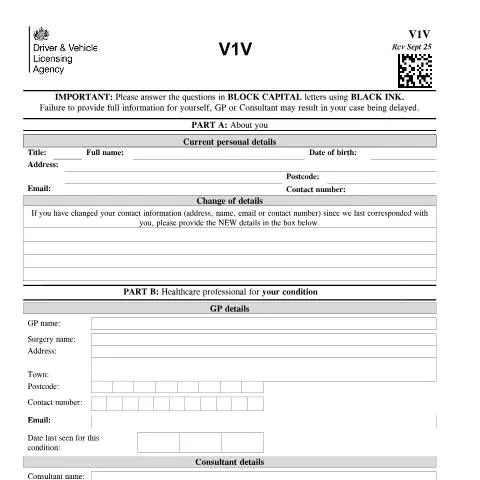
The V1V completion process requires careful preparation and, often, coordination with multiple healthcare professionals. The form's emphasis on block capitals and black ink isn't merely bureaucratic preference—it ensures optical character recognition systems can process responses accurately, reducing delays and transcription errors.
Part A establishes the applicant's current identity and contact details, with particular attention to changes since previous DVLA correspondence. This seemingly routine section serves an important purpose—many vision conditions develop gradually, and individuals may have moved or changed healthcare providers during the progression of their condition.
Part B requires comprehensive healthcare professional details for both GP and specialist consultants. The form demands specific information including department names, contact details, and crucially, dates of last consultation for the relevant condition. This enables the DVLA to request current medical reports and ensures assessments are based on up-to-date clinical information.
The Vision Self-Declaration Section: Detailed Clinical Assessment
The self-declaration questions progress logically from basic vision standards to specific condition assessments. Question 1 establishes fundamental compliance with legal standards, but the subsequent questions delve into the nuances that determine real-world driving safety.
The treatment of double vision (diplopia) illustrates the form's clinical sophistication. Rather than simply asking whether the condition exists, the V1V explores control mechanisms—patches, prism lenses, surgical intervention, or botox injections. It recognises that well-controlled diplopia may be compatible with safe driving, while uncontrolled double vision clearly isn't.
Night blindness (nyctalopia) receives specific attention, acknowledging that some drivers may function adequately in daylight but become unsafe after dark. This condition-specific approach enables the DVLA to consider restricted licensing arrangements rather than outright prohibition.
Processing Pathways and DVLA Assessment Procedures
Once submitted, V1V forms enter the DVLA's medical licensing division, where trained staff assess submissions against established criteria. The processing pathway depends significantly on the complexity of the declared conditions and the completeness of supporting information.
Straightforward cases—where applicants meet clear vision standards and have appropriate professional support—may be processed relatively quickly. These might include well-controlled glaucoma with recent specialist review, or stable monocular vision with confirmed adaptation.
Complex cases trigger additional assessment procedures. The DVLA may request detailed medical reports from named consultants, arrange independent medical examinations, or require practical driving assessments. These extended procedures can take several months, particularly when specialist appointments or test arrangements are needed.
The agency operates a priority system for certain categories of applicant. Professional drivers whose livelihood depends on Group 2 entitlement may receive expedited assessment, while individuals with progressive conditions might be fast-tracked to prevent dangerous delays in licence review.
Communication During Processing
The DVLA maintains contact through various channels during V1V processing. Initial acknowledgment typically arrives within two weeks, followed by regular updates for complex cases. Applicants can track progress through the online licence checking service, though detailed medical assessments aren't visible through this system.
When additional information is required, the DVLA issues specific requests with clear deadlines. Failure to respond within stated timeframes can result in automatic licence revocation, emphasising the importance of maintaining current contact details and responding promptly to correspondence.
Submission Channels and Their Strategic Implications
The V1V form is available through multiple channels, each with distinct advantages and considerations for applicants. Understanding these differences can significantly impact processing speed and accuracy.
Online submission through the gov.uk portal offers the fastest processing route. Digital forms undergo immediate validation checks, reducing the risk of incomplete submissions that cause delays. The system provides instant confirmation of receipt and enables electronic communication throughout the assessment process.
Postal submission remains essential for applicants requiring paper-based completion, perhaps due to complex medical conditions affecting their ability to use digital systems. Posted forms should be sent to the DVLA medical enquiries unit in Swansea, with recorded delivery recommended for valuable documentation.
Healthcare professional involvement in submission can expedite processing. When GPs or consultants submit V1V forms alongside supporting medical reports, the DVLA often has sufficient information for immediate assessment without requiring additional documentation.
Supporting Documentation Strategy
While the V1V is primarily a self-declaration form, strategic inclusion of supporting documentation can prevent delays and additional requests. Recent eye examination reports, consultant letters confirming treatment effectiveness, or visual field test results provide immediate clinical context for DVLA assessors.
Applicants should ensure supporting documents are clearly labelled with their driver number and relate specifically to driving-relevant aspects of their condition. Generic medical summaries may not provide the focused information required for licensing decisions.
Ongoing Monitoring and Licence Conditions
V1V submission often marks the beginning rather than the end of ongoing medical monitoring arrangements. The DVLA may impose various licence conditions based on the assessment outcomes, creating long-term obligations for licence holders.
Time-limited licences are common for progressive conditions like glaucoma or diabetic retinopathy. These typically run for one to three years, requiring regular V1V resubmission with updated medical information. The renewal cycle aligns with clinical review schedules, ensuring licensing decisions remain current with medical status.
Restriction codes may be applied to licences where conditions permit limited driving. Code 01 (eyesight correction required) mandates corrective lens use, while more specific restrictions might limit driving to daylight hours or familiar routes. These restrictions are legally binding and must be observed to maintain valid insurance coverage.
Regular monitoring requirements often extend beyond DVLA obligations. Licence holders with declared vision conditions typically need annual eye examinations and may require specialist review at specified intervals. Failure to maintain these clinical relationships can result in licence revocation if conditions deteriorate undetected.
The Appeals and Review Process
When V1V assessment results in licence refusal or restriction, applicants have specific rights of appeal through the magistrates' court system. This process requires independent medical evidence and can take several months to resolve. During appeals, driving privileges are typically suspended unless interim arrangements are specifically approved.
The DVLA also operates an internal review process for cases where new medical evidence becomes available or where applicants believe errors occurred in the original assessment. This administrative route is often faster than formal appeals but requires compelling evidence of changed circumstances or procedural errors.
Medical Evidence Requirements and Supporting Documentation
When completing form V1V, the quality and comprehensiveness of your medical evidence can significantly impact the DVLA's assessment of your fitness to drive. The agency requires specific types of documentation to evaluate your condition accurately, and understanding these requirements beforehand can prevent delays in processing your application.
Medical reports must come from qualified healthcare professionals who have direct knowledge of your condition. Your GP's report carries substantial weight, particularly if they've been managing your condition over an extended period. However, specialist consultants' reports often provide the detailed clinical insight that DVLA medical advisers require for complex conditions. For neurological conditions, a consultant neurologist's assessment may be essential, while cardiac conditions typically require input from a cardiologist.
The timing of medical evidence is crucial. Reports should reflect your current medical status, ideally within the past three months of submitting form V1V. Outdated medical information may prompt the DVLA to request fresh assessments, extending your case's processing time. If your condition is rapidly evolving, ensure your healthcare provider documents the progression and current stability of your symptoms.
Hospital discharge summaries provide valuable context, particularly following significant medical events like heart attacks, strokes, or major surgeries. These documents typically include detailed clinical findings, treatment provided, and recommendations for ongoing care. However, discharge summaries alone rarely provide sufficient detail for DVLA assessment purposes and should be supplemented with more comprehensive reports.
For psychiatric conditions, reports must address specific functional aspects relevant to driving safety. Mental health professionals should comment on your insight into your condition, compliance with treatment, and any residual symptoms that might affect concentration, decision-making, or emotional stability behind the wheel. The DVLA particularly values assessments of your response to medication and any side effects that could impair driving performance.
Diagnostic test results often form a crucial component of your medical evidence package. Electrocardiograms (ECGs), echocardiograms, blood glucose monitoring records, visual field tests, and neuroimaging results all provide objective data supporting clinical assessments. Ensure copies of relevant test results accompany your healthcare provider's interpretation and clinical correlation.
When multiple healthcare professionals are involved in your care, coordinated reporting strengthens your application. If your GP refers to specialist opinions or test results in their report, include copies of these supporting documents. This comprehensive approach demonstrates thorough medical management and provides DVLA medical advisers with a complete clinical picture.
Understanding DVLA Medical Standards and Assessment Criteria
The DVLA applies detailed medical standards outlined in their guidance document "Assessing fitness to drive: a guide for medical professionals." These standards vary significantly between Group 1 licences (ordinary cars and motorcycles) and Group 2 licences (lorries and buses), with Group 2 requirements being considerably more stringent due to the increased responsibility and potential consequences of incapacitation while driving larger vehicles.
For cardiovascular conditions, the assessment focuses on your risk of sudden incapacitation. Following a heart attack, Group 1 licence holders typically need to demonstrate satisfactory left ventricular function and exercise tolerance before resuming driving. Group 2 licence holders face more extensive requirements, including stress testing and detailed cardiac imaging. The DVLA may impose time-limited licences requiring regular medical reviews to monitor your ongoing cardiac status.
Neurological conditions present particular complexity due to their unpredictable nature. Epilepsy standards require specific seizure-free periods: typically one year for Group 1 licences and five years for Group 2 licences, though variations exist depending on seizure type and circumstances. The DVLA distinguishes between provoked seizures (caused by identifiable triggers like alcohol withdrawal) and unprovoked seizures, with different implications for driving restrictions.
Visual standards encompass both central vision and visual field requirements. The minimum visual acuity standard for Group 1 licences requires you to read a number plate at 20 metres (or 20.5 metres for older-style plates). Visual field defects, even if caused by conditions like stroke or glaucoma, may still permit driving if sufficient vision remains and you can demonstrate adaptation to your visual loss.
Diabetes management increasingly focuses on hypoglycaemia awareness and blood glucose monitoring compliance rather than blanket restrictions. If you treat your diabetes with insulin or certain oral medications, you must demonstrate adequate hypoglycaemia awareness and regular blood glucose monitoring. The DVLA may require detailed glucose monitoring records and specialist diabetes team input to assess your suitability for continued driving.
Mental health assessments consider the functional impact of your condition rather than diagnosis alone. Depression, anxiety, or other psychiatric conditions don't automatically preclude driving, but the DVLA evaluates factors like medication side effects, insight into your condition, and any associated risks such as suicidal ideation or impaired judgment that could affect road safety.
The assessment process may involve independent medical examinations arranged by the DVLA. These examinations provide standardised assessments by medical professionals experienced in fitness-to-drive evaluations. While you cannot choose the examining doctor, you can request that reports are shared with your own healthcare providers to ensure continuity of care and understanding of the DVLA's requirements.
Managing Licence Decisions and Ongoing Responsibilities
DVLA licence decisions following form V1V submissions can take several forms, each carrying specific implications for your driving privileges and ongoing obligations. Understanding these potential outcomes helps you prepare for different scenarios and ensures compliance with your licensing conditions.
Unconditional licence renewal represents the most straightforward outcome, confirming that your medical condition doesn't currently affect your fitness to drive under normal circumstances. However, you retain ongoing responsibility to report any significant deterioration in your condition or new medical developments that might affect your driving safety.
Time-limited licences require renewal at specified intervals, typically ranging from one to three years depending on your condition's nature and stability. These licences ensure regular medical review of progressive or potentially unstable conditions. You'll receive renewal documentation before your licence expires, but initiating the renewal process early prevents any gap in your driving entitlement.
Conditional licences may impose specific restrictions tailored to your circumstances. Common conditions include daylight driving only, local area restrictions, or requirements for regular medical reviews. Some conditions mandate specific vehicle adaptations or prohibit certain types of driving, such as passenger-carrying services or goods vehicle operation.
Licence refusal or revocation requires immediate cessation of driving until you meet the required medical standards. The DVLA provides detailed reasons for their decision and information about appealing or reapplying when your circumstances change. Understanding the specific medical improvements needed helps focus your treatment and rehabilitation efforts.
The appeals process through the Magistrates' Court provides an independent review mechanism if you disagree with the DVLA's medical assessment. Appeals must be lodged within six months of the decision, and you'll need comprehensive medical evidence supporting your case. Legal representation, while not mandatory, can help navigate the complex medical and legal arguments involved.
Interim arrangements during the assessment period vary depending on your circumstances. If you hold a valid licence when submitting form V1V, you may continue driving unless specifically instructed otherwise. However, certain conditions, such as unexplained blackouts or recent seizures, may require immediate driving cessation pending medical clearance.
Insurance implications require careful consideration throughout this process. Your motor insurance remains valid during DVLA medical assessments, provided you've reported your condition to your insurer as required by your policy terms. Some insurers offer specialist policies for drivers with medical conditions, potentially providing more appropriate cover and competitive premiums.
Employer notification becomes necessary if your employment involves driving and your licence status changes. Professional drivers must inform their employers immediately of any medical restrictions or licence limitations. Even if your primary employment doesn't involve driving, company car policies or occasional business driving may be affected by medical licensing conditions.
Record-keeping supports ongoing compliance with your licensing obligations. Maintain copies of all medical reports, DVLA correspondence, and licensing decisions. This documentation proves invaluable for insurance claims, employment purposes, or future medical assessments. Regular review of your medical management with healthcare providers ensures optimal treatment and may support future licence applications or renewals.