When Medical Episodes Put Your Licence at Risk: Understanding DVLA's FEP1V Assessment
A single unexplained blackout behind the wheel. A seizure that strikes without warning. An episode of altered consciousness that leaves you questioning your fitness to drive. These medical events trigger a critical juncture where your driving privileges intersect with public safety obligations. The Driver and Vehicle Licensing Agency's form FEP1V serves as the gateway through which drivers must navigate this complex terrain, providing medical transparency that determines whether you retain, lose, or regain your right to drive.
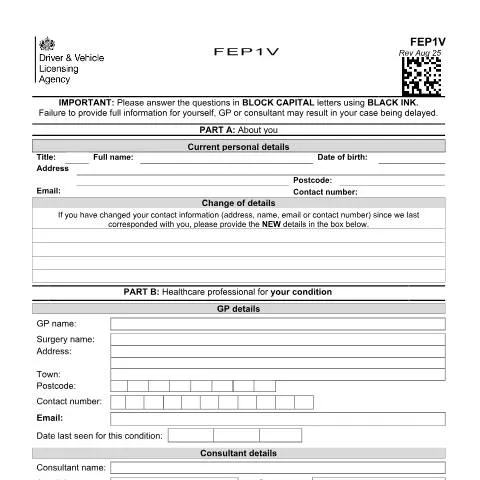
This eight-page medical questionnaire specifically targets epilepsy, seizures, and blackouts—conditions that the DVLA classifies as potentially incompatible with safe vehicle operation. Unlike routine licence renewals or straightforward medical declarations, the FEP1V demands granular detail about neurological episodes, their frequency, triggers, and medical management. The stakes extend beyond administrative compliance: incomplete or inaccurate responses can result in immediate licence revocation, whilst thorough documentation may preserve your driving privileges under specific medical supervision.
The Medical Threshold: Who Must Complete This Neurological Assessment
The FEP1V obligation extends to a broader population than many drivers initially recognise. Current licence holders must complete this form following any seizure, epileptic episode, or unexplained loss of consciousness, regardless of whether the event occurred while driving. This includes single seizures that might appear isolated, recurrent episodes separated by years, and even seizures occurring during sleep if they affect consciousness levels.
New licence applicants face FEP1V completion when their medical history reveals relevant episodes, even those occurring in childhood or attributed to specific triggers like fever or head trauma. The form distinguishes between provoked seizures (those with identifiable triggers such as infection, metabolic imbalances, or substance use) and unprovoked episodes, with significantly different licensing implications.
Several specific scenarios mandate FEP1V submission:
- Medication-related seizures: Episodes following changes to anti-seizure medication, even when medically supervised
- Post-traumatic seizures: Any seizure occurring more than seven days after head injury requires detailed assessment
- Dissociative seizures: Non-epileptic episodes linked to mental health conditions or trauma
- Cough syncope: Loss of consciousness triggered by severe coughing fits
- Pacemaker recipients: Particularly those with Cardiac Resynchronisation Therapy Pacemakers (CRT-P)
The form explicitly excludes certain immediate post-trauma seizures (those occurring at the moment of impact or within seven days of head injury) and specific medical procedures like electroconvulsive therapy or repetitive transcranial magnetic stimulation, recognising these as distinct from underlying seizure disorders.
Decoding the FEP1V Structure: Medical Categories and Assessment Pathways
The FEP1V employs a sophisticated branching structure that routes different medical presentations through tailored assessment pathways. Understanding this architecture helps drivers navigate the form efficiently whilst ensuring comprehensive disclosure.
Part A: Personal Demographics and Contact Evolution
Beyond standard identification details, this section captures contact information changes since previous DVLA correspondence. This proves crucial as medical licensing decisions often involve extended review periods, and outdated contact details can result in licence suspension through administrative default.
Part B: Healthcare Professional Network
The form requires detailed GP and consultant information, including specialty designations and most recent consultation dates. This dual healthcare professional approach reflects the DVLA's preference for specialist neurological input whilst maintaining primary care continuity. Email addresses, when provided, can expedite medical report requests, though telephone contact remains the standard verification method.
Single Seizure Assessment Pathway
Questions 2-9 create a specific route for drivers reporting solitary seizure episodes. The form distinguishes between various single-seizure contexts:
| Seizure Context | DVLA Classification | Typical Licensing Outcome |
|---|---|---|
| Eclampsia-related | Provoked, pregnancy-specific | Temporary suspension, review post-delivery |
| Immediate head trauma | Acute provoked | Standard medical review |
| Post-trauma (7+ days) | Potentially unprovoked | Extended assessment period |
| Unexplained single seizure | Requires investigation | Specialist referral mandatory |
Multiple Seizure Complexity
Questions 10-20 address recurrent seizures with particular attention to the critical distinction between awake and asleep seizures. This differentiation carries profound licensing implications: seizures occurring exclusively during sleep may permit continued driving under specific conditions, whilst awake seizures typically mandate extended seizure-free periods.
The form's treatment of medication-related seizures (questions 18-20) reflects nuanced medical reality. Seizures following medically supervised medication changes receive different consideration than those resulting from treatment non-compliance, with potential for licence restoration following successful medication re-establishment.
Critical Distinction: Epileptic versus Dissociative Seizures in Licensing Context
Questions 21-23 address dissociative seizures, also termed functional seizures or non-epileptic attack disorder. These episodes, while resembling epileptic seizures, stem from psychological rather than neurological origins. The DVLA's approach to dissociative seizures reflects their unpredictable nature and frequent association with underlying mental health conditions.
Key Assessment Factors for Dissociative Seizures:
- Episode frequency and triggers
- Occurrence while driving (immediate licence concern)
- Associated mental health treatment
- Response to psychological intervention
- Healthcare professional confidence in diagnosis
Unlike epileptic seizures, which follow established seizure-free period requirements, dissociative seizures require individualised assessment considering psychological stability, trigger management, and treatment engagement. The form's specific inquiry about episodes occurring while driving reflects the immediate safety risk these unpredictable events pose.
Blackouts and Consciousness Alterations: Beyond Epilepsy Scope
Questions 24-27 expand beyond seizure disorders to encompass broader consciousness disturbances. This section captures syncope (fainting), cardiac-related blackouts, and unexplained consciousness alterations that might indicate underlying medical conditions affecting driving safety.
Cough syncope receives particular attention due to its specific trigger mechanism and potential for occurrence while driving. These episodes, triggered by severe coughing fits that temporarily reduce blood flow to the brain, require assessment of underlying respiratory conditions and episode frequency.
The form's inquiry about pacemakers, particularly CRT-P devices, reflects the intersection between cardiac management and seizure-like episodes. Some pacemaker recipients experience device-related episodes that might be confused with seizures, requiring specialist cardiac assessment alongside neurological evaluation.
Diagnostic Uncertainty Navigation
Question 25 addresses a common clinical reality: blackouts or consciousness alterations without clear medical explanation. These cases require particularly thorough investigation, often involving multiple specialties and extended monitoring periods. The DVLA typically mandates comprehensive medical assessment before licensing decisions in such cases.
Submission Logistics and Processing Expectations
The FEP1V requires completion in block capital letters using black ink, reflecting optical scanning requirements for efficient processing. This seemingly minor detail proves crucial: forms completed in pencil, blue ink, or cursive script may require manual processing, extending assessment timelines significantly.
Submission Methods and Timelines:
- Postal submission: DVLA Medical Group, Longview Road, Swansea, SA6 7JL
- Processing timeline: Standard medical cases typically require 6-8 weeks, complex cases may extend to 12-16 weeks
- Interim driving: Generally prohibited once medical condition notified unless specifically authorised
The form warns that incomplete information regarding the applicant, GP, or consultant details may delay case processing. This reflects the DVLA's reliance on comprehensive medical reports from healthcare professionals to make informed licensing decisions.
Medical Report Coordination
Upon FEP1V receipt, the DVLA typically requests detailed medical reports from both the applicant's GP and any specialist consultants involved in their care. These reports must address specific licensing-relevant questions:
- Seizure/episode frequency and characteristics
- Current medication regimen and compliance
- Specialist monitoring arrangements
- Prognosis and seizure risk assessment
- Healthcare professional recommendation regarding driving fitness
Regulatory Framework: Seizure-Free Periods and Licensing Categories
The FEP1V operates within established DVLA medical standards that mandate specific seizure-free periods before licence restoration. These requirements vary significantly between Group 1 (cars and motorcycles) and Group 2 (lorries and buses) licences, with the latter requiring substantially longer seizure-free periods due to enhanced public safety considerations.
Standard Group 1 Requirements:
- Single unprovoked seizure: 6-month seizure-free period
- Multiple seizures: 12-month seizure-free period
- Sleep-only seizures: May permit driving after established pattern (minimum 12 months)
- Medication withdrawal seizures: Case-by-case assessment following successful medication re-establishment
The form's detailed inquiry about medication changes reflects the complex relationship between anti-seizure medication and driving privileges. Medically supervised medication adjustments that trigger seizures don't necessarily reset the entire seizure-free period requirement, provided the previously effective medication is promptly restarted.
Exceptional Licensing Circumstances
Certain medical contexts may permit modified licensing approaches. Drivers with well-controlled epilepsy who experience breakthrough seizures solely due to intercurrent illness, medication malabsorption, or other temporary factors may face shorter restriction periods. However, these exceptions require comprehensive specialist assessment and detailed medical documentation.
The FEP1V's structure accommodates these nuanced scenarios through its branching question format, ensuring that drivers with potentially qualifying circumstances receive appropriate assessment rather than automatic extended restrictions.
Post-Submission Navigation: Medical Review Outcomes and Appeal Rights
Following FEP1V submission and medical report compilation, the DVLA Medical Group renders licensing decisions that fall into several categories. Understanding these potential outcomes helps drivers prepare for various scenarios and their associated requirements.
Possible Decision Categories:
- Licence retention: Continued driving privileges, possibly with periodic medical review requirements
- Temporary surrender: Licence suspension pending completion of seizure-free period
- Permanent revocation: Complete licence withdrawal with reapplication requirements following medical clearance
- Restricted licensing: Modified privileges (e.g., daylight driving only) under specialist supervision
- Further assessment: Additional medical investigation before final determination
Adverse decisions carry formal appeal rights through the Magistrates' Court system, though successful appeals typically require substantial additional medical evidence contradicting the DVLA's initial assessment. Most drivers find it more practical to comply with recommended seizure-free periods and reapply following medical clearance.
The FEP1V process concludes with formal written notification of the DVLA's decision, including specific requirements for licence restoration where applicable. Drivers receiving temporary restrictions must understand that premature driving during suspension periods constitutes a serious criminal offence, potentially resulting in prosecution and extended driving bans beyond the medical restriction period.
For drivers whose medical conditions stabilise, the FEP1V may require periodic completion to maintain driving privileges, establishing ongoing medical monitoring as a condition of continued licensing. This reflects the DVLA's balanced approach between individual mobility needs and public safety obligations, ensuring that medical fitness for driving receives regular professional assessment rather than one-time clearance.
Understanding Medical Evidence Requirements and Documentation Standards
The quality and comprehensiveness of your medical evidence can significantly impact the assessment of your FEP1V form. The DWP requires specific types of documentation that demonstrate both the nature of your condition and its functional impact on your daily activities and work capacity.
Primary Medical Evidence Sources
Your GP remains the cornerstone of medical evidence provision, but their report must go beyond basic diagnosis. The assessment focuses on functional capacity rather than medical labels. Your GP should detail how your condition affects specific activities like walking distances, concentration periods, or manual dexterity. For mental health conditions, evidence should address cognitive function, social interaction capabilities, and stress tolerance levels.
Hospital consultant reports carry particular weight, especially for complex or rare conditions. These specialists can provide detailed prognosis information and explain how your condition may fluctuate over time. If you're under ongoing consultant care, ensure your FEP1V submission includes recent correspondence that demonstrates active treatment and monitoring.
Specialist Reports and Their Strategic Value
Occupational health assessments, where available, provide crucial workplace-specific insights. These reports can bridge the gap between medical diagnosis and practical work limitations. If your employer has conducted capability assessments or provided workplace adjustments, this documentation supports your FEP1V application by demonstrating real-world impact.
Mental health evidence requires particular attention to detail. Community Mental Health Team reports, psychiatric assessments, and psychological evaluations should address cognitive function, mood stability, and social functioning. The DWP particularly values evidence that explains how mental health symptoms affect reliability, decision-making, and interpersonal relationships in work contexts.
Medication Impact Documentation
Side effects from prescribed medications can be as limiting as the underlying condition itself. Your FEP1V should include detailed information about medication regimens and their functional impact. Drowsiness from antihistamines, concentration difficulties from pain medication, or mood changes from steroids all constitute relevant evidence.
Keep a medication diary if your treatment involves complex regimens or frequent adjustments. This demonstrates the ongoing nature of your condition management and helps assessors understand fluctuating capabilities. Include information about medication timing, as some treatments require specific scheduling that affects work patterns.
Navigating the Assessment Process and Potential Outcomes
Following your FEP1V submission, the DWP initiates a structured assessment process that determines your eligibility for various benefits and support measures. Understanding this process helps you prepare appropriately and know what to expect at each stage.
Initial Processing and Triage
The DWP first conducts a paper-based review of your FEP1V and supporting evidence. This initial triage determines whether additional assessment is required or if a decision can be made based on submitted documentation alone. Cases with clear, comprehensive medical evidence and obvious functional limitations may proceed directly to decision without further assessment.
More complex cases, or those where the functional impact isn't immediately clear from paperwork, will be scheduled for Work Capability Assessment. The decision to require face-to-face assessment depends on several factors including the nature of your condition, the quality of submitted evidence, and current DWP capacity.
Work Capability Assessment Preparation
If selected for Work Capability Assessment, preparation is crucial for accurate evaluation. The assessment focuses on specific functional areas including mobility, manual dexterity, communication, memory and concentration, consciousness during waking moments, and ability to cope with change and pressure.
Document your typical day, including how long tasks take, rest periods required, and assistance needed. The assessment isn't about your best or worst days, but your typical functional capacity. If your condition fluctuates significantly, explain these variations clearly and provide examples of how unpredictability affects your reliability.
Understanding Assessment Outcomes
The assessment process results in one of several determinations. You may be found fit for work, with limited capability for work, or with limited capability for work-related activity. Each outcome triggers different benefit entitlements and obligations.
Limited capability for work means you're eligible for Employment and Support Allowance but may be required to engage in work-related activities. Limited capability for work-related activity provides ESA without activity requirements, recognising severe functional limitations. Understanding these distinctions helps you prepare evidence that addresses the specific criteria for each category.
Managing Ongoing Obligations and Review Processes
Reporting your medical condition through FEP1V initiates ongoing obligations that continue throughout your benefit claim. These responsibilities ensure the DWP maintains accurate records of your circumstances and can adjust support accordingly.
Change Reporting Requirements
You must report significant changes in your medical condition promptly. Improvements that might affect your work capability, new diagnoses, or changes in treatment that alter your functional capacity all require notification. The definition of 'significant change' includes both improvements and deteriorations that could affect your benefit entitlement.
Changes in medication, completion of treatment courses, or new therapeutic interventions should be reported even if you're unsure about their significance. The DWP prefers over-reporting to under-reporting when it comes to medical condition changes. Hospital admissions, surgical procedures, or changes in specialist care arrangements all constitute reportable changes.
Periodic Review Procedures
Most medical condition determinations include review dates when your case will be reassessed. Review frequency depends on your condition's expected trajectory - stable conditions may have longer review periods, while conditions with potential for improvement face more frequent reassessment.
Prepare for reviews by maintaining updated medical evidence throughout your claim period. Don't wait for review notifications to gather current medical reports. Regular GP appointments and specialist consultations should include discussions about functional capacity and any changes in your condition's impact on daily activities.
Appeals and Revision Processes
If you disagree with assessment outcomes, formal appeal processes are available. Mandatory reconsideration must be requested before tribunal appeal, and this process allows the DWP to review their decision with fresh eyes. New medical evidence can be submitted during mandatory reconsideration, potentially leading to decision revision without tribunal proceedings.
Tribunal appeals require careful preparation and often benefit from representation. The tribunal system operates independently from the DWP and takes a fresh look at your entire case. Understanding the specific criteria applied at tribunal level helps you prepare evidence that addresses the legal tests for benefit entitlement rather than simply restating your medical conditions.