When Medical Conditions Threaten Your Right to Drive
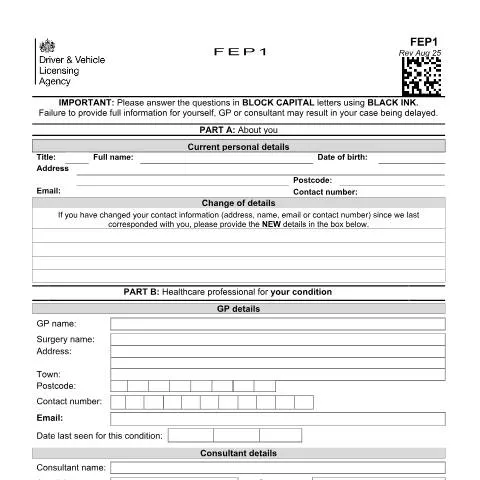
Every year, thousands of UK drivers face a moment of reckoning: their medical condition has changed, and they must decide whether they can still safely operate a vehicle. The FEP1 form – formally titled "Report your medical condition (form FEP1)" – represents the Driver and Vehicle Licensing Agency's primary tool for assessing drivers who experience epilepsy, seizures, or blackouts. This isn't simply paperwork; it's a medical evaluation that can determine whether you keep your licence or face immediate revocation.
The stakes couldn't be higher. Unlike other DVLA forms that process routine changes, the FEP1 directly examines your fitness to drive following episodes that could compromise vehicle control. Whether you've experienced a single seizure after a head injury or live with diagnosed epilepsy, this eight-page questionnaire serves as the gateway between your medical reality and your driving privileges.
The Spectrum of Drivers Required to Complete FEP1
The FEP1 targets a surprisingly broad range of medical episodes, extending far beyond traditional epilepsy diagnoses. Single seizure cases represent a significant portion of submissions – perhaps following a head injury, pregnancy-related eclampsia, or even medical procedures like electroconvulsive therapy. The form distinguishes carefully between seizures occurring at the moment of impact versus those developing days later, as licensing implications differ markedly.
Multiple seizure scenarios involve more complex assessments. The DVLA considers seizures within a 24-hour period as a single event under licensing regulations, but patterns emerging over months or years trigger different evaluation criteria. Drivers experiencing both waking and sleeping seizures face particularly detailed questioning, as the timing and consciousness levels during episodes directly influence licensing decisions.
Perhaps most challenging are dissociative seizures – formerly termed "non-epileptic attack disorder" or "functional seizures." These episodes, often linked to mental health conditions like trauma or stress, can appear identical to epileptic seizures but stem from different neurological mechanisms. The FEP1 dedicates specific sections to these cases, recognising their distinct assessment requirements.
Blackouts and altered consciousness levels round out the form's scope. From cough syncope to unexplained loss of awareness, any episode potentially affecting vehicle control warrants FEP1 completion. Even drivers with implanted pacemakers or cardiac devices may need to complete sections if their devices were fitted following blackout episodes.
Professional Driver Considerations
Lorry drivers, bus operators, and other professional licence holders face stricter medical standards throughout the FEP1 process. While ordinary drivers might retain their licence following certain single seizures, professional drivers typically face longer restriction periods or permanent disqualification depending on their specific medical circumstances.
Navigating the Form's Medical Complexity
The FEP1's eight pages demand precision that many drivers find daunting. Part A captures essential personal details, but crucially includes space for changed contact information – vital since DVLA correspondence often spans months or years. The agency's emphasis on block capitals and black ink isn't bureaucratic pedantry; unclear handwriting can delay medical assessments when every day without driving privileges impacts employment and daily life.
Part B requires comprehensive healthcare professional details for both GP and consultant contacts. This dual requirement reflects the DVLA's need for both routine medical oversight and specialist neurological assessment. Drivers often underestimate the importance of complete contact details – incomplete information can stall the entire medical review process.
The Critical Medical Timeline Questions
Questions 13-19 form the FEP1's analytical heart, requiring precise seizure dating across multiple categories. The form differentiates between awake and asleep seizures because consciousness levels during episodes directly influence driving safety assessments. Drivers must provide dates for first seizures, recent seizures, and any patterns showing seizure-free periods.
| Seizure Category | Information Required | Assessment Impact |
|---|---|---|
| Single seizure | Exact date and cause | May allow shorter restriction period |
| Awake seizures | First occurrence and last two episodes | Higher driving risk assessment |
| Asleep seizures | Pattern documentation over time | May permit restricted driving rights |
| Mixed patterns | Transition dates between seizure types | Complex individual assessment required |
Medication-related questions (17-19) address a common scenario: seizures triggered by stopping, reducing, or changing epilepsy medications under medical supervision. The DVLA recognises that medication adjustments can temporarily increase seizure risk, potentially allowing for different licensing decisions if effective treatment is promptly restarted.
Behind the Medical Assessment Process
Once submitted, the FEP1 triggers a medical review process that can take several weeks to months. The DVLA's medical advisers don't simply process forms mechanically; they evaluate each case against detailed medical guidelines that consider seizure types, frequency patterns, and individual circumstances.
GP and consultant reports play crucial roles beyond the FEP1 itself. The DVLA routinely requests detailed medical reports from the healthcare professionals listed in Part B, seeking clinical assessments of seizure control, medication compliance, and driving safety. These reports can significantly influence final licensing decisions, making the accuracy of contact details paramount.
The assessment timeline varies considerably based on case complexity. Simple single-seizure cases with clear medical causes might resolve within 4-6 weeks, while complex epilepsy cases involving multiple seizure types could require 3-4 months of medical review. Urgent cases – such as professional drivers whose livelihoods depend on their licences – may receive priority processing, though medical safety standards remain unchanged.
The Role of Medical Evidence
Beyond the FEP1, drivers often need to provide additional medical evidence. EEG results, brain imaging reports, and detailed seizure diaries can all influence licensing decisions. Drivers with well-documented seizure-free periods may receive more favourable assessments than those with incomplete medical records, emphasising the importance of maintaining regular healthcare contact.
Licence Outcomes and Restriction Scenarios
FEP1 assessments rarely result in simple yes-or-no licensing decisions. The DVLA employs various restriction and monitoring approaches depending on individual medical circumstances.
Temporary licence revocation represents the most common initial outcome. Drivers experiencing recent seizures typically face mandatory seizure-free periods before licence restoration – usually one year for single seizures without identified causes, or longer periods for multiple seizures. During revocation, drivers cannot legally operate any motor vehicle, making alternative transport arrangements essential.
Restricted licences offer middle-ground solutions for certain cases. Drivers whose seizures occur exclusively during sleep may retain daytime driving privileges after demonstrating consistent sleep-only patterns over specified periods. Similarly, drivers with well-controlled epilepsy might receive licences valid for shorter periods, requiring regular medical review.
Professional licence holders face different standards throughout this process. Many professional drivers experiencing any seizure activity lose their vocational entitlements permanently, though ordinary car licences might be restored following appropriate seizure-free periods.
Monitoring and Review Cycles
Licensed drivers with ongoing medical conditions often enter cyclical review processes. The DVLA may issue licences valid for 1-3 years, requiring fresh medical assessments before renewal. These reviews typically involve updated FEP1 submissions along with current medical reports, ensuring continued fitness to drive as medical conditions evolve.
Strategic Completion and Submission Approaches
Successful FEP1 completion requires more than accurate form-filling; it demands strategic medical preparation. Pre-submission medical consultations can significantly improve outcomes, particularly when healthcare professionals help compile comprehensive seizure histories and medication records.
Timing considerations affect assessment outcomes. Submitting FEP1 forms immediately after seizure episodes may result in longer licence restrictions than waiting for medical stabilisation, though legal reporting obligations override tactical considerations. Drivers experiencing seizures must cease driving immediately and cannot delay FEP1 submission to improve their medical profile.
Documentation quality directly influences processing speed and decision accuracy. Complete healthcare contact details, precise seizure dating, and thorough medical history reporting can expedite assessments, while incomplete information invariably causes delays. Drivers should verify GP and consultant contact details before submission, ensuring the DVLA can efficiently obtain necessary medical reports.
Managing the Assessment Period
The weeks or months between FEP1 submission and licensing decisions present practical challenges requiring careful planning. Employment considerations may necessitate early discussions with employers about alternative duties or temporary transport arrangements. Insurance implications also warrant attention – some policies may be affected by licence restrictions even before formal DVLA decisions.
Regular follow-up with both healthcare providers and the DVLA can help identify potential delays or additional information requirements. The DVLA's medical enquiry team can provide updates on assessment progress, though they cannot influence medical decisions or provide outcome predictions.
Long-term Medical Monitoring and Licence Management
FEP1 completion often marks the beginning rather than the end of ongoing medical licensing oversight. Drivers with episodic conditions like epilepsy typically enter long-term monitoring relationships with the DVLA, requiring periodic medical updates and licence renewals at shorter intervals than standard ten-year periods.
Condition changes trigger fresh FEP1 requirements throughout drivers' lives. Seizure pattern modifications, medication adjustments, or new episodes all necessitate updated medical reporting, creating ongoing compliance obligations that extend far beyond initial form submission.
The relationship between medical management and driving privileges creates complex decision-making scenarios for drivers and healthcare providers alike. Medication compliance becomes not just a health issue but a licensing requirement, while seizure reporting carries legal as well as medical implications.
Understanding these long-term implications helps drivers and families plan for medical condition management that supports both health outcomes and continued driving privileges, recognising that the FEP1 represents one element in a potentially lifelong process of medical licensing oversight.
Understanding Medical Evidence Requirements and Supporting Documentation
The quality and comprehensiveness of medical evidence you provide with form FEP1 can significantly impact the assessment of your condition and subsequent benefit determinations. The Department for Work and Pensions requires specific types of documentation that demonstrate both the nature of your medical condition and its functional impact on your daily life and work capacity.
Medical evidence should ideally come from healthcare professionals who have direct, ongoing knowledge of your condition. Your GP remains the primary source, but consultant letters, hospital discharge summaries, and specialist reports carry particular weight in the assessment process. When gathering this documentation, ensure reports are recent—ideally within the last six months for progressive conditions, though older reports may be relevant for establishing the history and development of your condition.
Diagnostic test results, including blood tests, imaging studies, or specialist assessments, should accompany clinical reports where available. For mental health conditions, reports from community psychiatric nurses, occupational therapists, or approved mental health professionals can provide valuable functional assessments. The key is demonstrating not just what your condition is, but how it affects your ability to perform specific activities.
Medication lists with dosages and frequencies help assessors understand the severity of your condition and any side effects that may impact your functioning. Include details of any treatments you've tried, their effectiveness, and reasons for discontinuation. This information helps paint a complete picture of your medical journey and current management strategies.
If you're awaiting specialist appointments or diagnostic procedures, include referral letters and appointment confirmations with form FEP1. This demonstrates ongoing medical engagement and can explain gaps in recent specialist evidence. For conditions requiring regular monitoring, include appointment records or hospital attendance records that show the frequency and nature of your medical care.
Private medical reports, while accepted, should clearly state the practitioner's qualifications and registration details. The DWP may give less weight to private assessments, particularly if they contradict NHS evidence, so ensure any private reports are comprehensive and well-substantiated with objective findings.
Navigating Complex Multi-Condition Scenarios and Cumulative Effects
Many individuals submitting form FEP1 experience multiple medical conditions that interact in complex ways, creating cumulative effects that exceed the sum of individual impairments. Understanding how to present these interconnected conditions effectively is crucial for accurate assessment of your overall functional capacity.
When documenting multiple conditions, avoid simply listing each diagnosis separately. Instead, describe how conditions interact and compound each other's effects. For example, arthritis pain may worsen depression, leading to reduced motivation for self-care, which in turn exacerbates physical symptoms through reduced activity levels. This cyclical relationship should be clearly articulated in your form submission.
Consider the varying impact of conditions throughout different times of day, seasons, or in relation to treatment cycles. Some conditions follow predictable patterns—morning stiffness in rheumatoid arthritis, seasonal affective patterns in depression, or fatigue cycles in chronic fatigue syndrome. Document these patterns as they affect your ability to maintain consistent work performance or daily routines.
Medication interactions and side effects often create additional functional limitations that aren't immediately obvious from individual diagnoses. Pain medications may cause drowsiness affecting concentration; blood pressure medications might cause dizziness limiting mobility; psychiatric medications could affect weight, coordination, or cognitive processing. These medication-related limitations are legitimate aspects of your overall functional capacity.
For fluctuating conditions, describe both your best and worst days, but emphasise the frequency and unpredictability of symptoms. Assessors need to understand not just your capabilities on good days, but the reliability of your functioning over time. Conditions like multiple sclerosis, fibromyalgia, or bipolar disorder often involve significant day-to-day variation that impacts work sustainability.
Primary and secondary conditions may have developed complex relationships over time. A workplace injury might have led to chronic pain, which subsequently caused depression and anxiety about returning to work. These secondary conditions are equally valid and should be documented as part of your overall medical picture, not as separate, unrelated issues.
When multiple specialists are involved in your care, inconsistencies in their reports can occur. Address these directly in your form submission, explaining different perspectives or focusing on different aspects of your condition. If specialists disagree on prognosis or functional impact, provide context about their different areas of expertise and your experience of the condition.
Timing Strategies and Managing Form Submissions During Medical Transitions
The timing of your form FEP1 submission can significantly impact the assessment outcome, particularly when your medical condition is undergoing changes, treatment modifications, or diagnostic refinement. Strategic timing considerations can help ensure your submission accurately reflects your current functional capacity and medical status.
If you're beginning new treatment or have recently changed medications, consider whether to wait for stabilisation or submit immediately based on your current limitations. New treatments often require adjustment periods during which your functional capacity may be temporarily reduced due to side effects or the time needed to achieve therapeutic benefit. Document this transition period clearly, explaining both current limitations and realistic timescales for potential improvement.
For progressive conditions, timing becomes particularly critical. Submitting too early might underrepresent the full impact of your condition, while waiting too long could mean missing crucial support during deterioration. Consider submitting when you have sufficient recent evidence demonstrating the progression and its functional impact, even if further deterioration is expected.
Surgical procedures or major medical interventions create unique timing challenges. Post-operative recovery periods might not represent your long-term functional capacity, but the need for benefits may be immediate. In these situations, clearly distinguish between temporary post-procedure limitations and underlying condition-related impairments. Include surgical reports, rehabilitation plans, and realistic recovery timelines from your medical team.
Diagnostic uncertainty shouldn't delay submission if you're experiencing functional limitations. Many conditions require extensive investigation periods during which symptoms significantly impact daily functioning and work capacity. Include investigation schedules, interim diagnoses, and symptom management strategies while awaiting definitive diagnosis. The functional impact matters as much as the diagnostic label.
Seasonal or cyclical conditions require careful timing consideration. Mental health conditions often worsen during specific seasons; some physical conditions fluctuate with weather patterns or stress cycles. If possible, submit during periods that represent your typical functioning rather than exceptionally good or bad phases, unless those phases represent the majority of your experience.
Review deadlines and processing times when planning submission. If your condition is deteriorating rapidly, earlier submission ensures support is in place sooner, even if reassessment becomes necessary later. Conversely, if improvement is genuinely expected within months, document this clearly while emphasising current limitations and support needs during the recovery period.
Consider coordination with other benefit applications or reviews. Multiple assessments within short timeframes can be overwhelming and may produce inconsistent information if your condition changes between assessments. Plan submissions to provide consistent information across different benefit streams while avoiding assessment fatigue that might compromise the quality of your responses.