When Sleep Disorders Meet Driving Safety: Understanding DVLA's Medical Reporting Requirements
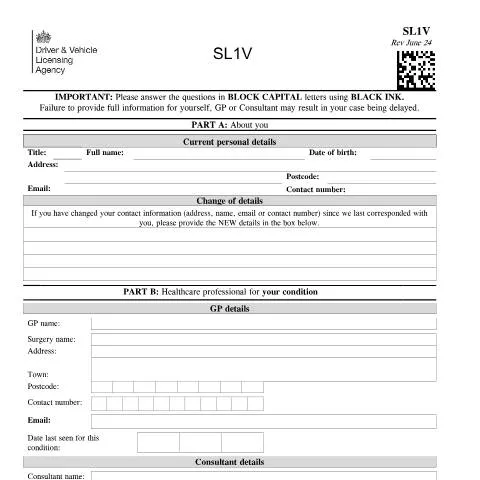
Every year, thousands of drivers across the UK face a critical decision when diagnosed with sleep-related conditions that could affect their ability to drive safely. The SL1V sleep self-declaration form represents the formal mechanism through which the Driver and Vehicle Licensing Agency (DVLA) assesses whether individuals with conditions like obstructive sleep apnoea, narcolepsy, or idiopathic hypersomnia remain fit to hold a driving licence. This process balances individual mobility rights with public road safety, creating a framework where medical transparency becomes essential for maintaining driving privileges.
The form's significance extends beyond mere bureaucracy—it serves as the primary tool for determining whether someone experiencing excessive sleepiness can continue driving legally. Unlike many DVLA medical forms that focus on physical disabilities or mental health conditions, the SL1V specifically targets sleep disorders that pose unique risks on Britain's roads, where microsleep episodes or sudden loss of consciousness can have catastrophic consequences.
The Medical Landscape: Which Sleep Conditions Trigger DVLA Scrutiny
The SL1V form addresses four primary categories of sleep disorders, each presenting distinct challenges for driving safety assessment. Narcolepsy and cataplexy represent the most severe conditions, where sudden sleep attacks or muscle weakness can occur without warning, potentially causing immediate loss of vehicle control. The form requires detailed information about symptom onset, frequency, and current management strategies for these conditions.
Obstructive Sleep Apnoea (OSA) and Obstructive Sleep Apnoea Syndrome (OSAS) constitute the largest group of conditions covered by this form. The DVLA distinguishes between mild OSA (Apnoea Hypopnoea Index below 15) and moderate to severe cases (AHI above 15), with different licensing implications for each severity level. Drivers with mild OSA may retain their licences with regular monitoring, whilst those with moderate to severe conditions often require evidence of effective treatment, typically continuous positive airway pressure (CPAP) therapy, before licence retention is considered.
Idiopathic hypersomnia presents particular assessment challenges, as this condition involves excessive daytime sleepiness without the clear structural abnormalities seen in sleep apnoea. The form requires specific details about symptom patterns and any treatment responses, as the condition's unpredictable nature makes driving safety assessment more complex.
| Sleep Condition | Primary Risk Factor | Typical DVLA Response |
|---|---|---|
| Narcolepsy/Cataplexy | Sudden sleep attacks | Licence suspension until controlled |
| Mild OSA (AHI <15) | Intermittent sleepiness | Regular monitoring required |
| Moderate/Severe OSA (AHI >15) | Significant daytime sleepiness | Treatment compliance essential |
| Idiopathic Hypersomnia | Unpredictable sleepiness | Individual assessment required |
Healthcare Professional Coordination: Building the Medical Evidence Chain
The SL1V form establishes a comprehensive medical information network involving multiple healthcare professionals. General practitioners typically serve as the primary medical contact, providing ongoing care coordination and baseline health monitoring. The form requires complete GP details, including surgery name, full address, and recent consultation dates specific to the sleep condition.
Specialist consultant information forms the clinical cornerstone of DVLA assessments. Sleep medicine consultants, respiratory physicians, or neurologists specialising in sleep disorders provide the detailed diagnostic and treatment information that determines licensing decisions. The form specifically requests consultant speciality, department, hospital affiliation, and recent appointment dates, creating a clear medical audit trail.
Sleep centres play an increasingly important role in modern sleep disorder management, often providing the diagnostic sleep studies and ongoing CPAP therapy monitoring that inform DVLA decisions. The form dedicates specific sections to sleep centre details, recognising their specialised role in treatment compliance monitoring and symptom assessment.
This multi-professional approach ensures that DVLA medical assessors receive comprehensive information from all relevant healthcare providers, reducing the likelihood of incomplete assessments or delayed decisions due to missing medical evidence.
Treatment Compliance and Symptom Control: The Critical Assessment Factors
The concept of "controlled symptoms" represents the pivotal factor in DVLA licensing decisions for sleep disorders. The form requires precise dating of when symptoms became controlled, establishing a timeline that helps medical assessors determine licence restoration eligibility. For OSA patients, this typically means demonstrating consistent CPAP usage with objective compliance data showing nightly use for prescribed hours.
Treatment adherence extends beyond simple equipment usage to encompass lifestyle modifications, weight management, and regular medical monitoring. The form's emphasis on agreement to attend regular reviews reflects the DVLA's recognition that sleep disorders often require ongoing management rather than one-time treatment interventions.
For drivers not receiving active treatment, the form allows explanation of alternative symptom control methods. This might include significant weight loss for OSA patients, surgical interventions, or lifestyle modifications that have effectively managed excessive sleepiness. However, such cases require particularly robust evidence of sustained symptom improvement.
The form's structure acknowledges that symptom control varies significantly between individuals and conditions. Narcolepsy patients might require medication adjustments and sleep hygiene protocols, whilst OSA patients focus primarily on CPAP compliance and weight management. This individualised approach ensures that licensing decisions reflect the specific medical realities of each case.
Completing the Self-Declaration: Technical Requirements and Common Challenges
The SL1V form demands block capital letters in black ink, reflecting DVLA's optical character recognition systems and quality assurance processes. This seemingly minor requirement becomes crucial when incomplete or illegible forms cause processing delays that can extend licence suspension periods unnecessarily.
Personal details sections require current information, with specific provisions for recent changes to address, name, email, or contact numbers. Drivers who have moved house or changed contact details since their initial DVLA correspondence must provide updated information in designated sections, preventing communication failures that could delay case resolution.
The medical timeline sections present particular completion challenges, requiring precise dates for symptom onset and control achievement. Many patients struggle to pinpoint exact dates for gradual symptom development or improvement, yet the form's structure demands specific day, month, and year entries. Healthcare professionals often assist with these sections, using medical records to establish accurate chronologies.
Severity classification for OSA requires understanding of Apnoea Hypopnoea Index scores, technical information that many patients may not readily know. The form provides guidance on mild versus moderate/severe classifications, but patients often need to consult their sleep study reports or healthcare providers to complete these sections accurately.
The Legal Framework: Authorisation, Data Sharing, and Criminal Implications
The form's authorisation section establishes comprehensive medical information sharing permissions between healthcare providers and DVLA medical assessors. This blanket authorisation allows doctors, specialists, and healthcare professionals to disclose relevant medical information without requiring separate consent for each information request.
Data sharing extends to the Secretary of State's Honorary Medical Advisory Panels, specialist medical committees that review complex cases requiring expert clinical input. These panels maintain strict confidentiality whilst providing independent medical opinions on challenging licensing decisions, particularly for unusual conditions or treatment-resistant cases.
The criminal offence warning carries significant weight, with false declarations potentially resulting in prosecution under road traffic legislation. This legal framework ensures that drivers understand the serious consequences of providing misleading medical information, whilst protecting public safety through accurate medical disclosure.
Electronic communication preferences allow patients to choose email or SMS contact for application updates, streamlining communication whilst maintaining security standards. However, patients who prefer traditional postal communication can opt out of electronic channels without affecting their application processing.
Processing Pathways: From Submission to Decision
Once submitted to the Drivers Medical Group in Swansea, SL1V forms enter a structured assessment pathway involving medical case workers and specialist advisers. Initial screening identifies cases requiring immediate licence action versus those suitable for continued driving with monitoring conditions.
Cases involving uncontrolled symptoms typically result in immediate licence revocation pending treatment establishment and symptom stabilisation. The DVLA may require evidence of treatment compliance over specific periods—commonly three to six months for CPAP therapy—before considering licence restoration.
Medical examinations or practical driving assessments may be mandated for complex cases where paper evidence alone cannot determine fitness to drive. These assessments involve independent medical examiners or approved driving assessment centres, providing objective evaluation of functional driving ability despite medical conditions.
Appeal processes exist for drivers who disagree with DVLA decisions, involving independent medical review panels and potential Magistrates' Court proceedings. However, appeals require substantial medical evidence of improved condition management or diagnostic errors in original assessments.
Beyond the Form: Long-term Monitoring and Licence Maintenance
Successful SL1V form submission often results in conditional licensing arrangements requiring ongoing medical monitoring. Annual medical reviews become standard requirements for many sleep disorder patients, ensuring continued symptom control and treatment compliance.
Licence conditions may include restrictions on certain vehicle categories, with Group 2 licences (lorries, buses) facing stricter requirements than standard car licences. Professional drivers often face more stringent medical standards, reflecting the increased public safety implications of commercial vehicle operation.
Treatment failure or symptom deterioration requires immediate DVLA notification, with legal obligations for both patients and healthcare providers to report relevant changes. This ongoing monitoring system ensures that licensing decisions remain current with medical realities, balancing individual mobility needs with public safety requirements.
The relationship between sleep disorder management and driving privileges creates long-term healthcare engagement incentives, with effective treatment compliance directly linked to maintained driving independence. This framework encourages sustained medical engagement and treatment adherence, ultimately benefiting both individual health outcomes and road safety standards across the UK.
Common Medical Conditions and Their Impact on SL1V Reporting
The type and severity of your medical condition significantly influence how you complete form SL1V and what evidence you'll need to provide. Understanding these distinctions helps ensure your application receives appropriate consideration from the Department for Work and Pensions.
Mental Health Conditions
Mental health conditions require particularly detailed documentation on form SL1V. Conditions such as depression, anxiety disorders, bipolar disorder, or post-traumatic stress disorder affect your daily functioning in ways that may not be immediately visible. When completing the form, focus on specific examples of how your condition impacts routine activities rather than simply listing symptoms.
For instance, if anxiety prevents you from using public transport, explain the physical symptoms you experience, how long episodes last, and any coping strategies you've attempted. Include details about medication side effects, as these can significantly impact your ability to work or engage in daily activities. Sleep disturbances, concentration difficulties, and social withdrawal should be documented with specific examples of when these occur and their duration.
Your GP or mental health specialist's input becomes crucial here. They can provide objective assessments of your functional capacity and explain how your condition affects your ability to cope with work-related stress, interact with colleagues, or maintain consistent attendance. If you're receiving treatment from a Community Mental Health Team or attending counselling sessions, this information strengthens your SL1V submission.
Physical Disabilities and Chronic Conditions
Physical conditions encompass a broad spectrum, from mobility impairments and chronic pain to conditions like multiple sclerosis, rheumatoid arthritis, or cardiovascular disease. Each requires a different approach when completing your SL1V form.
For mobility issues, describe your walking distance, whether you need mobility aids, and how your condition varies throughout the day. Many people with arthritis, for example, experience morning stiffness that improves during the day, while others find their symptoms worsen with activity. Be specific about distances – can you walk 50 metres, 200 metres, or do you require a wheelchair for any distance beyond your home?
Chronic pain conditions present particular challenges in SL1V reporting because pain levels fluctuate and may not be visible to assessors. Document your pain levels using recognised scales, note triggers that worsen your condition, and explain how pain affects your concentration, sleep, and ability to maintain positions like sitting or standing for extended periods.
Fatigue-related conditions such as chronic fatigue syndrome, fibromyalgia, or post-viral fatigue require detailed explanation of how exhaustion impacts your daily life. Describe your energy levels throughout the day, how long simple tasks take you compared to before your condition developed, and the recovery time you need after activities.
Sensory Impairments
Visual or hearing impairments affect how you navigate both work environments and daily life. For visual impairments, specify your level of vision, whether you're registered as sight impaired or severely sight impaired, and what adaptations you require. Explain how your vision affects reading, computer use, mobility in unfamiliar environments, and recognition of faces or objects.
Hearing impairments should be documented with audiometry results if available. Describe situations where your hearing loss creates difficulties – telephone conversations, group meetings, noisy environments, or distinguishing between similar sounds. If you use hearing aids, explain their limitations and any situations where they're insufficient.
Navigating the Assessment Process After SL1V Submission
Once you've submitted your completed SL1V form, understanding the subsequent assessment process helps you prepare for what follows and ensures you receive appropriate consideration for your circumstances.
Work Capability Assessment Preparation
Your SL1V submission may lead to a Work Capability Assessment, designed to evaluate how your condition affects your ability to work. This assessment considers both your current functional capacity and your potential for future work with appropriate support.
The assessment examines various activities of daily living, including physical functions like walking, climbing stairs, and manual dexterity, as well as cognitive functions such as memory, concentration, and ability to cope with social situations. Your SL1V form provides the foundation for this assessment, so thorough completion is essential.
Prepare for potential face-to-face assessments by gathering additional evidence that supports your SL1V submission. This might include medication lists showing current treatments, appointment letters demonstrating ongoing medical care, or photographs of mobility aids or adaptations you use. If your condition fluctuates, keep a diary documenting your symptoms and functional capacity on different days.
Consider whether you need someone to accompany you to any assessment. This could be a family member, friend, or advocate who understands your condition and can provide additional perspective on how it affects your daily life. Inform the assessment centre in advance if you require any reasonable adjustments, such as ground floor access, breaks during the assessment, or sign language interpretation.
Understanding Decision Timescales
The processing time for SL1V-related assessments varies considerably depending on the complexity of your case and current caseloads. Simple cases with clear medical evidence might be processed within 6-8 weeks, while more complex situations requiring additional medical evidence or specialist input can take several months.
During this period, maintain regular contact with your healthcare providers and keep records of any changes in your condition. If your circumstances change significantly – either improvement or deterioration – inform the Department for Work and Pensions promptly, as this may affect your assessment outcome.
You'll receive written notification of decisions, which will explain the reasoning behind the outcome and your rights regarding appeals if you disagree with the decision. This notification includes important timescales for any further action you might wish to take.
Appeals and Mandatory Reconsideration
If you disagree with a decision made following your SL1V submission, you have the right to request a mandatory reconsideration before proceeding to tribunal appeal. This process allows the Department for Work and Pensions to review their decision using the same evidence plus any additional information you provide.
For mandatory reconsideration, you must request this within one calendar month of receiving your decision letter. Use this opportunity to highlight any aspects of your condition that may not have been fully considered in the original assessment. Additional medical evidence, witness statements from people who observe your daily difficulties, or clarification of how your condition affects specific activities can strengthen your reconsideration request.
If mandatory reconsideration doesn't resolve your concerns, you can appeal to an independent tribunal. Tribunal hearings provide an opportunity to present your case in person, with medical and legal experts examining the evidence and making an independent decision about your circumstances.
Ongoing Responsibilities and Review Processes
Submitting form SL1V marks the beginning of an ongoing relationship with the benefits system rather than a one-time interaction. Understanding your continuing responsibilities and the review processes ensures you maintain appropriate support while meeting your obligations.
Reporting Changes in Circumstances
Your legal obligation to report changes in your medical condition continues well beyond your initial SL1V submission. The Department for Work and Pensions requires notification of both improvements and deteriorations in your condition, as these may affect your benefit entitlement or the support services available to you.
Significant improvements might include successful treatment that restores substantial functional capacity, completion of rehabilitation programmes that enhance your work capabilities, or surgical interventions that resolve mobility limitations. Conversely, deteriorations could involve progression of degenerative conditions, development of additional health problems, or adverse reactions to treatments that worsen your functional capacity.
Changes in your living situation also require reporting. Moving to accommodation with better accessibility features might improve your independence, while changes in family circumstances could affect the support available to help manage your condition. Employment status changes are particularly important – starting work, changing work patterns, or leaving employment due to your condition all require prompt notification.
The Department for Work and Pensions provides multiple channels for reporting changes, including telephone helplines, online portals, and written notification. Choose the method that best accommodates any communication difficulties related to your condition, and always keep records of when and how you reported changes.
Scheduled Reviews and Reassessments
Most conditions reported through SL1V forms are subject to periodic review to ensure continued appropriateness of support. Review intervals depend on your condition's nature and prognosis – stable, long-term conditions might be reviewed every two to three years, while conditions with potential for improvement may face more frequent assessment.
Progressive conditions like multiple sclerosis or Parkinson's disease typically receive longer review periods, acknowledging their degenerative nature. However, even these conditions require periodic assessment to ensure support matches your current functional capacity and to identify any additional needs that have developed.
Mental health conditions often face more frequent reviews, particularly during treatment phases where improvement is anticipated. This doesn't diminish the validity of your condition but reflects the potential for recovery with appropriate intervention and support.
Prepare for reviews by maintaining comprehensive records of your condition's impact throughout the review period. Medical appointment records, medication changes, functional capacity variations, and any workplace accommodations or support services you've accessed all provide valuable evidence for reassessment.
Accessing Additional Support Services
Your SL1V submission may unlock access to various support services beyond financial benefits. Understanding these options helps you maximise the assistance available to manage your condition and maintain independence where possible.
Access to Work schemes can provide workplace accommodations, assistive technology, or support workers that enable continued employment despite your condition. These might include ergonomic equipment for physical conditions, software solutions for sensory impairments, or mental health support for psychological conditions.
Local authority services often provide additional support through social services departments. This might include occupational therapy assessments for home adaptations, community transport services for mobility-impaired individuals, or day centre activities that provide social interaction and structured activities.
Voluntary sector organisations frequently offer condition-specific support that complements statutory services. These might include peer support groups, condition management programmes, advocacy services, or practical assistance with daily living tasks. Many provide services specifically designed around the challenges identified in your SL1V submission.
Healthcare services may also expand following your SL1V assessment. Referrals to specialist consultants, access to physiotherapy or occupational therapy, or inclusion in condition management programmes often follow from the detailed functional assessment that begins with your SL1V form.