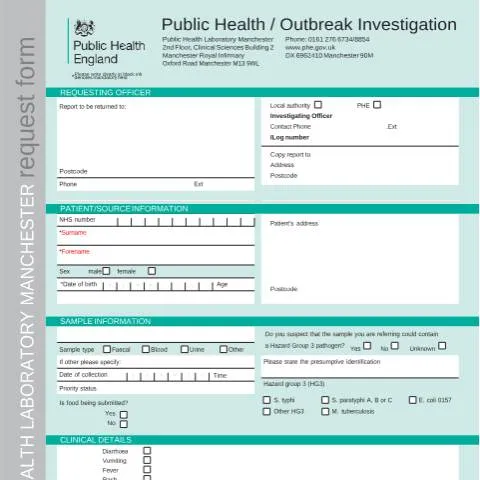
Understanding the Public Health Laboratory Manchester Request Form: A Key Administrative Tool
In the realm of public health, the importance of accurate data submission cannot be overstated. The Public Health Laboratory Manchester Request Form serves as a critical component for health professionals engaged in outbreak investigations or routine diagnostics. Filling out this form with precision ensures that health authorities can perform their duties effectively, contributing to public safety and health management.
A Closer Look at Request Form Specifics: What Sets It Apart?
The Public Health Laboratory Manchester Request Form is distinct from other health-related forms, such as those used for patient admissions or basic laboratory tests. This form is specifically tailored for submitting samples suspected of containing hazardous pathogens, which is crucial in preventing outbreaks and protecting public health. The key aspects that set this form apart include:
- Focus on Hazard Group 3 Pathogens: The form includes specific sections to identify potential Hazard Group 3 pathogens, such as Salmonella Typhi and Mycobacterium tuberculosis.
- Clinical Context Gathering: It requests comprehensive information regarding the patient’s clinical symptoms, recent travel history, and classification of cases (e.g., follow-up, sporadic).
- Urgency Indicators: The priority status section allows the requesting officer to stress the urgency, which can significantly impact lab turnaround times.
The Role of the Request Form in the Broader Public Health Framework
This form is not an isolated document; rather, it is embedded within a larger network of public health initiatives. When health professionals complete this request, they contribute valuable data to Public Health England (PHE), which is vital for:
- Outbreak Monitoring: Timely submission of samples helps PHE track and respond to potential outbreaks swiftly.
- Data Analysis: The information gathered supports epidemiological studies and informs public health policies.
- Resource Allocation: Understanding where diseases are being reported allows resources to be allocated effectively.
As part of the data-driven approach to health management, this form captures critical information that informs response strategies and public health campaigns.
Who Needs to Submit this Form? Profile of Requesting Officers
The individuals tasked with submitting the Public Health Laboratory Manchester Request Form typically include:
- Healthcare Professionals: This group includes doctors, nurses, and laboratory technicians involved in patient care or diagnostics.
- Public Health Officers: These officials are responsible for investigating outbreaks and ensuring compliance with health regulations.
- Emergency Response Teams: In cases of suspected outbreaks, these teams may be called to action to provide rapid assessments and reporting.
Each profile has unique circumstances and responsibilities that may influence how they complete the form:
- Emergency Situations: In urgent cases, additional emphasis may be placed on the potential risks associated with the suspected pathogens.
- Travel History Considerations: Recent foreign travel can alter the nature of the investigation, making it vital to provide accurate location details.
Completing the Form: Practical Guidance for Accuracy
Completing the Public Health Laboratory Manchester Request Form requires a careful approach. Here are crucial steps to ensure accuracy:
- Use Clear Black Ink: Always fill the form out in black ink. This ensures that the information is legible and can be scanned if necessary.
- Patient Information: Fill in all mandatory fields, including the NHS number and patient’s address. Missing information can delay processing.
- Sample Details: Clearly indicate the type of sample being submitted, ensuring accurate identification of pathogens.
- Clinical Symptoms: Provide comprehensive clinical details. The more information you provide, the greater the chance of a precise diagnosis.
- Check Priority Status: Indicate if the case is urgent, as this can significantly impact the laboratory’s response time.
Submission Channels: Navigating the Options
Once the form is completed, it must be submitted through the appropriate channels. Understanding where and how to send the request is essential:
| Submission Method | Description | Pros | Cons |
|---|---|---|---|
| Online Submission | Submitting the form via the PHE online portal (if applicable). | Speedy processing; confirmation received immediately. | Requires stable internet connection; may need extra verification steps. |
| Postal Submission | Mailing the completed form to the Public Health Laboratory Manchester address. | Accessible for those without internet access; physical records kept. | Longer processing time; risk of postal delays. |
| In-Person Submission | Delivering the form directly to the laboratory. | Opportunity for immediate follow-up; direct communication possible. | Time-consuming; may require travel. |
The Timeline: When to Expect Feedback
Understanding the timeline for processing requests is crucial for both healthcare providers and patients. The following outlines typical timelines associated with the Public Health Laboratory Manchester Request Form:
- Submission to Acknowledgment: Generally, once submitted, acknowledgment will be received within 24 hours, depending on the method of submission.
- Testing Timeline: Once the laboratory receives the sample, testing can typically take 3-5 business days. High-priority cases may be expedited.
- Reporting Results: Results will be communicated to the requesting officer, who is responsible for sharing this information with the patient or relevant parties.
Addressing Issues: Errors and Missing Information
Every healthcare professional dreads the possibility of errors on critical forms. If an error is detected post-submission, or if mandatory information is missing, it’s essential to act swiftly:
- Contact the Laboratory: Reach out to the Public Health Laboratory Manchester directly via the provided contact number (0161 276 6734/8854).
- Provide Correct Information: When contacting them, have the original request form handy to reference specific deficiencies and provide corrected details.
- Follow Up: After corrections have been submitted, ensure to confirm with the laboratory that the information has been successfully updated in their records.
Timely actions can help mitigate the impact of errors, ensuring that public health responses remain effective and swift.
Conclusion: The Importance of Diligence in Public Health Submissions
Submitting the Public Health Laboratory Manchester Request Form is a responsibility that healthcare professionals must approach with diligence. This document plays a fundamental role in safeguarding public health, and understanding its nuances—from completion to submission—ensures that every potential outbreak is effectively managed. By being meticulous in filling out this form, professionals contribute to a collective effort in maintaining a healthy community.
Understanding the Role of Public Health Laboratories in Manchester
Public health laboratories, such as those in Manchester, play a crucial role in safeguarding the health of the community. They are essential in performing diagnostic tests, monitoring disease outbreaks, and conducting research to inform public health policies. The laboratories work closely with local health authorities, the NHS, and Public Health England to ensure timely responses to health threats.
Among their many functions, public health laboratories in Manchester specialize in microbiology, biochemistry, and environmental testing. Microbiology testing is vital for identifying infectious diseases, while biochemistry tests often screen for conditions like diabetes and cholesterol levels. Environmental testing ensures that food and water supplies are safe for consumption and comply with health regulations.
Understanding the operations of these laboratories is essential for anyone engaging with the healthcare system in Manchester. From healthcare professionals to researchers and members of the public, knowing how to properly request laboratory services can streamline the process and improve health outcomes.
The Request Process: Step-by-Step Guidance
When submitting a request form to a public health laboratory in Manchester, it’s crucial to follow a systematic approach to ensure that your request is processed efficiently. Here’s a comprehensive guide that breaks down the request process into manageable steps:
- Identify the Type of Test Required: Before completing the request form, ascertain the specific tests you need. This could range from microbiological analyses to biochemical assessments. Consult with healthcare professionals if you are unsure which tests are appropriate.
- Gather Necessary Information: Complete all sections of the request form accurately. Essential details include patient demographics (name, address, date of birth), the clinical history, and the specific tests ordered. Inaccurate or incomplete information can lead to delays in processing.
- Submit the Request Form: Send the completed request form to the designated laboratory department. Be sure to keep a copy for your records. Depending on the laboratory’s protocol, submissions may be made via mail, email, or a dedicated online portal.
- Follow Up: After submitting your request, it’s advisable to follow up with the laboratory to ensure that the request has been received and is being processed. This can prevent any unforeseen delays in receiving results.
Remember, clear communication with healthcare providers is key throughout this process. If you have any questions about the tests or the request form, do not hesitate to ask for clarification.
Interpreting Laboratory Results and Next Steps
Once the tests have been conducted, the laboratory will generate results that will be sent back to the requesting healthcare professional. Understanding these results is critical for making informed decisions regarding health management.
Results are typically provided in a standardized format that includes reference ranges for comparison. It’s important to remember that results should always be interpreted within the context of the individual’s clinical situation. For example, factors such as age, medical history, and symptoms can affect how results should be viewed.
Healthcare professionals will usually discuss the results with the patient, providing insights into what the findings mean and what steps might be taken next. In some cases, additional testing may be necessary, or a treatment plan may need to be developed based on the results.
Moreover, if abnormal results are found, timely intervention is crucial. In such cases, healthcare providers will often coordinate with specialists or other healthcare services to ensure comprehensive care. Public health laboratories in Manchester also support epidemiological investigations, which may involve contacting affected individuals if a communicable disease is identified.
It is vital for patients to maintain an open line of communication with their healthcare provider after receiving results. Questions about the implications of the results, potential treatment options, and follow-up testing can help ensure a proactive approach to health management.