The Regulatory Lifeline: When Medicines Face Market Discontinuation
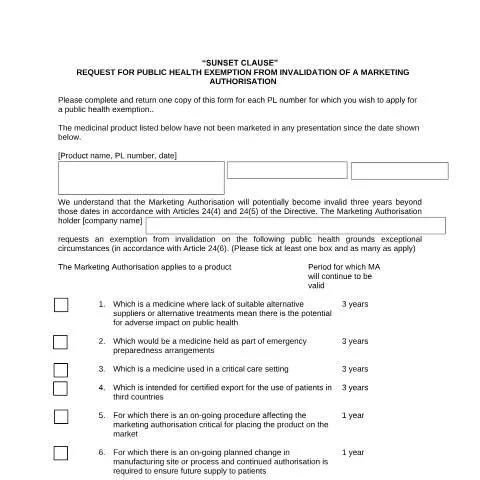
In the pharmaceutical regulatory landscape, a marketing authorisation represents more than just permission to sell a medicine—it embodies the legal foundation that keeps essential treatments available to patients. Yet what happens when a company ceases marketing a product, leaving its authorisation vulnerable to automatic invalidation? The Medicines and Healthcare products Regulatory Agency (MHRA) operates under strict European-derived regulations that trigger a sunset clause mechanism: any marketing authorisation unused for three consecutive years faces automatic cancellation.
This regulatory guillotine serves legitimate purposes—clearing defunct products from official registers and preventing the accumulation of dormant authorisations. However, the healthcare reality proves more nuanced. Critical medicines may disappear from active marketing due to commercial decisions, manufacturing challenges, or supply chain disruptions, yet their potential return to market could prove vital for public health. The Request for Public Health Exemption from Invalidation form emerges as the procedural bridge between regulatory efficiency and healthcare necessity.
The form addresses a fundamental tension in medicines regulation: balancing administrative tidiness against the unpredictable nature of medical need. When Hurricane Maria devastated Puerto Rico's pharmaceutical manufacturing in 2017, or when Brexit threatened medicine supply chains, the importance of maintaining authorisations for temporarily unavailable products became starkly apparent. This exemption mechanism allows marketing authorisation holders to preserve their regulatory permissions when compelling public health grounds justify continued validity.
Navigating the Sunset Clause Regulatory Framework
The sunset clause operates under Articles 24(4) and 24(5) of the European Medicines Directive, provisions that the UK retained post-Brexit through domestic legislation. The mechanism functions with mathematical precision: three years after a medicine's last market presence across all its presentations, the marketing authorisation automatically becomes invalid. This timeline applies regardless of the reason for market absence, whether due to manufacturing issues, commercial decisions, or supply disruptions.
The exemption request must be submitted by the current marketing authorisation holder—the legal entity listed on the product licence. This requirement creates immediate complexity in cases involving corporate restructuring, mergers, or acquisitions, where ownership may be transitioning during the critical period. The form explicitly acknowledges this challenge through criterion seven, which addresses regulatory activity related to company changes.
Each product licence (PL) number requires a separate application, reflecting the MHRA's product-specific approach to risk assessment. A pharmaceutical company with multiple formulations, strengths, or presentations of the same active substance must submit individual requests for each distinct authorisation. This granular approach ensures that exemptions align precisely with genuine public health needs rather than providing blanket protection for entire product portfolios.
| Exemption Category | Validity Period | Primary Rationale |
|---|---|---|
| Critical care medicines | 3 years | Patient safety in acute settings |
| Emergency preparedness | 3 years | National security considerations |
| Ongoing regulatory procedures | 1 year | Administrative continuity |
| Manufacturing transitions | 1 year | Supply chain stability |
| NHS supplier diversity | 1 year | Market competition preservation |
The Eleven Pathways to Regulatory Preservation
The form presents eleven distinct criteria for exemption, each reflecting different aspects of pharmaceutical market dynamics and public health priorities. Understanding these categories requires appreciating the complex ecosystem in which modern medicines operate, from manufacturing networks spanning multiple continents to the intricate relationships between reference products and their derivatives.
Critical Supply and Alternative Treatment Scenarios
The first criterion addresses perhaps the most straightforward public health concern: medicines with limited alternative suppliers or treatments. This category encompasses orphan medicines for rare diseases, where patient populations may be too small to attract multiple manufacturers, and essential medicines where supply disruptions could create immediate patient harm. The three-year exemption period recognises that resolving supply issues or establishing alternative manufacturing arrangements often requires extensive time for regulatory approval and quality assurance.
Emergency preparedness medicines, covered under criterion two, serve national security functions beyond routine healthcare delivery. These products may include antidotes for chemical warfare agents, vaccines for bioterrorism scenarios, or treatments for pandemic diseases. The government maintains strategic stockpiles of such products, but their commercial viability may be minimal, creating a classic market failure that regulatory flexibility must address.
Manufacturing and Supply Chain Complexities
Criterion six acknowledges the reality of modern pharmaceutical manufacturing, where companies frequently optimise production by consolidating operations or upgrading facilities. During these transitions, products may temporarily disappear from market while new manufacturing sites undergo regulatory approval—a process that can extend well beyond the three-year sunset period. The one-year exemption provides breathing room for completing these transitions without losing regulatory permissions entirely.
The intellectual property consideration under criterion nine reflects the peculiar situation where regulatory approval precedes commercial freedom to market. Patents held by competitors may prevent a medicine's launch despite valid marketing authorisation, yet maintaining that authorisation ensures readiness when patent protection expires. The variable duration "up to three years" allows the MHRA to align exemption periods with known patent expiry dates.
Reference Product Dependencies
Criteria ten and eleven address the interconnected nature of modern pharmaceutical regulation, where one product's authorisation supports an ecosystem of related medicines. Parallel import products rely on cross-reference to domestically authorised medicines, creating regulatory dependencies that extend beyond the original product's commercial status. Similarly, clinical trials frequently use commercially available medicines as comparators or rescue medications, requiring continued authorisation even when routine market supply has ceased.
Corporate Responsibility and Regulatory Accountability
The exemption process places significant responsibility on marketing authorisation holders to maintain accurate situational awareness and communicate changes promptly. The declaration section requires companies to commit to providing supporting evidence within one week of any MHRA request—a timeline that demands robust internal documentation systems and clear chains of accountability.
This evidence requirement reflects the MHRA's risk-based approach to exemption management. Rather than demanding comprehensive documentation upfront, the agency reserves the right to conduct targeted investigations when circumstances warrant deeper scrutiny. Companies must therefore maintain contemporaneous records justifying their exemption claims, including supply forecasts, manufacturing timelines, regulatory correspondence, and market analysis.
The obligation to inform the MHRA of changing circumstances creates an ongoing duty that extends throughout the exemption period. If manufacturing issues resolve ahead of schedule, if alternative suppliers emerge, or if the underlying public health rationale diminishes, companies must proactively communicate these developments. This dynamic approach ensures that exemptions remain aligned with genuine need rather than becoming regulatory conveniences.
Strategic Timing and Procedural Coordination
The exemption request operates within a broader regulatory timeline that demands careful coordination with other pharmaceutical procedures. Companies typically become aware of impending sunset clause activation through MHRA communications, but proactive monitoring of product marketing status provides earlier warning and broader strategic options.
The form's reference to "ongoing procedures affecting the marketing authorisation" under criterion five acknowledges that pharmaceutical regulation rarely occurs in isolation. Variation applications, renewal procedures, or safety assessments may be progressing simultaneously with sunset clause considerations. The one-year exemption for such scenarios provides sufficient time to complete most regulatory procedures while maintaining authorisation continuity.
For companies undergoing mergers or acquisitions, criterion seven requires both entities to submit applications, recognising that regulatory transfers involve dual responsibilities. The acquiring company must demonstrate commitment to maintaining public health access, while the transferring company retains obligations until formal ownership changes complete. This dual application requirement prevents regulatory gaps during corporate transitions.
NHS Supply Chain Considerations
Criterion eight specifically addresses NHS supplier diversity, reflecting the health service's strategic interest in maintaining competitive markets for essential medicines. Even when multiple suppliers exist, preserving additional authorisations supports procurement flexibility and guards against supply disruptions. The one-year exemption period allows time to assess whether genuine competition exists or whether market consolidation threatens NHS interests.
This criterion highlights the intersection between commercial pharmaceutical markets and public healthcare delivery. The NHS's purchasing power can sustain or eliminate suppliers, but regulatory permissions must exist before commercial relationships can develop. Maintaining "spare" authorisations through exemption processes provides insurance against market failures that could compromise patient care.
Documentation Standards and Evidence Requirements
The form's emphasis on evidence provision reflects modern regulatory expectations for data-driven decision making. Companies must prepare comprehensive justifications that may include market analysis, supply chain assessments, clinical need evaluations, and regulatory impact studies. The one-week response requirement for evidence requests demands that this documentation be readily accessible rather than requiring fresh compilation.
For emergency preparedness applications, evidence might include government procurement contracts, emergency planning documents, or public health agency correspondence confirming the product's role in national preparedness strategies. Critical care applications require clinical evidence demonstrating the medicine's essential role in acute treatment protocols and the absence of suitable alternatives.
Manufacturing transition applications need detailed project timelines, regulatory approval schedules, and risk assessments addressing potential supply disruptions. The MHRA expects realistic projections rather than optimistic estimates, recognising that manufacturing transfers frequently encounter unexpected complications that extend planned timelines.
Quality Assurance and Ongoing Compliance
Throughout the exemption period, marketing authorisation holders remain subject to standard regulatory obligations including pharmacovigilance reporting, quality defect notifications, and compliance with Good Manufacturing Practice standards. The exemption preserves regulatory permissions but does not diminish safety responsibilities or quality expectations.
This ongoing compliance requirement ensures that exempted products maintain market-ready status rather than becoming regulatory placeholders. When companies resume active marketing, patients and healthcare professionals can rely on the same safety and quality standards that apply to continuously marketed products.
Regulatory Evolution and Future Considerations
The sunset clause exemption mechanism reflects evolving understanding of pharmaceutical market dynamics and public health needs. As medicine supply chains become increasingly globalised and complex, regulatory frameworks must balance efficiency with resilience. The exemption process provides a safety valve that prevents rigid rule application from creating unintended public health consequences.
Brexit has added additional complexity to UK pharmaceutical regulation, with the MHRA operating independently from European medicines agencies while maintaining parallel standards. The exemption mechanism helps manage transition periods and regulatory divergences that might otherwise create supply disruptions for UK patients.
Climate change and global health security concerns are likely to influence future exemption policy development. Extreme weather events, pandemic preparedness requirements, and supply chain vulnerabilities may expand the range of circumstances justifying regulatory preservation. The current eleven criteria provide flexibility for policy evolution without requiring fundamental procedural changes.
The form represents more than administrative paperwork—it embodies a sophisticated balance between regulatory efficiency and healthcare security. By maintaining pathways for essential medicines to return to market when needed, the exemption process protects both individual patients and broader public health interests against the unpredictable challenges facing modern pharmaceutical supply systems.
Procedural Requirements and Documentation Standards
When submitting a sunset clause exemption request, applicants must adhere to stringent documentation standards established by the Medicines and Healthcare products Regulatory Agency (MHRA). The regulatory framework requires comprehensive evidence packages that demonstrate not merely potential benefit, but quantifiable public health impact that cannot reasonably be achieved through alternative means.
Primary documentation must include detailed epidemiological data spanning at minimum the preceding three years, with particular attention to geographical distribution patterns and demographic stratification. For pharmaceutical products, this encompasses adverse event reporting data from the Yellow Card Scheme, alongside comparative safety profiles against existing therapeutic alternatives. Medical device applications require post-market surveillance data demonstrating real-world performance metrics, including any device-related incidents reported through the MHRA's incident reporting system.
Supporting clinical evidence must meet Good Clinical Practice (GCP) standards as outlined in the Clinical Trials Regulations 2004 (as amended). This includes randomised controlled trial data where available, though the MHRA recognises that emergency public health situations may necessitate reliance on observational studies or real-world evidence. Applicants must explicitly address any methodological limitations and provide statistical confidence intervals for all efficacy claims.
Economic impact assessments form a critical component, requiring detailed cost-effectiveness analyses using Quality-Adjusted Life Years (QALYs) or Disability-Adjusted Life Years (DALYs) as appropriate. These calculations must incorporate direct healthcare costs, indirect societal costs, and potential savings from prevented morbidity or mortality. The assessment should align with methodologies employed by the National Institute for Health and Care Excellence (NICE) for consistency with broader NHS decision-making frameworks.
Regulatory compliance documentation must demonstrate adherence to applicable EU retained law and domestic regulations. For medicinal products, this includes compliance with the Human Medicines Regulations 2012, whilst medical devices must meet requirements under the Medical Devices Regulations 2002 (as amended post-Brexit). Manufacturing quality documentation should reference Good Manufacturing Practice (GMP) certification and any relevant British Standards or ISO certifications.
Risk management plans require particular attention to potential off-label usage scenarios and population subgroups who may experience differential risk-benefit profiles. This includes pregnant women, children, elderly patients, and individuals with compromised immune systems. The documentation must address monitoring strategies for ongoing safety surveillance and specify trigger points for regulatory review or withdrawal.
Stakeholder Consultation and Evidence Gathering
The MHRA's approach to sunset clause exemptions incorporates extensive stakeholder consultation processes designed to capture diverse perspectives on public health impact and risk tolerance. This multi-phase consultation framework ensures that decisions reflect not only regulatory science but also practical implementation considerations and patient advocacy concerns.
Initial stakeholder mapping identifies relevant professional bodies, patient organisations, academic institutions, and healthcare delivery partners. For pharmaceutical exemptions, this typically includes the Royal Pharmaceutical Society, relevant medical royal colleges, and condition-specific charities. Medical device exemptions involve additional consultation with healthcare technology assessment bodies and clinical engineering societies.
Healthcare professional surveys form a cornerstone of evidence gathering, targeting practitioners with direct experience of the product or condition in question. These surveys employ validated instruments to assess clinical need, current treatment gaps, and anticipated impact on patient outcomes. Response rates and demographic representation are carefully monitored to ensure statistical validity and minimise selection bias.
Patient and public involvement (PPI) activities follow established frameworks developed by the National Institute for Health Research (NIHR). This includes focus groups with affected patient communities, online consultation portals, and collaboration with established patient research networks. Special attention is paid to reaching underrepresented groups who may face barriers to participation, including ethnic minorities, rural populations, and individuals with communication difficulties.
Expert advisory panels convene to review technical evidence and provide independent scientific opinion. Panel composition reflects relevant expertise whilst managing potential conflicts of interest through comprehensive declaration processes. Panel deliberations follow structured frameworks that separate technical assessment from policy considerations, ensuring transparent decision-making processes.
International regulatory intelligence gathering examines decisions made by comparable agencies including the European Medicines Agency (EMA), US Food and Drug Administration (FDA), and other recognised regulatory authorities. This comparative analysis helps identify emerging safety signals or efficacy concerns that may not yet be apparent in UK-specific data.
Healthcare system impact assessments involve consultation with NHS England, NHS Scotland, NHS Wales, and the Health and Social Care Board in Northern Ireland. These discussions address implementation feasibility, resource implications, and potential impacts on existing service delivery models. Particular attention is paid to geographical variations in healthcare infrastructure and specialist service availability.
Monitoring, Compliance, and Post-Decision Obligations
Successful sunset clause exemption applications trigger comprehensive monitoring and compliance frameworks designed to ensure continued public health benefit whilst maintaining appropriate safety oversight. These obligations extend beyond traditional post-market surveillance to encompass enhanced reporting requirements and periodic reassessment protocols.
Enhanced pharmacovigilance requirements typically exceed standard post-market surveillance obligations, with accelerated reporting timelines for serious adverse events and mandatory periodic safety update reports (PSURs) at three-month intervals rather than the standard six-month cycle. For medical devices, this translates to enhanced post-market clinical follow-up (PMCF) studies with predetermined sample sizes and outcome measures.
Real-world evidence generation becomes mandatory through structured data collection programmes coordinated with NHS Digital and equivalent bodies across the devolved nations. These programmes utilise existing electronic health record systems, prescription databases, and hospital episode statistics to monitor effectiveness and safety in routine clinical practice. Data linkage protocols must comply with the Data Protection Act 2018 and UK GDPR requirements whilst enabling meaningful analysis of population-level trends.
Conditional approval mechanisms may restrict product availability to specific healthcare settings or practitioner qualifications. For example, exemptions might limit prescribing to consultant specialists within designated centres, or require administration in hospital settings with appropriate resuscitation facilities. Compliance monitoring involves regular audits of prescribing patterns and facility capabilities.
Supply chain oversight includes enhanced reporting of manufacturing changes, supply disruptions, or quality deviations that could impact public health objectives. Manufacturers must maintain strategic stockpiles sufficient to meet anticipated demand for the exemption period, with contingency plans for supply augmentation if utilisation exceeds projections.
Periodic benefit-risk reassessment occurs at predetermined intervals, typically every six months for the initial exemption period. These reviews examine accumulated safety data, effectiveness indicators, and evolving treatment landscapes. The MHRA retains authority to modify exemption conditions, restrict availability, or revoke exemptions if the benefit-risk balance shifts unfavourably.
International coordination ensures alignment with regulatory decisions in other jurisdictions and facilitates information sharing about emerging safety concerns. This includes participation in international regulatory harmonisation initiatives and bilateral information sharing agreements with key regulatory partners.
Sunset clause timeline management involves clear communication about exemption expiry dates and requirements for transition to standard regulatory pathways. Applicants must submit comprehensive dossiers for marketing authorisation or medical device approval well in advance of exemption expiry to ensure continuity of patient access where appropriate.