Understanding the Importance of Enhanced Surveillance for Haemophilus influenzae
The emergence of Haemophilus influenzae as a significant public health concern stems from its potential to cause severe illnesses, particularly among vulnerable populations such as children and immunocompromised individuals. Public Health England (PHE) has instituted enhanced surveillance protocols to monitor the prevalence and clinical characteristics of this organism. This initiative plays a crucial role in informing public health responses, vaccination strategies, and healthcare practices aimed at reducing morbidity and mortality rates associated with H. influenzae infections.
Who Needs to Fill Out the Enhanced Surveillance Form?
Healthcare professionals, particularly those in emergency departments and hospitals, are tasked with completing the Haemophilus influenzae Enhanced Surveillance Form. This responsibility primarily falls upon clinicians who encounter suspected cases of invasive H. influenzae infections, which may include:
- General practitioners treating patients with severe symptoms.
- Emergency room physicians who diagnose infections.
- Pediatricians caring for infants, especially those under five years old.
- Specialists managing patients with chronic conditions that may increase susceptibility.
The necessity of collecting detailed patient information cannot be overstated. PHE relies on these submissions to implement effective public health interventions and track epidemiological trends across the UK.
Key Sections of the Form: A Detailed Breakdown
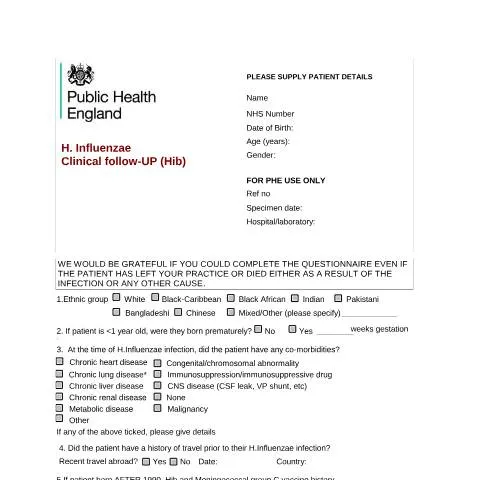
The form comprises several critical sections designed to gather comprehensive data regarding the patient's infection and background. Each subsection is vital for accurate surveillance and requires careful attention to detail.
Section 1: Patient Identification
In this initial section, basic information such as the patient's Name, Date of Birth, and NHS Number is required. Ensure that:
- The NHS Number is accurate, as it links to the individual's health record.
- Spelling of the name is correct, avoiding any errors that might cause identification issues later.
Section 2: Clinical History and Comorbidities
This section probes the patient's medical history, particularly any co-morbidities that may influence their health status. The following options must be evaluated carefully:
- Chronic heart disease
- Chronic lung disease
- Immunosuppression
If any conditions are marked, additional details may be required. It is crucial to provide thorough information to support epidemiological assessments.
Section 3: Vaccination History
For patients born after 1990, the form requires accurate documentation of their vaccination status regarding the Hib and Meningococcal group C vaccines. Specifics such as:
- The number of doses received
- The dates of each vaccination
- The associated batch numbers
Must be documented meticulously. This information aids PHE in understanding vaccination coverage and effectiveness.
Section 4: Clinical Presentation of Infection
Detailed descriptions of the clinical presentation are necessary. Common manifestations of invasive H. influenzae infection include:
- Meningitis
- Epiglottitis
- Septic arthritis
It is essential to specify any unusual symptoms or complications, as these details are instrumental in shaping public health recommendations.
Filing and Submission of the Enhanced Surveillance Form
After completion, the form should be returned to PHE using the provided pre-paid envelope or via fax. The specific details for submission are as follows:
Recipient: Dr. Shamez Ladhani Department: Immunisation, Hepatitis, and Blood Safety Department Address: 61 Colindale Avenue, London NW9 5EQ Phone: 020 8327 7155 Fax: 020 8327 7404 Email: [email protected]It is imperative to ensure that the form is filled out accurately to avoid unnecessary delays in processing. If the patient has passed away or left the practice, PHE still requests completion of the form to maintain comprehensive data accuracy.
Post-Submission Process and Follow-Up
Once submitted, the form becomes part of a broader dataset that PHE analyzes to identify trends and formulate public health strategies. While individual follow-ups on forms are not standard practice, healthcare providers may reach out to PHE for insights into how their data contributes to ongoing surveillance efforts. Key aspects to consider after submission include:
- Understanding that a confirmation of receipt is generally not provided unless there is a specific query.
- Recognizing the implications of the form, which can influence local and national health policies.
Integration of the Surveillance Form within Public Health Strategies
This enhanced surveillance form does not exist in isolation; rather, it plays a significant role within a larger framework of disease monitoring and response. PHE utilizes the data collected not only for immediate public health responses but also for:
- Targeting vaccination campaigns in high-incidence areas.
- Adjusting treatment guidelines based on emerging resistance patterns.
- Enhancing overall public health education and awareness regarding H. influenzae infections.
Healthcare providers are integral in linking individual cases to collective public health efforts, transforming patient data into actionable insights.
Considerations for Special Cases
Certain patient demographics may necessitate additional considerations when completing the enhanced surveillance form. For instance:
- Foreign Nationals: Healthcare providers should take extra care to document travel history for patients who have recently arrived from abroad, as this can elucidate potential outbreaks or imported cases.
- Minors: Increased attention should be paid to vaccination history and any congenital abnormalities that may complicate the patient's health status.
- Complex Cases: Patients with multiple comorbidities or unusual presentations should have detailed notes included, ensuring that their cases provide valuable insights for epidemiological studies.
Contributing to a Safer Public Health Environment
Completing the Haemophilus influenzae Enhanced Surveillance Form effectively contributes to the broader objective of enhancing public health safety. By providing thorough and accurate data, healthcare professionals help PHE monitor trends and make informed decisions that ultimately aim to lower the incidence of serious infections and improve health outcomes across the UK.
In closing, the proactive involvement of clinicians in this surveillance initiative is essential. By recognizing the critical role that accurate reporting plays in public health, professionals not only fulfill their responsibilities but also ensure the health and safety of the communities they serve.