Understanding the Hepatitis B Enhanced Laboratory Surveillance
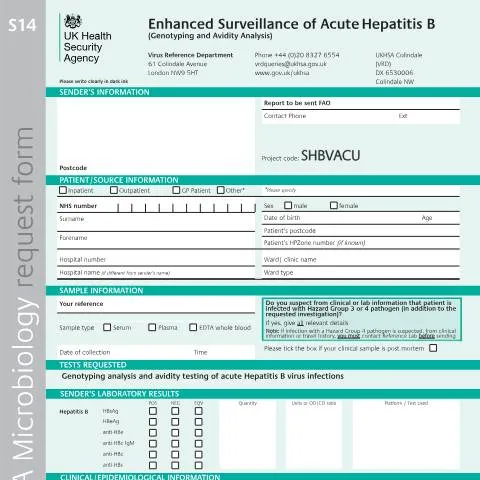
The Hepatitis B Enhanced Laboratory Surveillance of Acute Infection form is essential for monitoring and managing acute Hepatitis B cases in the UK. This specialized form plays a pivotal role in public health by enhancing the understanding of infection patterns and facilitating timely responses to outbreaks. Designed for use by medical professionals, it enables health authorities to gather critical data on new cases, thus informing health strategies and interventions.
Who Submits This Form and Why?
This document is primarily submitted by healthcare providers, including hospitals, clinics, and laboratories involved in the diagnosis and treatment of Hepatitis B. It is typically filled out when a healthcare professional suspects an acute Hepatitis B infection based on clinical presentation or laboratory findings. By completing this form, the submitting entity ensures that vital epidemiological and clinical data reaches the UK Health Security Agency (UKHSA).
Such submissions are vital for distinguishing acute infections from chronic cases, thereby allowing the health authorities to track and manage outbreaks more effectively. Additionally, they contribute to the broader public health database, ultimately helping in the decision-making processes regarding vaccination programs and other preventive measures.
Completing the Form: Practical Insights
Filling out the Hepatitis B Enhanced Laboratory Surveillance form requires attention to detail, as the accuracy of the provided information is crucial. The key sections of the form include:
- Patient Information: This includes the patient’s name, date of birth, postcode, and NHS number. Ensure that the details are written clearly in dark ink to avoid misinterpretation.
- Clinical Details: Indicate whether the patient is an inpatient or outpatient and provide the name of the hospital or clinic.
- Sample Information: Specify the sample type, collection date, and any relevant clinical findings such as jaundice. Ensure you indicate if the sample is post-mortem as this impacts the testing process.
- Laboratory Results: This section requires comprehensive laboratory results, including HBsAg levels and other serological markers crucial for diagnosing Hepatitis B.
When completing the form, it’s imperative to check that all required fields are filled accurately and that laboratory results are attached appropriately. Missing or incomplete information may delay processing and potentially impact patient care.
Submission Process: Where and How to Send the Form
Once the form has been completed, the next step is submission. The form should be sent to the UK Health Security Agency, specifically to the Virus Reference Department at their Colindale address. It’s advisable to send the form securely, ensuring it remains compliant with the UK GDPR regulations for personal data.
Keep in mind that submissions must be made promptly, particularly if there are public health concerns associated with the case. A failure to submit on time can hinder the ability of health authorities to respond effectively to an outbreak.
The Role of UKHSA in Processing Submissions
Upon receipt of the form, the UKHSA undertakes several important processes. They will evaluate the information provided, which informs their surveillance activities. This may include:
- Data Entry: The information from the form is entered into health databases, which contribute to national surveillance data regarding Hepatitis B infections.
- Epidemiological Analysis: The data is analyzed to identify trends, outbreaks, or clusters of cases, which can be critical in managing public health responses.
- Feedback to Submitters: In some cases, the submitting laboratory or healthcare provider may receive follow-up communication from UKHSA if additional information is required or if specific actions are recommended based on the findings.
Consequences of Non-compliance: What Happens If You Don’t Submit?
Failing to submit the Hepatitis B Enhanced Laboratory Surveillance form can have significant implications. The primary risk is the potential for missed detection of outbreak patterns, which can compromise public health efforts. Healthcare providers have a legal obligation to report certain communicable diseases, and neglecting this duty could result in:
- Legal Repercussions: Failure to comply with reporting requirements can lead to legal actions against the responsible healthcare entity.
- Missed Opportunities for Patient Care: Without adequate data flow, patients may not receive timely public health interventions, including potential vaccination or treatment resources.
- Impaired Public Health Surveillance: The lack of reporting can create gaps in the epidemiological understanding of Hepatitis B, ultimately hampering efforts to improve health outcomes.
Special Considerations: Unique Cases and Situations
While the form is designed for standard cases of Hepatitis B, there are unique situations that warrant special attention:
- Minors: When dealing with underage patients, additional consent may be required from guardians or parents. Ensure that all legal requirements are met before submitting the form.
- Non-residents: For patients who are not UK residents, extra documentation might be necessary to clarify their healthcare status and any cross-border implications.
- Complex Cases: If a patient presents with co-infections or other complicating health issues, thorough documentation and potentially supplementary forms may be required to convey the full clinical picture.
Dealing with Errors and Missing Information
In the event that a submitted form contains errors or is deemed incomplete, prompt action is crucial. The UKHSA may contact the submitting party to request additional information. Here’s what to do:
- Respond Quickly: If contacted, provide the necessary corrections or additional data as soon as possible to avoid delays in patient management.
- Follow Up: If you haven’t received confirmation of receipt in a reasonable timeframe, consider following up with the UKHSA to ensure that your submission was processed.
- Record Keeping: Always maintain copies of submitted forms and related correspondence for your records. This could be invaluable in case of disputes or audits.
Navigating Refusals and Appeals
If for any reason your submission is rejected or further action is advised, knowing your options is essential:
- Understand the Grounds for Refusal: Familiarize yourself with why the submission may have been rejected. This could range from incomplete information to issues with the provided laboratory results.
- File an Appeal: If you believe the decision was unwarranted, you can file a formal appeal with detailed explanations and supplementary documentation.
- Consult the Guidelines: Review UKHSA’s guidance documents related to hepatitis surveillance to ensure compliance with all requirements for resubmission.
Practical Tips for Healthcare Providers
| Tip | Description |
|---|---|
| Double-check Patient Details | Ensure all personal information is accurate to prevent delays in processing. |
| Use Clear Handwriting | Submitters should always write clearly to avoid misinterpretation of data. |
| Keep Abreast of Updates | Stay informed about any changes in submission guidelines or procedures from UKHSA. |
| Follow Data Protection Guidelines | Ensure that all patient data is handled in accordance with the Data Protection Act 2018. |
The Hepatitis B Enhanced Laboratory Surveillance form is a crucial instrument in the public health landscape of the UK. By adhering to submission guidelines, healthcare providers can ensure that they contribute effectively to the surveillance and management of Hepatitis B infections, ultimately supporting public health efforts.
Understanding Hepatitis B: Symptoms and Transmission
Hepatitis B is a viral infection that affects the liver, potentially leading to serious health issues, including cirrhosis and liver cancer. Understanding the symptoms and modes of transmission is crucial for early detection and prevention. Common symptoms may appear six weeks to six months following exposure and can include:
- Fatigue
- Nausea and vomiting
- Abdominal pain, particularly in the liver area
- Loss of appetite
- Jaundice (yellowing of the skin and eyes)
- Dark urine
- Clay-colored stool
Transmission of the Hepatitis B virus typically occurs through contact with infectious body fluids, such as blood, semen, or vaginal fluids. Common routes include:
- Unprotected sexual contact with an infected individual
- Sharing needles or syringes
- From mother to child during childbirth
- Exposure to infected blood through cuts or abrasions
Public health initiatives in the UK focus on raising awareness of these transmission routes to minimise the risk, particularly among high-risk groups, including men who have sex with men (MSM), individuals with multiple sexual partners, and those who inject drugs.
The Role of Enhanced Laboratory Surveillance in Managing Outbreaks
Enhanced laboratory surveillance is a critical component in managing and responding to outbreaks of Hepatitis B. In the UK, this involves a coordinated effort by the UK Health Security Agency (UKHSA) and local health authorities to monitor and report cases of acute Hepatitis B infections.
This surveillance system is important for several reasons:
- Early Detection: Enhanced laboratory surveillance enables the quick identification of new cases, which is vital for implementing control measures and preventing further transmission.
- Data Collection: Collecting data on demographics, clinical presentations, and potential outbreaks helps health authorities understand trends and identify at-risk populations. This information is essential for tailoring public health messages and vaccination campaigns.
- Research Facilitation: The data gathered through enhanced surveillance supports ongoing research into the epidemiology of Hepatitis B, leading to improved prevention strategies and treatments.
Healthcare practitioners play a crucial role in this process by reporting suspected cases to public health authorities. Guidelines for reporting are clearly outlined by the UKHSA, which includes specific laboratory tests that should be undertaken to confirm Hepatitis B infection.
Vaccination and Preventive Strategies in the UK
The UK has implemented a comprehensive vaccination programme to combat Hepatitis B, particularly focusing on high-risk populations. The vaccine is safe and effective, typically administered in a three-dose series over six months. Key populations targeted by the vaccination programme include:
- Healthcare workers who may be exposed to blood
- Individuals with chronic liver disease
- Men who have sex with men
- Injecting drug users and their partners
- Newborns born to infected mothers
In addition to vaccination, public health strategies include:
- Educational Campaigns: Initiatives to raise awareness about Hepatitis B transmission and prevention methods are vital for reducing stigma and encouraging individuals to seek testing and vaccination.
- Harm Reduction Strategies: Providing access to clean needles, safe sex education, and support for substance misuse is crucial for reducing transmission rates within vulnerable communities.
- Routine Screening: Regular screening for Hepatitis B in at-risk populations enables early diagnosis and treatment, significantly improving patient outcomes and reducing the risk of transmission.
These preventive measures, combined with enhanced laboratory surveillance, form a robust framework for managing Hepatitis B in the UK, focusing on protecting public health and reducing the incidence of new infections.