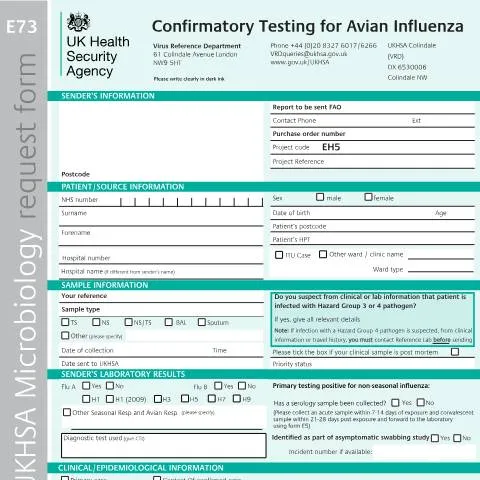
Understanding the Avian Influenza Confirmatory Testing Request Form
The urgency of public health safety is paramount, especially in the context of zoonotic diseases such as avian influenza. The Avian Influenza Confirmatory Testing Request Form is a pivotal document used by laboratories and healthcare professionals to report suspicious cases of avian influenza. This process is crucial for effective disease control, surveillance, and research purposes.
The Role of the UK Health Security Agency (UKHSA)
The UK Health Security Agency (UKHSA) is responsible for protecting the public from infectious diseases and other threats to health. Avian influenza represents a significant risk, particularly in regions with high poultry populations. The UKHSA’s role encompasses monitoring, testing, and controlling outbreaks to minimize the impact on public health and the economy. The confirmatory testing request form facilitates the rapid collection of data necessary for these processes.
Public Health Implications
Failure to properly report and test for avian influenza can have dire consequences. Delayed diagnosis may lead to increased transmission among poultry or even zoonotic spillover to humans. Consequently, the form acts not only as a laboratory document but as a public health measure that encourages timely reporting and testing.
Who Submits the Confirmatory Testing Request Form?
The responsibility for submitting the Avian Influenza Confirmatory Testing Request Form typically falls on clinical laboratories, veterinary clinics, and public health officials who suspect avian influenza in patients or animals. This includes:
- Veterinary Surgeons: Those working with poultry who observe symptoms indicative of avian influenza.
- Healthcare Professionals: Clinicians who encounter patients with a recent history of exposure to infected birds.
- Public Health Officials: Individuals responsible for managing potential outbreaks in the community.
Special Cases
In particular scenarios, such as international travel or exposure to infected birds, the submission might require additional urgency. Laboratories must act quickly to gather and report relevant data to mitigate risks effectively.
Completing the Testing Request Form: Key Sections
Filling out the Avian Influenza Confirmatory Testing Request Form requires attention to detail, as accurate information ensures proper processing. The document consists of several key sections that need to be correctly completed:
- Sample Information: Indicate the priority status and project reference to ensure the sample is handled expediently.
- Sender’s Laboratory Results: Detail any preliminary results, including the country of exposure and the type of avian influenza suspected (H5, H7, H9).
- Clinical/Epidemiological Information: Provide comprehensive details on symptoms, diagnostic tests used, and patient history.
- Patient/Source Information: Include demographic data, such as age, sex, and contact details for follow-up.
Accuracy and Clarity
It is crucial to fill the form in clear, dark ink to prevent misinterpretation. Any ambiguity can result in delays in testing and subsequent public health responses. Laboratories should ensure that all sections are completed to prevent the form from being returned due to insufficient information.
Submission Pathways for the Request Form
The completed form can be submitted through various channels. Understanding the best method for submission can expedite the testing process:
| Submission Method | Details | Timeframe |
|---|---|---|
| Online Submission | Directly through the UKHSA's portal | Immediate |
| Postal Submission | Mailing the form to the UKHSA's Microbiology Lab | Up to 1 week depending on postal service |
| In-Person Delivery | Hand-delivering to a local health authority office | Same day |
Choosing the Right Submission Method
Choosing the appropriate submission method depends on the urgency of the suspected case and the geography of the laboratory. In situations where time is of the essence, online or in-person submissions are preferable. Additionally, laboratories should maintain copies of all forms submitted for their records.
Consequences of Incomplete or Untimely Submissions
Submitting an incomplete or delayed request form may have serious ramifications. A few potential consequences include:
- Increased Risk of Outbreak: Delays in confirming avian influenza can lead to broader outbreaks.
- Legal Liability: Health professionals may face scrutiny regarding compliance with reporting regulations.
- Loss of Time and Resources: Resources spent on follow-ups and re-testing due to incomplete information can strain laboratory operations.
Legal Framework and Obligations
Health professionals have a legal obligation to report certain diseases under public health regulations. Failing to adhere to these regulations can result in penalties. The Data Protection Act 2018 along with UK GDPR governs how personal data is processed in the context of this form, ensuring that patient confidentiality is upheld while facilitating necessary public health measures.
Impact of the Request Form on Public Health Strategies
The Avian Influenza Confirmatory Testing Request Form is not merely a procedural document; it plays a vital role in informing public health strategies. By gathering data through these forms, the UKHSA can track potential outbreaks, identify trends, and implement targeted interventions.
Data Utilization
Information collected through this form contributes to national surveillance databases, enabling researchers and policymakers to understand the epidemiology of avian influenza better. Insights gained from this data can inform vaccination strategies, control measures, and future research priorities.
Special Considerations for International Cases
When avian influenza is suspected in individuals who have traveled internationally, or in birds imported from abroad, specific protocols must be followed. Additional details must be provided on travel history, including:
- The countries visited and dates of travel
- Any contact with poultry farms or live bird markets
- Symptoms experienced upon return
Urgency of Reporting
In scenarios involving international travel, health professionals should escalate their reporting to ensure that the necessary investigations can occur. This often includes notifying the local health department, which may have additional guidelines to follow.
Final Thoughts on Compliance and Best Practices
Ensuring accurate completion and timely submission of the Avian Influenza Confirmatory Testing Request Form is essential for public health safety. Here are some best practices to keep in mind:
- Review all sections before submitting to ensure completeness.
- Maintain open lines of communication with local health authorities for any clarifications needed.
- Stay updated on any changes to submission guidelines or reporting regulations.
By adhering to these guidelines, healthcare professionals and laboratories can contribute significantly to managing avian influenza risks effectively, safeguarding both public health and scientific integrity in the ongoing fight against infectious diseases.
Understanding the Confirmatory Testing Process for Avian Influenza
The confirmatory testing process for avian influenza in the UK is a critical component of the framework designed to manage outbreaks and ensure the safety of both animal and human populations. When a suspected case of avian influenza is reported, it is vital for the responsible authorities, including the Animal and Plant Health Agency (APHA), to act swiftly to confirm the strain and source of infection. This process not only aids in controlling the disease but also in protecting public health.
Initial reports of suspected avian influenza cases generally originate from farms, wildlife monitoring programs, or veterinarians noticing unusual symptoms in poultry or wild birds. Upon receiving such a report, the APHA conducts preliminary screenings. If these screenings suggest a potential avian influenza infection, a request for confirmatory testing is promptly initiated. The confirmatory testing is performed in laboratories accredited by the UK’s Department for Environment, Food & Rural Affairs (DEFRA).
It is essential for those involved in the poultry industry or wildlife management to be aware of this process. This includes understanding the need for biosecurity measures and the role of prompt reporting in mitigating the spread of the virus. The entire testing process involves the collection of samples, such as swabs from the throat or cloaca of birds, followed by laboratory analysis to identify the presence of the influenza virus.
Compliance with Reporting and Data Protection Regulations
When filling out the confirmatory testing request form for avian influenza, compliance with various reporting and data protection regulations is paramount. Under the Data Protection Act 2018 and the UK GDPR, stakeholders must ensure that the personal data of individuals involved in the reporting process is handled correctly. This includes anonymizing data where possible and ensuring that identifiable information is only shared with authorized personnel.
The form itself necessitates the collection of specific information, such as the location of the suspected infection, the species of birds affected, and the details of the person reporting the case. To ensure compliance, individuals should be familiar with the legal framework surrounding data collection and processing. This means being aware of what data must be reported, how to protect sensitive information, and the potential implications of failing to comply with data protection laws.
Moreover, the confirmatory testing request form must be submitted promptly to prevent any further escalation of the outbreak. Stakeholders should keep in mind the legal timeframes associated with reporting, as delays in submission can lead to legal ramifications or worsen the spread of avian influenza.
The Role of Stakeholders in Avian Influenza Management
Various stakeholders play crucial roles in the management of avian influenza within the UK. This includes farmers, veterinarians, wildlife officials, and public health authorities. Each group has specific responsibilities that contribute to the overall efficacy of the response to avian influenza outbreaks.
Farmers are on the front lines, as they are often the first to notice symptoms in their flocks. By maintaining strict biosecurity measures and reporting any unusual health issues promptly, they can help prevent the spread of the virus. Training sessions and resources provided by DEFRA and the APHA can equip farmers with the knowledge they need to recognize potential outbreaks and act quickly.
Veterinarians also play a vital role in this ecosystem. They are responsible for diagnosing the health of birds and should be aware of the latest developments in avian influenza research and reporting protocols. Collaboration with public health officials and wildlife monitoring agencies ensures that the veterinary community contributes effectively to early detection and response.
Finally, public health authorities must coordinate the overall response to avian influenza threats, working closely with the APHA to implement control measures and manage public concerns. They are responsible for disseminating information to the public about the risks of avian influenza and the measures being taken to contain outbreaks.
In conclusion, the management of avian influenza requires a coordinated effort among multiple stakeholders, each with distinct roles and responsibilities. Understanding the confirmatory testing request process, complying with data protection laws, and maintaining open lines of communication among all parties involved are essential components of a successful response to avian influenza threats in the UK.