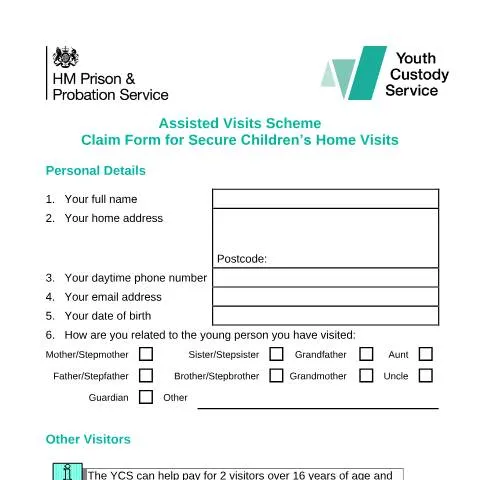
Understanding the Assisted Visits Scheme: A Lifeline for Families
When a loved one is placed in a Secure Children’s Home (SCH), the emotional toll can be profound. Families often find themselves navigating an unfamiliar landscape of regulations, financial burdens, and emotional strain. The Assisted Visits Scheme, administered by the Ministry of Justice, offers critical support to families wishing to maintain connections with their children in care. Understanding the intricacies of the Assisted Visits Scheme Claim Form is essential for relatives to access these vital benefits.Who Can Access the Scheme? Profiles and Relationships
The Assisted Visits Scheme is designed to alleviate some of the financial stress associated with visiting children housed in Secure Children’s Homes. It specifically targets family members of children under the care of the Youth Custody Service (YCS). Eligible Relatives include:- Parents or Stepparents
- Siblings (Brothers/Sisters, Stepbrothers/Stepsisters)
- Grandparents
- Aunts and Uncles
- Legal Guardians
Underage Visitors
The scheme recognizes that visiting often involves multiple family members. It allows for up to two adult visitors over the age of 16 and three children (who must also be close relatives of the young person). This inclusivity ensures that familial bonds can remain strong, even during challenging times.The Historical Context of the Assisted Visits Scheme
The Assisted Visits Scheme has its roots in broader efforts to support youth and families involved with the justice system. Over the years, various reforms and policies have emerged, reflecting a growing understanding of the importance of maintaining family ties for children in care. The Ministry of Justice implemented this scheme to ensure families could afford to visit their children, recognizing that regular contact is crucial for emotional support and rehabilitation. The scheme aligns with initiatives focusing on restorative justice, which prioritize healing and connection over punishment. By facilitating visits, the Ministry seeks to foster a more supportive environment for young people, encouraging positive relationships that can aid in their development and reintegration into society.Filling Out the Claim Form: A Step-by-Step Guide
Completing the Assisted Visits Scheme Claim Form is straightforward, but careful attention is necessary to ensure a smooth experience. Here’s how to effectively fill out the form:Gather Required Information
Before diving into the form, ensure you have the following information at hand:- Your full name and home address
- Your daytime phone number and email address
- Your date of birth
- The relationship between you and the young person (e.g., mother, father, grandmother)
Details of Other Visitors
The form will ask for details of other visitors accompanying you. Be prepared to provide:- Name and age of each visitor
- Their relationship to the young person
Information About the Visit
Next, you will need to provide specifics about your visit:- Which Secure Children’s Home did you visit?
- Young person’s name
- Date and time of the visit
- Mode of transport used
- Time you left and returned home
Reimbursement Details
The scheme supports various reimbursement options, including:- BACS transfer directly to your bank account
- Cheque payments
The Timeline: Key Dates and Next Steps
Understanding the timeline for submitting the claim is essential for a successful application.Submission Window
Claims must be submitted within 28 days of the visit to ensure eligibility. This deadline is strict; late submissions may not be considered, which can lead to significant frustration for families trying to secure financial support.After Submission
Once you’ve submitted the claim form:- Keep a copy of the completed form for your records.
- Monitor your bank account or mail for the reimbursement.
What Happens in Case of a Denied Claim? Navigating Challenges
If your claim is denied, understanding the reasons can help guide your next steps.Common Denial Reasons
Claims may be rejected for several reasons, including:- Missing or incomplete information on the form.
- Submissions received after the 28-day deadline.
- Travel modes not covered under the scheme.
Steps to Address a Denial
If your claim is denied:- Review the denial letter to understand the reasoning.
- Gather any additional documentation that may support your case.
- Contact the SCH for clarification and potential appeal options.
Administration and Tracking Your Claim
Keeping track of your claim within the administration process is vital to ensure a timely resolution.Following Up
Once submitted, you may want to reach out to the SCH office to inquire about the status of your claim. Be sure to have your claim details handy, including the date of submission and the young person’s name.Documentation and Record Keeping
Maintaining records of all communications, travel receipts, and submitted forms can be extremely useful if any disputes arise.Understanding Your Rights and Obligations
While the Assisted Visits Scheme provides financial support, it’s crucial to understand both your rights as a claimant and your obligations to ensure compliance.Your Rights as a Claimant
Relatives have the right to:- Receive clear guidance on the claims process.
- Be informed of any reasons for claim denial.
- Access support if needed during the visit.
Obligations of the Claimant
As a claimant, it’s also your responsibility to:- Provide accurate information on the claim form.
- Submit the claim within the designated timeframe.
- Provide any requested documentation to support your claim.
Final Thoughts on the Assisted Visits Scheme
The Assisted Visits Scheme plays a crucial role in supporting families as they navigate the challenges of maintaining connections with children in Secure Children’s Homes. By understanding the details of the claim process, timelines, and required documentation, families can better position themselves to access necessary support. While the paperwork may seem daunting at first glance, the emotional benefits of keeping families connected during difficult times can far outweigh the effort involved in completing the Assisted Visits Scheme Claim Form. As you prepare to fill it out, remember that you are not just completing a form; you are taking an essential step towards nurturing the family bonds that matter most.Understanding the Eligibility Criteria for the Assisted Visits Scheme
The Assisted Visits Scheme (AVS) is designed to facilitate visits for individuals who are in custody, allowing their relatives or other significant individuals to visit them without the worry of financial burden. To make a successful claim, it is essential to understand the eligibility criteria set forth by the Ministry of Justice and the specifics of the application process.
Primarily, the scheme is available to people who are visiting a relative or friend who is held in a prison or secure facility. The following criteria must be met to qualify:
- Relationship to the prisoner: You must be a close relative or a significant other, which typically includes partners, parents, grandparents, siblings, children, or guardians. In certain cases, extended family members may be considered, depending on the context of the relationship.
- Financial need: The claimants must demonstrate that they are on a low income or receiving specific benefits that qualify for assistance. This often includes those receiving Universal Credit, Jobseeker’s Allowance, or other forms of government support. Documentation providing proof of your financial status will be needed during the application process.
- Distance from the prison: The scheme often considers the distance between the claimant's home and the prison, as well as the associated travel costs. You may need to provide evidence of distances traveled, which can include receipts or travel tickets.
Understanding these criteria is crucial, as they are the foundation for both the application process and the subsequent approvals for financial assistance. Keeping track of your documentation and ensuring all eligibility requirements are met can save time and streamline the claims process.
Application Process for the Assisted Visits Scheme
The application process for the Assisted Visits Scheme is designed to be as clear and straightforward as possible, but it can be daunting if you are unfamiliar with the requirements and steps involved. Here’s a detailed breakdown of how to navigate this process effectively:
Step 1: Gather Necessary Information
Before beginning your application, it is essential to compile all required documents. You should have the following at hand:
- Your National Insurance number
- Details of your relationship to the prisoner
- Proof of income and benefits received, such as recent payslips or benefit award letters
- Travel documentation, including receipts, tickets, and any other relevant evidence of expenses incurred for visits.
Step 2: Complete the Application Form
The official application form for the Assisted Visits Scheme is typically available on the Ministry of Justice's website or through direct request from the relevant prison or facility. Ensure you read each section carefully and provide detailed information to avoid delays. When completing the form, ensure:
- You accurately state your income and expenses, listing them clearly to avoid misunderstandings.
- All sections pertaining to your relationship with the prisoner are filled out comprehensively, demonstrating the necessity for your visits.
Step 3: Submit Your Application
The completed form should be submitted along with all necessary supporting documents. It is advisable to send your application through a recorded delivery service to ensure it arrives safely and can be tracked. Retain copies of everything you submit, as having this on file can be helpful in case of any disputes or questions.
Step 4: Awaiting the Decision
After submitting your application, you will need to wait for a response from the Ministry of Justice. Be aware that processing times can vary, so it’s prudent to be patient. If further information is required, they will reach out to you, so make sure your contact details are accurate.
Common Mistakes to Avoid in Your Claim
- Incomplete Information: One of the most common reasons applications are delayed is due to incomplete information. Ensure all sections of the form are filled out to the best of your ability, and provide all requested documentation. If unsure, seek assistance to clarify any sections.
- Insufficient Proof of Financial Need: Claimants are required to demonstrate financial need. Failing to provide comprehensive evidence of income, benefits, or other financial circumstances can lead to denial of the claim. Gather all required documentation diligently.
- Ignoring Deadlines: Ensure you are aware of any relevant deadlines, especially if you are currently receiving benefits or have specific financial situations that may change. Keeping on top of these dates can prevent issues.
- Not Following Up: After submitting your application, if you haven’t received confirmation or a response within a reasonable time frame, don’t hesitate to follow up with the Ministry of Justice. Being proactive can help clarify the status of your claim.
Avoiding these common mistakes can significantly increase your chances of a successful claim and provide you with the financial support needed to continue visiting your loved ones in prison.