Navigating Trade Mark Ownership Updates: When Details Change but Ownership Remains
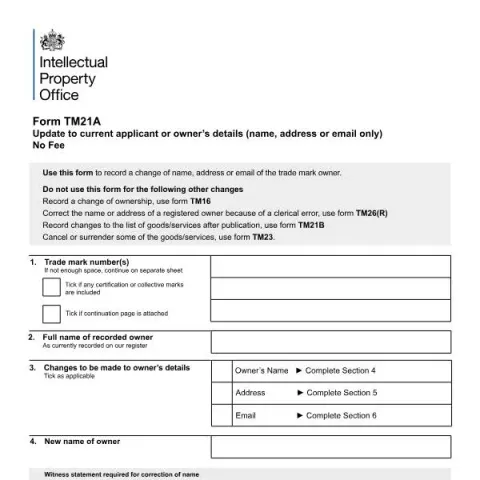
Trade mark ownership in the UK presents a unique administrative challenge when personal or business circumstances change. A company relocates its headquarters, a sole trader adopts a different trading name, or contact details shift following a restructure. These seemingly straightforward updates can trigger complex administrative requirements, with specific forms for specific situations. The TM21A form serves this precise niche: recording changes to an owner's name, address, or email whilst preserving the underlying ownership structure intact.
Unlike ownership transfers or corrections to registered errors, this process acknowledges that trade mark holders evolve whilst their intellectual property rights remain constant. The Intellectual Property Office recognises this distinction, providing a streamlined mechanism that avoids the more complex procedures associated with actual ownership changes or clerical corrections.
Understanding the TM21A's Specific Territory Within Trade Mark Administration
The TM21A operates within a carefully delineated administrative landscape. The Intellectual Property Office maintains distinct procedures for different types of changes, each serving specific circumstances and carrying different evidentiary requirements.
This form specifically handles three types of updates: name changes where the legal entity remains the same but adopts different nomenclature, address modifications reflecting relocations or postal updates, and email amendments for communication purposes. Crucially, these changes occur without any transfer of ownership rights or correction of previously recorded errors.
| Change Type | Appropriate Form | Key Requirement |
|---|---|---|
| Name, address, or email update | TM21A | No ownership transfer |
| Ownership transfer | TM16 | Assignment documentation |
| Clerical error correction | TM26(R) | Evidence of original error |
| Goods/services amendments | TM21B | Post-publication changes only |
| Partial surrender | TM23 | Specific goods/services cancellation |
The boundaries between these categories matter significantly. Using TM21A when ownership actually transfers can invalidate the application, whilst applying TM26(R) for genuine name evolution rather than clerical correction may result in rejection. The IPO's form selection reflects substantive legal distinctions rather than mere administrative convenience.
Certification and Collective Marks: Special Considerations
The form includes specific provisions for certification and collective marks, which operate under different regulatory frameworks. These marks, governed by additional statutory requirements, may require supplementary documentation or approval processes. The checkbox system allows applicants to flag these special categories, triggering appropriate review procedures within the IPO.
Profile Analysis: Who Initiates TM21A Submissions
The form accommodates various applicant profiles, each bringing different authorisation requirements and procedural considerations. Understanding these distinctions helps determine the appropriate approach and necessary supporting documentation.
Recorded Owners: Direct Control
The most straightforward scenario involves the recorded trade mark owner directly submitting the form. This category includes sole traders updating personal details, companies reflecting corporate changes, or partnerships adjusting their recorded information. These applicants possess inherent authority to request changes, requiring only the standard declaration confirming continued ownership.
For individual owners, common triggers include marriage or divorce affecting surnames, residential relocations, or email address changes. Corporate owners typically submit TM21A following rebranding exercises, office relocations, or communication system updates. The key requirement remains demonstrating continuity of the underlying legal entity despite superficial changes.
Recorded Representatives: Agency Authority
Trade mark attorneys, solicitors, and other professional representatives frequently manage these updates on behalf of clients. The form recognises this relationship, allowing representatives to act with appropriate authority. However, the representative must be formally recorded with the IPO, not merely instructed for this specific transaction.
Representatives often coordinate multiple changes simultaneously, updating details across various intellectual property portfolios. The form's continuation provisions and cross-referencing capabilities support these comprehensive update exercises, whilst maintaining clear audit trails for each individual mark.
Other Interested Parties: Exceptional Circumstances
The "Other" category captures unusual situations where neither the recorded owner nor representative initiates the update. This might include liquidators managing corporate estates, executors handling deceased individuals' estates, or court-appointed administrators. These circumstances require additional documentation establishing authority to act, typically involving formal legal appointments or court orders.
The Documentation Hierarchy: From Simple Updates to Complex Evidence
TM21A operates on a tiered evidence system, with requirements scaling according to the nature of the requested change. This approach balances administrative efficiency with intellectual property security, ensuring genuine updates proceed smoothly whilst preventing unauthorised modifications.
Address and Email Changes: Minimal Documentation
Address and email modifications typically require only the completed form with appropriate declaration. The IPO recognises these as routine administrative updates with minimal security implications. However, the confirmation address becomes significant – all future correspondence will use the updated details, making accuracy crucial.
For corporate entities, address changes might reflect office relocations, registered office modifications, or postal system updates. The IPO doesn't distinguish between these motivations, focusing instead on ensuring the recorded information enables effective communication.
Name Changes: Evidence Requirements
Name modifications trigger enhanced scrutiny, recognising their potential for confusion or misrepresentation. The form distinguishes between genuine name changes and clerical corrections, with different procedures for each scenario.
For genuine name changes – such as corporate rebranding, partnership restructuring, or individual name changes following marriage – the IPO requires supporting documentation. Marriage certificates, deed poll documents, or corporate resolution records establish the legitimacy of the change whilst confirming entity continuity.
Witness Statements: When Names Require Correction
When a recorded name contains errors requiring correction rather than genuine change, the TM21A demands witness statement evidence. This elevated requirement reflects the IPO's careful approach to retrospective corrections, which could potentially affect third-party rights or create registry confusion.
Witness statements must explain the error's nature, its origins, and the basis for correction. The IPO's guidance emphasises clarity and specificity, with statements requiring formal attestation. This process protects against attempts to circumvent ownership transfer procedures through claimed "corrections".
Procedural Choreography: From Submission to Registry Update
The TM21A process follows a structured sequence designed to maintain registry integrity whilst processing legitimate updates efficiently. Understanding this choreography helps applicants manage expectations and coordinate related activities.
Pre-Submission Validation
Before submission, applicants must verify their trade mark numbers, confirm current registry details, and ensure they're using the appropriate form. The IPO's online systems provide current registration information, allowing applicants to confirm exactly how their details currently appear.
This verification step proves crucial because the form requires stating details "as currently recorded on our register". Discrepancies between the applicant's understanding and actual registry entries can delay processing or trigger additional queries.
Digital Submission Preferences
The IPO strongly encourages email submission through their dedicated forms address, promising faster processing than postal alternatives. This preference reflects broader government digitalisation initiatives and practical processing efficiencies.
Digital submissions enable automated acknowledgment, electronic tracking, and faster query resolution. However, the IPO maintains postal alternatives for circumstances where digital submission proves impossible, ensuring access regardless of technological capabilities.
Processing Timeline and Confirmation
Following submission, the IPO processes applications according to their internal procedures, which vary depending on the complexity of requested changes and current workload. Simple address updates typically process more quickly than name changes requiring evidence review.
Confirmation communications use the contact details specified in section 7, which may differ from the updated owner details. This separation ensures applicants receive confirmation even when their primary contact information is changing.
Integration with Broader IP Portfolio Management
TM21A rarely operates in isolation, often forming part of broader intellectual property portfolio updates following corporate changes, personal circumstances, or strategic decisions. The form includes provisions supporting coordinated submissions across multiple rights.
Multiple Trade Mark Updates
Owners holding multiple trade marks frequently require identical updates across their entire portfolio. The form accommodates this through continuation pages and cross-referencing systems, allowing efficient batch processing whilst maintaining individual record integrity.
The "Your Reference" field becomes particularly valuable in these scenarios, enabling applicants to coordinate multiple submissions and track progress across complex update exercises. Professional representatives often develop systematic referencing approaches supporting large-scale portfolio management.
Coordination with Other IP Rights
While TM21A specifically addresses trade marks, owners often hold mixed intellectual property portfolios including patents, designs, and copyright interests. Although these require separate procedures, coordinating updates helps maintain consistent contact information across all IPO interactions.
The form's section 9 specifically addresses concurrent applications, encouraging applicants to declare related submissions. This transparency supports IPO processing efficiency and helps prevent conflicting or duplicated efforts.
Strategic Timing and Portfolio Considerations
The timing of TM21A submissions can significantly impact broader intellectual property strategy, particularly when coordinating with renewal deadlines, opposition periods, or related applications.
Renewal Period Coordination
Trade mark renewals operate on ten-year cycles, with specific deadlines and communication requirements. Updating contact details well before renewal periods ensures owners receive timely renewal reminders and can respond to any queries without communication delays.
The IPO sends renewal notices to recorded addresses, making current contact information crucial for maintaining rights. Late renewals carry additional fees and administrative complexity, making proactive detail management a valuable defensive strategy.
Opposition and Legal Proceedings
During opposition proceedings or legal challenges, accurate contact information becomes legally significant. Courts and opposing parties rely on IPO registry details for service requirements, making updates time-sensitive when legal proceedings are active or anticipated.
The form's declaration regarding ownership continuity provides important legal confirmation during disputes, establishing that administrative changes don't affect underlying rights or legal standing.
Quality Control and Common Pitfalls in Practice
Experience with TM21A submissions reveals recurring issues that can delay processing or trigger additional queries. Understanding these patterns helps applicants navigate the process more effectively.
Incomplete declarations represent the most frequent issue, particularly regarding the ownership continuity statement. This declaration carries legal significance, confirming that administrative changes don't mask ownership transfers that require different procedures.
Evidence quality varies significantly, particularly for name changes requiring supporting documentation. Clear, legible copies of marriage certificates, deed polls, or corporate documents expedite processing, whilst poor-quality images or incomplete documentation trigger delays.
Cross-referencing errors between multiple submissions create administrative complexity, particularly when applicants coordinate updates across large portfolios. Consistent referencing and clear communication help IPO staff process related applications efficiently.
The witness statement requirements for name corrections often catch applicants unprepared, particularly when the distinction between genuine changes and clerical corrections isn't immediately obvious. Early consultation with the IPO or professional advisors can clarify appropriate procedures before submission.
Common Scenarios Requiring Detail Updates and Their Specific Requirements
Different life circumstances trigger the need to update applicant or owner details, each carrying distinct administrative considerations and potential complications. Understanding these scenarios helps ensure you complete the correct procedures and avoid unnecessary delays or rejections.
Marriage, Civil Partnership, and Name Changes
When updating details following marriage or civil partnership, you'll typically need to provide certified copies of your marriage certificate or civil partnership certificate alongside your update request. The Intellectual Property Office accepts these as primary evidence for name changes, but they must be issued by a registrar in England, Wales, Scotland, or Northern Ireland, or be appropriately apostilled if issued elsewhere.
For deed poll name changes, you'll need to submit a certified copy of the enrolled deed poll from the Royal Courts of Justice, or an unenrolled deed poll witnessed by a solicitor, magistrate, or other qualified professional. Simple statutory declarations aren't typically sufficient for trademark or design registrations, though they may be accepted for some patent applications depending on the specific circumstances.
If you're updating both name and address simultaneously following marriage, submit both pieces of evidence together rather than making separate applications. This reduces processing time and ensures consistency across your intellectual property portfolio. However, be aware that if you're changing from a maiden name that appears on existing correspondence, you may need to provide additional documentation linking your previous identity to your new married name.
Corporate Restructuring and Business Changes
Company name changes require submission of a certified copy of the certificate of incorporation on change of name from Companies House, along with form TM21 or the equivalent for your specific intellectual property right. If your company has undergone a merger or acquisition, you'll need to provide evidence of the corporate transaction, typically including board resolutions and certificates of incorporation for any new entities.
For partnerships converting to limited companies, or sole traders incorporating their business, the process involves more complex documentation. You'll need to demonstrate continuity of business operations and provide evidence that the new entity has legitimate grounds to maintain ownership of the intellectual property rights. This might include partnership agreements, articles of incorporation, and statutory declarations confirming the business transfer.
If you're updating details following a company dissolution and reformation, particular care is needed to ensure intellectual property rights haven't lapsed during any interim period. The Intellectual Property Office may require additional evidence that rights have been properly maintained throughout any corporate restructuring process.
International Relocations and Cross-Border Considerations
Moving abroad while maintaining UK intellectual property rights presents specific challenges, particularly regarding correspondence addresses and legal representation requirements. If you're relocating outside the European Economic Area, you may be required to appoint a UK-based representative for certain types of intellectual property proceedings.
Fill in your form directly online
No printing: type your details into the boxes of the official form, tick, then download the PDF ready to send.
- 1Type into the form boxes
- 2Tick in one click
- 3Save and download the PDF
When updating your address to an overseas location, ensure you understand the implications for service of legal documents and official correspondence. Some intellectual property matters require a UK address for service, and failure to maintain this could result in missed deadlines or deemed abandonments of your rights.
For trademark applications, if you're claiming priority from an overseas application, moving countries during the application process might affect your priority claims. Consult the relevant international treaties and consider whether your move impacts any Madrid Protocol registrations or Community Trade Mark applications you may have filed.
Technical Requirements and Digital Submission Protocols
The Intellectual Property Office's digital systems have specific technical requirements that applicants must follow when submitting detail updates electronically. Understanding these requirements prevents submission errors and reduces processing delays.
File Format and Document Specifications
Supporting documents must be submitted in PDF format, with individual files not exceeding 10MB in size. Multi-page documents should be compiled into single PDF files rather than submitted as separate image files. Scanned documents must be clear and legible, with a minimum resolution of 300 DPI for text documents and 600 DPI for any documents containing signatures or official seals.
When scanning official certificates or legal documents, ensure the entire document is visible, including any security features, watermarks, or official stamps. Partial scans or documents with cropped edges may be rejected and require resubmission, potentially causing delays to your application.
For documents in languages other than English, you must provide certified translations alongside the original documents. The translation must be completed by a qualified translator and include a statement confirming the translator's qualifications and the accuracy of the translation. Simply using online translation services or providing uncertified translations will result in rejection of your submission.
Electronic Signature and Authentication Requirements
Digital submissions require appropriate electronic signatures that comply with UK electronic signature regulations. The Intellectual Property Office accepts several forms of electronic signature, including typed names in signature boxes, uploaded signature images, and advanced electronic signatures using digital certificates.
If you're signing on behalf of a company or organisation, your electronic signature must be accompanied by evidence of your authority to act on behalf of that entity. This might include a board resolution, power of attorney, or other corporate documentation confirming your signing authority.
For high-value intellectual property portfolios or complex corporate structures, consider using advanced electronic signatures with digital certificates. These provide additional security and non-repudiation features that can be valuable if your submissions are later challenged or disputed.
System Integration and Automated Processing
The Intellectual Property Office's online systems integrate with various government databases to verify information automatically. When you submit address updates, the system may cross-reference your new address against Royal Mail's Postcode Address File to ensure accuracy and deliverability.
For company registrations, the system automatically checks details against the Companies House database. If there are discrepancies between the information you submit and the official company records, your application may be flagged for manual review, potentially extending processing times.
Understanding these automated checks helps you prepare accurate submissions that pass through the system efficiently. Ensure all details match official records exactly, including precise formatting of company names, postcodes, and other standardised information.
Strategic Considerations for Portfolio Management
Managing detail updates across multiple intellectual property rights requires strategic planning to maintain portfolio integrity and avoid gaps in protection. This is particularly important for businesses with extensive trademark portfolios or complex licensing arrangements.
Coordinated Update Scheduling
When you hold multiple intellectual property rights, updating details in a coordinated manner helps maintain consistency and reduces administrative burden. Plan updates to coincide with natural review points, such as renewal periods or annual portfolio audits, rather than making ad hoc changes throughout the year.
Consider the timing of updates in relation to pending applications or opposition proceedings. Making significant changes to applicant details during active opposition periods might complicate proceedings or create opportunities for challengers to raise procedural objections.
For international portfolios that include UK rights alongside European Union or Madrid Protocol registrations, coordinate timing to ensure consistency across all jurisdictions. Changes made in one jurisdiction may trigger requirements to update corresponding registrations elsewhere, and sequential updates can be more efficient than attempting to manage multiple simultaneous changes.
Licensing and Assignment Implications
Detail updates can have significant implications for existing licensing agreements and assignment documents. When updating owner details following corporate restructuring, ensure that all licensing agreements properly reflect the new ownership structure and that licensees are formally notified of any changes.
If you're updating details as part of an assignment process, coordinate the timing of the detail update with the formal assignment recording. The Intellectual Property Office requires specific procedures for recording assignments, and updating owner details separately from assignment recording can create confusion about ownership status.
For exclusive licensing arrangements, changes to proprietor contact details might trigger notification requirements under the licensing agreement. Review your licensing documentation to understand any obligations to notify licensees of changes to your business structure or contact information.
Risk Management and Continuity Planning
Regular detail updates form part of effective intellectual property risk management. Outdated contact information can result in missed renewal notices, opposition deadlines, or other critical communications that could jeopardise your rights.
Implement systems to monitor and update details proactively rather than reactively. This might include annual reviews of all registered contact information, automated alerts for upcoming renewal periods, and procedures for updating details immediately following any corporate changes or relocations.
Consider appointing professional representatives or intellectual property attorneys to receive official correspondence on your behalf. This provides continuity even if your internal contact details change and ensures that qualified professionals monitor critical deadlines and requirements.
For businesses operating in multiple jurisdictions, maintaining current UK contact details is essential for preserving international priority rights and ensuring compliance with various treaty obligations. Outdated information can compromise your ability to enforce rights internationally or defend against challenges in other territories.