When Employee Immigration Status Becomes an Employer's Business Matter
The relationship between UK employers and their foreign national employees involves a delicate balance of workplace rights, immigration compliance, and administrative transparency. When an employee submits a visa application or seeks to establish their right to work, employers often find themselves in a position where they need concrete information about the progress of these applications to make informed decisions about employment continuity, contract renewals, or resource planning.
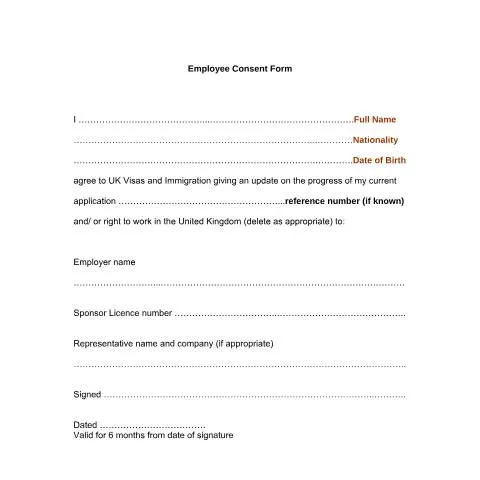
This is where UK Visas and Immigration's employee consent mechanism becomes particularly relevant. The Status updates on employee applications: consent form serves as a formal bridge between the confidential world of immigration applications and the practical needs of UK employers who must navigate the complexities of employing foreign nationals whilst maintaining compliance with sponsor licence obligations.
The form addresses a common workplace scenario: an employee has submitted an immigration application, but weeks or months pass without clarity on the outcome. Meanwhile, the employer faces operational uncertainties about whether to proceed with training programmes, assign long-term projects, or make strategic staffing decisions. Without this consent mechanism, employers would remain entirely in the dark about application progress, creating potential complications for both parties.
The Consent Framework Within UK Immigration Law
The legal foundation for this consent process stems from the UK's broader data protection framework, specifically the Data Protection Act 2018 and UK GDPR provisions governing personal data processing. Immigration status information is considered sensitive personal data, and UK Visas and Immigration cannot disclose application details to third parties—including employers—without explicit written consent from the applicant.
This consent requirement reflects a fundamental principle in UK administrative law: individuals maintain control over their personal information, even when that information might affect their employment relationship. The form essentially creates a controlled exception to the general rule of confidentiality, allowing UKVI to share specific, limited information about application progress with designated recipients.
The six-month validity period built into the form reflects practical considerations about the changing nature of both employment relationships and immigration applications. Circumstances can evolve significantly over time—employees might change jobs, applications might be withdrawn or decided, or employer needs might shift. The time limitation ensures that consent remains current and reflects the applicant's ongoing wishes rather than becoming an indefinite authorisation.
Interaction with Sponsor Licence Obligations
For employers holding a sponsor licence, this consent mechanism takes on additional significance. Sponsor licence holders have ongoing obligations to monitor their sponsored employees' immigration status and report changes to UKVI. The consent form can help employers fulfil these duties more effectively by providing authoritative updates directly from the immigration authority rather than relying solely on employee self-reporting.
However, it's crucial to understand that the consent form doesn't replace other sponsor duties. Licensed sponsors must still maintain their own records, conduct right to work checks, and report via the Sponsor Management System when required. The consent form supplements rather than substitutes these existing obligations.
Practical Completion and Implementation Requirements
The form's apparent simplicity belies several important completion requirements that affect its validity and usefulness. Each field serves a specific purpose in UKVI's verification process and must be completed accurately to ensure the consent functions as intended.
| Field | Requirements | Common Issues |
|---|---|---|
| Full Name | Must match passport/application exactly | Nicknames or abbreviations invalidate consent |
| Nationality | Current nationality as per passport | Multiple nationalities may require clarification |
| Date of Birth | DD/MM/YYYY format typically expected | US format (MM/DD/YYYY) causes processing delays |
| Application Reference | Complete UKVI reference if available | Partial or incorrect references prevent matching |
| Employer Details | Registered company name and sponsor licence | Trading names without licence numbers insufficient |
The signature and dating requirements are particularly critical. The signature must be the employee's own—electronic signatures are generally acceptable for electronic versions, but the signature method must be clearly identifiable. The date establishes the six-month validity period, so accurate dating is essential for determining when the consent expires.
The Representative Option
The form includes provision for a representative, acknowledging that many immigration applications involve professional legal or advisory support. When a representative is involved, they become an additional authorised recipient of status updates. This can be particularly valuable for complex applications where professional oversight helps ensure compliance with immigration requirements.
However, including a representative doesn't diminish the employer's direct access to updates. The consent creates multiple authorised channels rather than redirecting information through the representative exclusively.
Storage, Retention, and Compliance Obligations
The form's final paragraph establishes clear obligations for employers regarding document retention and accessibility. The requirement to retain the original form on the employee's HR file reflects UKVI's broader approach to immigration compliance, where employers become active participants in maintaining immigration-related documentation.
The choice between paper and electronic format provides flexibility while maintaining security requirements. Electronic storage must meet the same accessibility and integrity standards as paper files—the form must remain readily available and unaltered. Many employers integrate these forms into their existing HR management systems, but the storage method must ensure that visiting officers can easily access and review the documentation during compliance inspections.
Visiting officer inspections represent a significant compliance risk for employers, particularly those with sponsor licences. During these inspections, officers examine various aspects of immigration compliance, including right to work documentation, sponsor duties fulfilment, and record-keeping practices. The employee consent forms become part of this broader compliance picture, demonstrating that the employer has appropriately managed the balance between operational needs and immigration confidentiality requirements.
Integration with Broader HR Systems
Effective management of these consent forms requires integration with existing HR processes. Many employers establish specific protocols for obtaining consent when employees disclose pending immigration applications, ensuring that the forms are completed promptly and stored appropriately. This might involve training HR personnel to recognise situations where consent forms are advisable and establishing clear procedures for form completion and filing.
The six-month validity period necessitates tracking systems to monitor when consent expires. Some employers implement calendar reminders or database flags to ensure they don't inadvertently request updates after consent has lapsed, which could create compliance issues and potentially damage the employment relationship.
Strategic Timing and Application Scenarios
The timing of when employers request employee consent can significantly impact both the utility of the information received and the employment relationship dynamics. Different immigration application types create varying scenarios where consent might be particularly valuable or potentially sensitive.
For extension applications, where employees are applying to extend existing visas, consent forms are often most straightforward. The employee typically has a clear interest in keeping their employer informed, particularly if their current visa is approaching expiry. Early consent allows employers to plan for potential gaps in work authorisation and make necessary adjustments to project timelines or responsibilities.
Initial visa applications present more complex considerations. Prospective employees applying for their first UK visa might be more cautious about sharing application details, particularly if they're currently employed elsewhere or if the application outcome affects their ability to take up the position. However, employers often have the strongest business need for updates in these scenarios, as they may need to adjust start dates or make alternative arrangements.
Change of Circumstances Applications
Applications involving changes in immigration circumstances—such as switching from one visa category to another—often create the most uncertainty for employers. An employee might be switching from a Tier 2 (General) visa to a Skilled Worker visa, or from a student visa to work authorisation. These transitions can involve periods where work authorisation is unclear, making employer access to application updates particularly valuable.
The consent form proves especially useful when employees are applying for indefinite leave to remain or British citizenship. While these applications typically don't affect immediate work authorisation, they can impact long-term employment planning, particularly for roles requiring security clearances or positions with citizenship requirements.
Information Scope and Limitations of Updates
Understanding exactly what information UKVI will share under this consent arrangement helps employers set appropriate expectations and avoid misunderstandings about the scope of updates provided. The consent specifically covers "progress" updates rather than detailed application content or decision reasoning.
Typical updates might include confirmation that an application has been received and is being processed, notification that additional documentation has been requested, or confirmation that a decision has been made. However, UKVI generally won't share detailed information about why applications might be delayed, specific concerns raised during processing, or the reasoning behind negative decisions.
This limitation means that while employers gain valuable insight into application timing and basic status, they shouldn't expect comprehensive details about application content or immigration officer assessments. The updates serve operational planning purposes rather than providing deep insight into immigration decision-making processes.
Frequency and Method of Updates
UKVI doesn't commit to specific update frequencies or methods through this consent process. Updates are typically provided when significant milestones occur in application processing rather than on a regular schedule. Employers shouldn't expect weekly or monthly progress reports, but rather notifications when applications move between major processing stages.
The method of communication varies depending on UKVI's operational procedures and the specific circumstances of each case. Updates might come via telephone, email, or letter, and employers should ensure their contact details remain current throughout the consent period to avoid missing important communications.
Navigating Multi-Party Employment Relationships
Modern employment relationships often involve multiple parties—direct employers, recruitment agencies, umbrella companies, or contracting arrangements. The employee consent form must navigate these complex relationships to ensure updates reach the most relevant recipients while maintaining appropriate confidentiality boundaries.
When employees work through recruitment agencies or umbrella companies, determining the appropriate recipient for status updates requires careful consideration. The form allows for multiple recipients, but each must have a legitimate business need for the information. Simply including all parties in a complex employment chain could dilute the purpose of the consent mechanism and potentially create unnecessary privacy risks.
Sponsor licence considerations become particularly complex in multi-party arrangements. If multiple organisations in the employment chain hold sponsor licences, they may have different obligations and information needs regarding the employee's immigration status. The consent form should clearly identify which organisation holds the relevant sponsor licence for the employee's current immigration status.
Temporary and Contract Employment
For temporary or contract employees, the six-month validity period of the consent form may span multiple assignments or employers. This creates potential complications where the original consent was given to one employer, but the employee subsequently works for different organisations within the consent period.
The form's structure doesn't automatically transfer consent to new employers, so employees moving between positions may need to complete fresh consent forms for each employer requiring status updates. This ensures that consent remains specific to the current employment relationship rather than creating ongoing obligations that outlast the relevant business relationship.
Compliance Integration and Risk Management
The employee consent form operates within a broader compliance ecosystem that includes right to work checks, sponsor licence obligations, and general employment law requirements. Effective use of the consent mechanism requires understanding how these various compliance strands interact and support each other.
Right to work documentation requirements remain separate from and additional to the consent process. Employers must still conduct initial right to work checks when employees commence employment and follow-up checks when work authorisation has time limitations. The consent form provides supplementary information that can help employers anticipate when follow-up checks might be necessary, but it doesn't replace the fundamental obligation to verify work authorisation independently.
For organisations with sponsor licences, the consent form becomes part of a comprehensive approach to immigration compliance. Sponsors must maintain detailed records of their sponsored employees, report changes in circumstances, and demonstrate ongoing compliance with their licence conditions. Employee consent forms contribute to this compliance framework by providing authoritative information about application progress, but they must be integrated with other sponsor duties rather than treated as standalone compliance measures.
The risk management implications extend beyond immigration compliance to broader employment law considerations. Having clear information about employees' immigration status helps employers make informed decisions about employment terms, avoid discriminatory practices, and ensure they don't inadvertently breach employment law by making assumptions about employees' status or treating individuals differently based on incomplete information.
Regular review of consent form validity and effectiveness should form part of employers' broader compliance monitoring. This includes tracking when forms expire, assessing whether the information received meets business needs, and evaluating whether the consent process is being implemented consistently across the organisation. Such reviews help ensure that the consent mechanism continues to serve its intended purpose while maintaining appropriate respect for employee privacy and immigration confidentiality requirements.