Understanding the Seed Certification Process in the UK
In the realm of agriculture, seed quality plays a crucial role in determining the yield and health of crops. The Seed Certification process, administered by the Animal and Plant Health Agency (APHA), serves as an essential mechanism to ensure that seeds meet established quality standards. This document provides insight into the intricacies of obtaining seed certification labels in the UK, their legal significance, and practical applications.
Who Qualifies for Seed Certification Labels?
Obtaining seed certification labels is not a straightforward process and comes with specific eligibility criteria that applicants must meet. Primarily, the certification is available to:
- Seed producers who cultivate varieties that have been officially tested and approved.
- Institutions or companies engaged in seed breeding and multiplication.
- Farmers looking to market their certified seeds within the UK and abroad.
Additionally, the following conditions must be satisfied:
- The seeds must come from a registered seed producer or breeding site.
- All seed lots must undergo rigorous testing for diseases and genetic purity.
- Producers must adhere to the regulations set forth by the APHA concerning planting, harvesting, and processing.
The Legal Standing of Seed Certification Labels
Seed certification labels serve a pivotal role in the agricultural supply chain, providing legal assurance of seed quality and safety. The labels signify compliance with national and international standards, which can influence market access and consumer trust. When a seed lot is certified, it carries an official label that confirms:
- Varietal Identity: The seed is accurately identified as belonging to a particular variety.
- Quality Assurance: The seed has passed quality tests that evaluate parameters such as germination rates, purity, and absence of diseases.
- Regulatory Compliance: The producer has adhered to all necessary regulations and has proper documentation in place.
This legal assurance is crucial not just for producers but also for consumers who rely on the integrity of the seeds they purchase for agricultural use.
Steps to Obtain Seed Certification Labels
The process for obtaining seed certification labels involves several meticulous steps. Below is a streamlined guide to navigating this essential certification pathway:
- Register as a Seed Producer:To begin, ensure that you are registered with the APHA as a seed producer. This registration is vital for legality and credibility.
- Submit Seed Samples for Testing:Once registered, you must submit seed samples to an authorized laboratory for testing. The testing will evaluate the seeds for disease, genetic purity, and other quality parameters.
- Receive Test Results:Testing typically takes a few weeks. If the seeds pass the evaluation, a certificate will be issued.
- Request Seed Certification Labels:Upon receiving positive test results, you can formally request certification labels from the APHA. This request must include details about the seed lot and the results of the tests conducted.
- Receive Labels and Market Seeds:Once your application is reviewed and approved, you will receive official seed certification labels that you can affix to your seed packages.
Duration and Renewal of Seed Certification Labels
The validity of seed certification labels is crucial for maintaining market confidence. Generally, seed certification labels are considered valid for the duration of the "crop year", which runs from 6 April to 5 April of the following year. However, there are certain conditions regarding renewal and re-certification:
- Periodic Testing: Producers must submit new seed samples for testing every crop year to ensure continued compliance.
- Changes in Varieties: If a producer changes seed varieties, a new application must be submitted, along with fresh test results.
- Compliance Audits: The APHA conducts regular audits to ensure that producers continue to meet certification standards.
Failure to comply with these stipulations can lead to suspension or revocation of certification labels, which could severely impact marketing capabilities.
Practical Uses of Seed Certification Labels
Seed certification labels hold significant value beyond mere compliance; they also enhance marketing opportunities and consumer confidence. Here are some concrete applications:
- Market Access: Many retailers and wholesalers require certified seeds to ensure quality. Without certification, access to these markets may be limited.
- Consumer Trust: Farmers and home gardeners often prefer certified seeds, knowing they are purchasing quality products with a guarantee of purity and viability.
- Export Regulations: For those looking to export seeds, many countries mandate certification as a prerequisite for importation.
The certification is not just a badge of quality; it acts as a facilitator in various agricultural supply chains.
Who Demands Seed Certification?
Understanding who mandates seed certification can help producers tailor their operations accordingly. The following stakeholders often require seed certification labels:
- Agricultural Retailers: Retailers may insist on certified seeds to maintain quality assurance in their offerings.
- Export Authorities: Many countries have stringent certification requirements for seeds being imported, making compliance essential for international trade.
- Agricultural Cooperatives: These organizations may require producers to provide certified seeds to ensure quality across their collective operations.
Hence, having seed certification labels not only fulfills regulatory demands but also enhances the credibility of producers in the marketplace.
Additional Resources and Contact Information
For further guidance on seed certification and to address any queries, the following contacts are invaluable:
- Seed Marketing Team, APHA: They can provide tailored advice on certification processes. Email: [email protected]
- Official Label Supplier: Integrity Print can assist with obtaining certification labels. Contact their Sales Office at 01761 409590 or via email at [email protected]
For official updates, it is essential to refer to the latest guidelines from the APHA and stay informed about any changes to certification processes or requirements.
Conclusion
Securing seed certification labels is a vital step for producers aiming to establish credibility and ensure market access. Understanding the nuances of eligibility, legal standing, procedural steps, and practical applications is crucial for anyone involved in seed production or marketing. By adhering to the established protocols and regulations, producers can significantly enhance their opportunities in the agricultural landscape.
Understanding Seed Certification in the UK
Seed certification is a crucial aspect of the agricultural landscape in the UK, ensuring that farmers and growers receive high-quality seeds that meet established standards. The process is overseen by several regulatory bodies, including the Animal and Plant Health Agency (APHA) and the UK Seed Certification Scheme. This scheme aims to ensure that seeds are free from pests and diseases while meeting the varietal purity and quality standards necessary for commercial cultivation.
In the UK, seed certification is required for various types of crops, including cereals, pulses, and vegetables. Each crop type has specific guidelines and requirements for certification, which means that farmers must be familiar with the regulations that apply to their specific crops. The certification process typically includes field inspections, laboratory testing, and documentation, all of which play a vital role in ensuring seed quality.
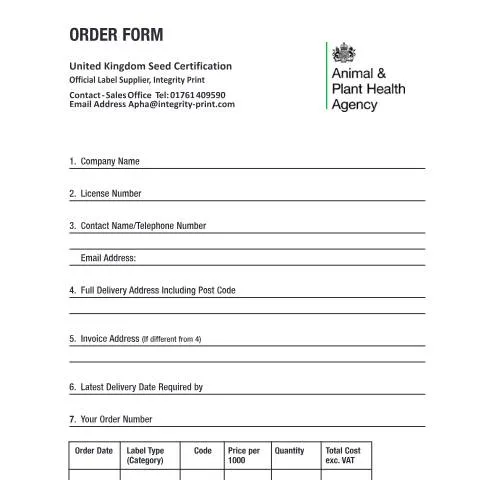
For farmers and businesses interested in obtaining certified seeds, understanding the specific requirements and processes is essential. This includes knowing the correct label order forms to use, as these forms are necessary for the certification process. Each label is uniquely identified and must correlate with the specific type of seed being certified, helping to ensure traceability and compliance with regulations.
The Role of Seed Certification Labels
Seed certification labels serve as a guarantee of quality for both farmers and consumers. These labels provide essential information about the seed, including its variety, origin, and the level of certification it has achieved. In the UK, there are different classes of seed, such as Basic Seed, Certified Seed, and Standard Seed, each varying in quality and testing requirements. Understanding these classifications is vital for growers who wish to choose the appropriate seed for their agricultural needs.
When ordering labels, it is essential to adhere to the stipulated guidelines regarding their format and content. Labels must display specific information such as the variety name, the year of production, and the certification number. This transparency helps maintain trust between producers and consumers and ensures compliance with the EU Seed Directive, which lays out the fundamental rules governing seed marketing and certification within the UK.
In addition to physical labels, electronic records and traceability systems are becoming increasingly important in the seed certification process. Growers must ensure that they maintain accurate records of all seed transactions, including the details of the certification labels issued. This digital approach not only streamlines the certification process but also makes it easier to trace the seed from production to sale.
Navigating the Label Order Process: Step-by-Step Guide
Ordering seed certification labels is a process that requires careful attention to detail. Here’s a step-by-step guide to help you navigate the label order process effectively:
- Determine Your Seed Type: Before placing an order, identify the type of seed you require certification for. Each seed type may have different certification requirements and corresponding labels.
- Complete the Necessary Documentation: Ensure that all required forms and documents are ready. This includes the seed certification application form, which you can obtain from the Animal and Plant Health Agency or your local authority. Be meticulous in filling out the form to avoid delays.
- Submit Your Order: Send the completed form along with any associated fees to the appropriate authority. The label order forms must be submitted promptly to ensure that your labels are processed in time for planting.
- Receive Your Labels: Once your order is processed, you will receive your seed certification labels. Check that all information is correct and that the labels match the seed types you intend to cultivate.
- Attach Labels to Seed Packages: Properly affix the certification labels to your seed packages to ensure that they are visible and legible. This step is crucial for compliance and traceability.
- Maintain Records: Keep a copy of all documentation related to your seed certification for future reference. This includes your application, payment receipts, and any correspondence with the certification authority.
By following these steps, you can ensure that you navigate the label order process smoothly and comply with the necessary regulations governing seed certification in the UK.