Understanding the Olive Oil Marketing Standards Regulations in the United Kingdom
The Department for Environment, Food & Rural Affairs (Defra) oversees the implementation of the olive oil marketing standards regulations in the UK. These regulations are designed to ensure that olive oil sold within the country meets specific quality and origin standards, providing consumers with accurate information and safeguarding the reputation of UK producers and importers.
Scope and Purpose of the Regulations
The regulations aim to establish a clear framework for the marketing of olive oil, covering aspects such as packaging, labelling, and origin verification. They are aligned with European Union legislation, specifically Commission Regulation 1019/2002, which sets out the standards for olive oil quality and origin claims. Although the UK has left the EU, these standards continue to be relevant for imports and domestic sales, ensuring consistency and transparency in the olive oil market.
Particularly, the regulations require companies involved in bottling and selling olive oil to demonstrate compliance through proper documentation and storage systems. This helps prevent mislabeling and ensures that consumers receive products that meet the declared standards.
Who Is Responsible for Compliance?
Any business involved in the packaging, storage, or sale of olive oil within the UK must adhere to these regulations. This includes importers, bottlers, and distributors. Companies must submit a declaration for approval to the Food Farming Group at Defra, confirming their compliance with the standards.
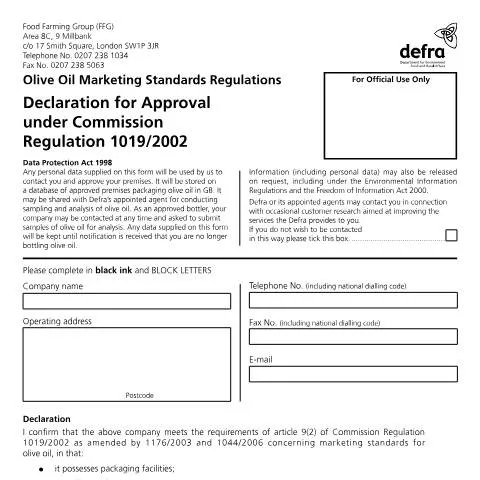
To obtain approval, companies need to demonstrate that they possess suitable packaging facilities, maintain accurate records supporting the indications on their packaging, and have a storage system capable of verifying the origin of the olive oils they handle.
Key Requirements for Companies
Packaging Facilities
- Companies must have appropriate packaging facilities that comply with the standards specified in the regulations.
- Packaging must accurately reflect the product's origin and quality attributes.
Supporting Documentation
- Officers of the company are required to collect and keep documentation supporting the indications displayed on packaging, such as origin and quality claims.
- This documentation must be available for inspection by UK authorities upon request.
Storage and Traceability
- Businesses must operate a storage system that allows traceability of the provenance of the olive oils, especially those bearing a designation of origin.
- This system ensures that the origin claims made on packaging can be verified and are accurate.
Declaration and Data Handling
Once a company confirms compliance, they must submit a declaration form to Defra, which includes details such as the company name, operating address, contact information, and a statement affirming adherence to the regulations. This declaration is an essential step in the approval process and must be signed by a company representative.
Personal data provided in the declaration will be processed in accordance with the Data Protection Act 2018 and UK GDPR. The data will be used to maintain a register of approved premises and may be shared with authorized agencies for sampling and analysis purposes. Companies should be aware that their data might also be used for customer research and regulatory oversight.
Legal and Regulatory References
The primary legal framework for these regulations is Commission Regulation 1019/2002, as amended by subsequent regulations, which sets out the standards for olive oil marketing across the EU and UK. These standards include definitions of quality grades, labelling requirements, and origin claims.
Compliance with these standards is essential for legal sale and marketing of olive oil within the UK. Non-compliance could result in enforcement actions, including penalties or suspension of the company's approval status.
Conclusion
The olive oil marketing standards regulations in the UK serve to protect consumers, ensure fair trading practices, and uphold the integrity of the olive oil market. Businesses involved in the production, packaging, or sale of olive oil must understand their obligations, maintain proper records, and submit the necessary declarations to remain compliant. For further guidance, companies should consult the Department for Environment, Food & Rural Affairs and review the relevant legal texts to ensure full adherence to the standards.