The Seed Marketing Licence: Gateway to Legitimate Agricultural Trade
In the complex landscape of agricultural commerce, the seed marketing licence stands as a critical regulatory checkpoint that separates legitimate operators from unauthorised dealers. Administered by the Animal and Plant Health Agency (APHA), this licensing system ensures that anyone involved in the commercial seed trade meets stringent standards for quality, traceability, and compliance with UK agricultural regulations.
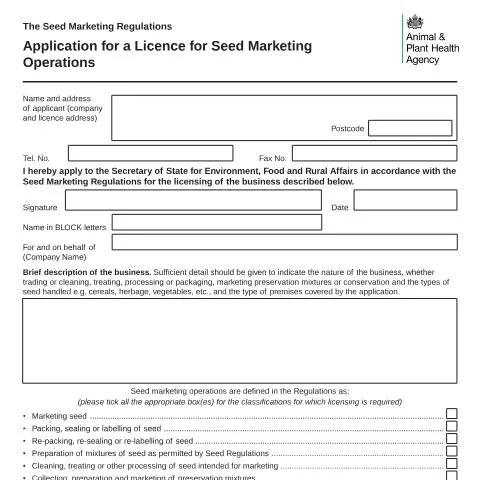
The licence application process, documented through form CERT 11, represents more than mere bureaucratic formality. It establishes a legal framework that protects farmers, gardeners, and the broader agricultural ecosystem from substandard or mislabelled seed products. Whether you're planning to establish a seed cleaning facility in Yorkshire, launch a vegetable seed packaging operation in Kent, or develop conservation mixtures for ecological restoration projects, this licence serves as your entry point into the regulated seed market.
The significance extends beyond individual businesses. Licensed seed operators form the backbone of UK food security, ensuring that the seeds reaching farms and gardens meet the quality standards essential for reliable crop production. From heritage wheat varieties to cutting-edge horticultural cultivars, every commercially marketed seed packet traces back to a licensed operation.
Defining Your Seed Marketing Operations: Beyond Simple Trading
The regulatory framework recognises six distinct categories of seed marketing operations, each requiring specific licensing considerations. Understanding these classifications proves crucial for completing your application accurately and ensuring comprehensive coverage of your planned activities.
Marketing seed represents the most straightforward category, covering the actual sale or distribution of seed products to end users. This encompasses retail sales, wholesale distribution, and even online marketing platforms. However, the definition extends beyond simple transactions to include advertising, promoting, and offering seeds for sale.
The packing, sealing, and labelling operations category addresses businesses that prepare seeds for market presentation. This includes companies that receive bulk seeds and portion them into consumer-friendly packages, apply regulatory labels, and seal containers to maintain quality. Specialist packaging facilities often focus exclusively on this aspect of the seed trade.
Re-packing, re-sealing, and re-labelling activities serve distinct market needs, particularly for imported seeds requiring UK-compliant labelling or bulk purchases requiring subdivision into smaller quantities. This category proves essential for businesses adapting international seed supplies to domestic market requirements.
| Operation Type | Typical Business Profile | Key Regulatory Focus |
|---|---|---|
| Seed Marketing | Garden centres, agricultural merchants | Traceability and variety authenticity |
| Cleaning & Processing | Specialist seed facilities | Quality maintenance and contamination prevention |
| Mixture Preparation | Wildflower specialists, turf suppliers | Composition accuracy and species identification |
| Preservation Mixtures | Conservation organisations | Genetic authenticity and ecological suitability |
The preparation of mixtures of seed category addresses businesses creating blended products such as wildflower meadow mixes, lawn seed combinations, or cover crop blends. These operations require particular attention to species proportions, compatibility, and labelling accuracy.
Cleaning, treating, and processing operations encompass the technical aspects of seed preparation, including removing debris, applying fungicidal treatments, or enhancing germination through priming techniques. These businesses often serve as intermediaries between seed producers and marketers.
Finally, preservation mixture activities focus on collecting, preparing, and marketing seed combinations specifically designed for conservation purposes. This specialised category addresses the growing demand for native species restoration and biodiversity enhancement projects.
Navigating the Application Landscape: From Conception to Submission
The journey toward seed marketing licensing begins well before completing form CERT 11. Prospective applicants must first establish their business premises, develop operational procedures, and identify qualified personnel capable of meeting regulatory requirements.
The nominated contact designation represents a critical component of the application process. This individual assumes responsibility for ensuring compliance with seed regulations and certification processes throughout the business operation. The nominated contact typically signs certification forms, responds to regulatory queries, and serves as the primary liaison with APHA inspectors.
Selecting an appropriate nominated contact requires careful consideration of both technical expertise and authority within the organisation. The individual must possess sufficient knowledge of seed regulations, quality control procedures, and certification requirements. Equally important, they must hold adequate authority to implement necessary changes and ensure ongoing compliance across all operational aspects.
The deputy nomination provision recognises that businesses require continuity in regulatory compliance even when primary contacts are unavailable. The deputy should possess comparable qualifications and authority, ensuring seamless regulatory interface during holidays, illness, or staff transitions.
Licensed seed samplers represent another crucial element of the regulatory framework. These qualified individuals possess specific training in seed sampling techniques, quality assessment procedures, and documentation requirements. The application requires listing any licensed samplers whose services will be available to the company, establishing the quality control infrastructure essential for ongoing operations.
Crafting Your Business Description
The business description section demands more than superficial overview. APHA requires sufficient detail to indicate the nature of operations, including specific activities, seed types handled, and premises characteristics. This information enables regulators to assess appropriate licensing scope and identify relevant inspection requirements.
Effective business descriptions specify whether operations focus on trading, processing, or combination activities. They identify seed categories such as cereals, herbage, vegetables, or ornamentals, providing insight into the technical expertise and facilities required. The premises description should address storage facilities, processing equipment, and quality control capabilities.
The Regulatory Framework: Understanding Seed Marketing Regulations
The Seed Marketing Regulations establish the legal foundation governing all aspects of commercial seed trade within the UK. These regulations implement European Union standards adapted for domestic application, ensuring consistency with international trade requirements while addressing specific UK agricultural needs.
The regulations define seed marketing operations comprehensively, extending beyond simple buying and selling to encompass all activities that bring seeds to market. This broad definition ensures regulatory oversight across the entire supply chain, from initial processing through final retail distribution.
Compliance requirements vary depending on the specific operations undertaken. Marketing operations require robust traceability systems, accurate labelling, and quality documentation. Processing activities demand additional controls over contamination prevention, treatment applications, and quality maintenance throughout handling procedures.
The certification process integration represents a particularly important aspect of the regulatory framework. Licensed operators often participate in official seed certification schemes, producing certified seeds that meet enhanced quality standards. The nominated contact's role in signing certification forms establishes direct accountability for these premium products.
Quality Standards and Traceability Requirements
Licensed seed marketing operations must maintain comprehensive records documenting seed sources, processing activities, and distribution channels. These traceability systems enable rapid response to quality issues, facilitate regulatory inspections, and support certification processes.
Quality control procedures extend beyond basic germination testing to encompass purity analysis, disease screening, and genetic authenticity verification. Licensed operators must demonstrate capability to maintain these standards consistently across all handled seed lots.
Data Protection Considerations in Agricultural Licensing
The application process involves extensive personal and commercial data collection, triggering specific obligations under the Data Protection Act 2018 and UK GDPR. Understanding these data protection implications proves essential for informed participation in the licensing system.
APHA serves as the data controller for all information provided through form CERT 11, assuming responsibility for lawful processing and appropriate data security measures. The primary processing purposes encompass regulatory compliance monitoring, certification scheme administration, and relevant business communication.
The data sharing arrangements extend beyond APHA to include technical contractors such as the National Institute of Agricultural Botany (NIAB), which administers seed certification schemes on APHA's behalf. This partnership enables specialised technical services while maintaining regulatory oversight.
International data sharing occurs with equivalent government departments in other European Union member states for enforcement purposes. This cooperation facilitates cross-border regulatory coordination and supports the international seed trade framework.
Licensed seed company registers published on APHA web pages provide public access to contact details for all licensed operators, supporting industry networking and customer verification processes.
The Freedom of Information Act 2000 and Environmental Information Regulations 2004 may require APHA to release application information upon request. However, the agency commits to preventing unwarranted confidentiality breaches while meeting statutory disclosure obligations.
Commercial Information Protection
Despite transparency requirements, APHA recognises the commercial sensitivity of certain application information. Processing procedures, customer lists, and proprietary techniques receive appropriate protection consistent with data protection obligations and commercial confidentiality principles.
Customer research activities may utilise application data for service improvement purposes, though participation remains voluntary and subject to separate consent procedures. These research initiatives aim to enhance regulatory services and reduce administrative burdens for licensed operators.
Fill in your form directly online
No printing: type your details into the boxes of the official form, tick, then download the PDF ready to send.
- 1Type into the form boxes
- 2Tick in one click
- 3Save and download the PDF
Strategic Timing and Operational Planning
The licensing timeline requires careful coordination with business development plans, premises preparation, and staff recruitment activities. Applications should be submitted well in advance of planned operational commencement, allowing sufficient time for processing, inspection, and any necessary modifications.
Seasonal considerations prove particularly relevant for seed marketing operations. Many businesses experience peak activity during spring planting seasons, making licence availability during these critical periods essential for commercial success. Early application submission ensures licensing completion before seasonal demand increases.
The inspection process typically follows application submission, requiring premises readiness and staff availability for regulatory assessment. Inspection scheduling may experience delays during peak agricultural seasons, reinforcing the importance of early application submission.
Licence validity periods and renewal requirements demand ongoing attention throughout business operations. Maintaining current licensing status requires continuous compliance monitoring and timely renewal submissions before expiration dates.
Integration with Certification Schemes
Many licensed operators participate in official seed certification programmes, producing premium seeds that command higher market prices. The licensing application establishes the foundation for certification participation, making early consideration of certification intentions valuable for comprehensive planning.
Certification scheme participation requires additional infrastructure investments, staff training, and quality control procedures beyond basic licensing requirements. Planning these enhancements during initial licensing application prevents subsequent operational disruptions and additional regulatory approvals.
Building Compliance Infrastructure for Long-term Success
Successful seed marketing operations require robust compliance infrastructure extending far beyond initial licence acquisition. The regulatory framework demands ongoing attention to quality control, record keeping, and staff development throughout business operations.
Licensed seed sampler availability represents a continuing operational requirement rather than a one-time application consideration. Businesses must maintain access to qualified sampling services, whether through employed staff, contracted services, or industry partnerships. The training requirements for seed samplers include specific courses addressing sampling techniques, quality assessment, and documentation procedures.
The continuous professional development needs extend beyond sampling to encompass regulatory updates, technical advances, and industry best practices. Nominated contacts and their deputies require ongoing education to maintain current knowledge of evolving regulatory requirements and certification standards.
Record keeping systems must accommodate the comprehensive documentation requirements spanning seed sources, processing activities, quality testing results, and distribution records. These systems support both routine operations and regulatory inspections while enabling rapid response to quality issues or customer enquiries.
The integration of multiple operational categories within single licences creates complex compliance matrices requiring systematic management approaches. Businesses handling various seed types across multiple operation categories must maintain appropriate controls and documentation for each combination of activities and products.
Technology Integration and Digital Compliance
Modern seed marketing operations increasingly rely on digital systems for inventory management, quality tracking, and regulatory compliance. The licensing framework accommodates these technological approaches while maintaining essential verification and audit capabilities.
Electronic record keeping systems must provide reliable data storage, retrieval capabilities, and backup procedures ensuring information availability during inspections and audits. The integration of quality control data, traceability information, and certification records creates comprehensive compliance documentation supporting all regulatory requirements.
The email communication preferences indicated during application establish ongoing information distribution channels for regulatory updates, industry guidance, and certification scheme developments. Maintaining current contact information ensures receipt of critical updates affecting operational compliance and market opportunities.