Understanding the Reporting of Non-Compliance with the Pet Travel Regulations in the UK
The Animal and Plant Health Agency (APHA) provides guidance for individuals and organisations involved in pet travel to and from the United Kingdom, particularly concerning the reporting of non-compliance with the Pet Travel Regulations. This official notice outlines the procedures, responsibilities, and legal obligations related to pet travel documentation and compliance checks, ensuring the health and safety of animals and the protection of the UK’s biosecurity standards.
Scope and Purpose of the Guidance
This guidance is aimed at pet owners, transport companies, veterinary professionals, and official inspectors involved in the movement of animals across UK borders. The primary goal is to ensure that all pet movements adhere to the EU Regulation 576/2013 and related UK legislation, which set out the necessary health and identification requirements for pets traveling internationally. The document also provides instructions on how to report instances where pets or their accompanying persons do not meet these legal standards, thereby helping to prevent the spread of diseases and ensuring animal welfare.
Key Points for Pet Travel Compliance and Reporting
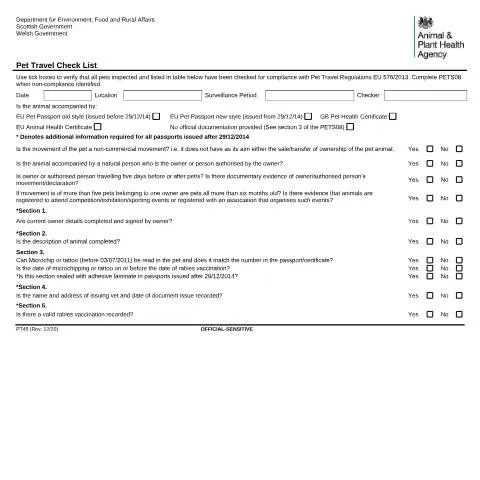
Documentation and Verification
Traveling pets must be accompanied by valid documentation, such as:
- EU Pet Passport (old or new style)
- GB Pet Health Certificate
- EU Animal Health Certificate
- No official documentation provided (if applicable)
Inspectors verify that these documents are complete and accurate, including vaccination records, microchip or tattoo details, and blood test results, especially for animals coming from unlisted third countries. Pets should also have the appropriate identification marks placed in a visible location, such as a microchip or tattoo, and the documentation must be signed and stamped by an authorized veterinarian.
Reporting Non-Compliance
If during inspection, a pet or its accompanying person is found to be non-compliant with the Pet Travel Regulations, this must be reported to the relevant authorities. Non-compliance can include missing or invalid documentation, incorrect identification, or failure to meet vaccination requirements. The report should include detailed information about the pet, the journey, and the nature of the non-compliance, supported by official documentation and inspection results.
Legal and Administrative Responsibilities
It is the responsibility of pet owners and transport operators to ensure all travel documentation is accurate, complete, and up-to-date before travel. Veterinary professionals must ensure that all health certificates and microchip details are correctly completed and endorsed. Failure to comply with these requirements can result in penalties, including fines, quarantine, or refusal of entry into the UK.
Official inspectors, such as those from the APHA, are tasked with conducting compliance checks at border points. They document findings meticulously, including the details of the pet, the route, and the verification status of each document. Any instances of non-compliance are formally reported, and appropriate enforcement actions are taken in accordance with UK legislation.
Conclusion and Further Guidance
This official guidance emphasizes the importance of thorough preparation and adherence to pet travel rules to facilitate smooth crossings and safeguard animal health. Pet owners and professionals are encouraged to review the detailed checklists and ensure all documentation and health requirements are met before travel. For further information, official resources and contact points are available through the Animal and Plant Health Agency, which oversees the enforcement of these regulations and provides support for compliant pet travel.