Navigating the N460HC Form: The Key to Your Appeal Journey
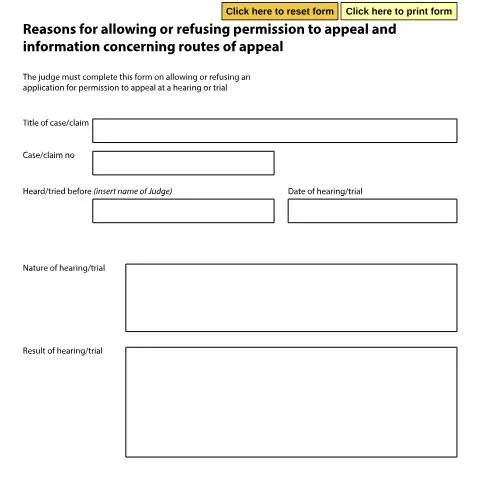
When a judgment is rendered in a court case, the stakes can be incredibly high for all parties involved. For those who believe that a decision was made in error, understanding the N460HC form becomes crucial. This document is far more than just a piece of paper; it represents a gateway to the appeal process. The Reasons for Allowing or Refusing Permission to Appeal form (N460HC) captures the essence of judicial transparency and provides insight into the court’s rationale.
Understanding the Appeal Process: Who Needs to Engage with N460HC?
The N460HC form is specifically designed for judges to articulate their reasons for allowing or refusing an application for permission to appeal. However, it’s imperative to grasp who can submit such applications:
- Claimants or Defendants: Individuals directly involved in the case are the primary users of this form. Whether you are a claimant seeking to appeal a ruling or a defendant looking to challenge a decision, the N460HC is directly relevant.
- Legal Representatives: Solicitors or barristers representing the parties can also play a significant role in the appeals process. They will advise their clients on the necessary steps and may assist in completing the N460HC.
- Certain Exceptions: There are various circumstances that may affect eligibility for appealing a decision, such as prior unsuccessful appeals or cases deemed 'totally without merit'. Understanding these nuances is key.
The Role of the Judge: Key Responsibilities in Completing the N460HC
The judge presiding over the initial hearings plays a pivotal role in the completion of the N460HC form. Their duty extends beyond just making a decision; it involves detailing the rationale behind that decision:
- Judgment Clarity: The judge must provide clear reasons for their decision to either allow or refuse permission to appeal. This is to ensure that the appellant understands the basis of the ruling and can make informed choices moving forward.
- Legal Framework: The form requires the judge to reference the appropriate legal grounds for their decision. This often includes statutes or principles of law that guided their ruling.
- Signature Requirement: The document must be signed by the judge, lending authority and authenticity to the adjudication process.
Section by Section Breakdown of the N460HC Form
Understanding each component of the N460HC form can significantly enhance your chances of a successful appeal. Here’s a detailed exploration of the form’s sections:
| Section | Description | Common Pitfalls |
|---|---|---|
| Title of Case/Claim | Identifies the specific case in question, providing essential context. | Ensure accurate naming; errors can lead to miscommunication or processing delays. |
| Case/Claim No | This unique identifier links the appeal to the original case record. | Double-check this number; any discrepancies can cause administrative issues. |
| Heard/Tried Before | The judge’s name who presided over the hearing is recorded here. | Omitting or misspelling the judge’s name can complicate the appeal process. |
| Date of Hearing/Trial | Specifying the date is crucial for timing and procedural adherence. | Ensure the date matches records; inaccuracies can raise questions about the appeal's timeliness. |
| Nature of Hearing/Trial | Describes the type of hearing that took place, further clarifying the context of the judgment. | Be concise but precise in the description to avoid ambiguity. |
| Result of Hearing/Trial | Clearly states whether the permission to appeal is allowed or refused. | Failure to clearly indicate the outcome may lead to confusion. |
| Reasons for Decision | A succinct explanation from the judge outlining the rationale for the decision. | This section must be clear; vague reasoning can lead to further complications in understanding judicial intent. |
Submitting the N460HC: Channels and Procedures
Once the N460HC form is duly filled and signed, the next step involves its submission. The process may vary depending on the chosen channel:
- Online Submission: For those who prefer a digital approach, submitting the form through the official court website is often the fastest method. Ensure you follow the detailed guidelines provided on the site.
- Paper Submission: Alternatively, you can print and mail the N460HC to the appropriate court address. It’s advisable to use a tracked delivery service to confirm receipt.
- In-Person Submission: For urgent cases, submitting the form at the court office can expedite the process. Be prepared for potential queues and ensure you arrive well within office hours.
Post-Submission: What Happens Next?
Upon submission of the N460HC, several outcomes are possible, depending on the judge's ruling:
- Permission Granted: If the application for permission to appeal is allowed, the appellant will receive an official notification. This opens the path to a formal appeal in the Court of Appeal, where the case will be reviewed.
- Permission Refused: In the case of a refusal, the reasons provided by the judge will become critical. Should the decision be based on the case being 'totally without merit', the appellant cannot renew their application at an oral hearing.
- Next Steps: If permission is refused but not deemed 'totally without merit', the appellant does have the option to renew their application in the Court of Appeal. This involves submitting a fresh notice along with the N460HC.
Challenges and Missteps: What to Avoid with N460HC
Completing and submitting the N460HC form correctly is paramount, as small errors can lead to significant challenges:
- Incomplete Information: Omitting necessary details can result in delays or rejections. Make sure every field is thoroughly filled out.
- Ignoring Deadlines: Be mindful of all relevant deadlines. The Self Assessment deadline for appeals often looms large, and missing it can close off avenues for recourse.
- Misunderstanding Legal Terms: Legal jargon can be daunting. If unsure, consider seeking guidance from a legal professional to avoid misinterpretations that could hinder your appeal.
In Case of Refusal: Next Steps and Considerations
Encountering a refusal on the N460HC form can be disheartening, but it’s essential to understand the avenues available:
- Review the Reasons: Scrutinise the judge's reasons for refusal. These will form the backbone of any subsequent appeal efforts.
- Consult Legal Counsel: Particularly if the decision was based on merit, enlisting the help of a solicitor or barrister can provide clarity and direction on how to proceed.
- Prepare to Renew the Application: In instances where the refusal does not equate to being 'totally without merit', be prepared to renew the application at the Court of Appeal. This involves a new submission and could entail additional legal arguments to support your case.
The Importance of Understanding Your Rights and Obligations
As an individual navigating the complexities of the legal system, being aware of your rights and obligations concerning the N460HC form is imperative:
- Right to Appeal: If granted permission, you have the right to present your case before the Court of Appeal.
- Obligations Regarding Timeliness: Adhering to deadlines is not merely a procedural formality; it is a legal requirement that can determine the success of your appeal.
- Right to Legal Representation: You are entitled to seek legal assistance at any stage of the process, ensuring that your case is presented effectively.
Your Final Steps: Knowing When to Seek Assistance
Grasping the intricacies of the N460HC form and the broader appeal process can be quite complex. If at any point you find yourself confused or overwhelmed:
- Engage with Legal Professionals: Seek out solicitors or legal advisors who have experience in appeals to receive tailored guidance.
- Utilise Court Resources: Many courts provide informational resources and support services to assist those unfamiliar with legal processes.
The N460HC form is an essential document that requires careful consideration and understanding. Thoroughly navigating the requirements and implications of this form can be the difference between a successful appeal and a missed opportunity for justice.
Understanding the Grounds for Appeal
In the context of making an application for permission to appeal using Form N460HC, it's essential to grasp the specific grounds upon which appeals can be allowed or refused. The court considers several factors when determining whether to grant permission to appeal, which typically revolve around the following key aspects:
Legal Error: One of the most common grounds for appeal is the assertion that a legal error was made during the original decision-making process. This could involve misinterpretation of the law, misapplication of legal principles, or failure to properly consider evidence presented. It's crucial for appellants to clearly articulate how such an error has affected the outcome of their case.
New Evidence: If new evidence comes to light that could not have been presented during the original hearing, this might serve as a basis for an appeal. The appellant must demonstrate that this evidence is significant enough to potentially alter the judgement reached in the initial hearing. However, simply presenting new evidence does not guarantee the success of an appeal; it must be relevant and compelling.
Procedural Irregularities: The appeal might be based on claims that there were procedural irregularities that impacted the fairness of the trial. For example, if a party was not given adequate opportunity to present their case or if there were significant breaches of protocol, these could affect the appeal's outcome.
Manifestly Unjust Decisions: Sometimes, a decision might be appealed on the grounds that it is manifestly unjust, even if no clear legal error can be identified. This can include situations where the outcome appears disproportionate or where the judge’s decision fails to take into consideration the equitable factors involved in the case.
Each of these grounds requires a thorough examination of the original ruling against the legal framework and principles governing the case. Thus, when filling out Form N460HC, applicants should ensure that their arguments are well-structured, backed by evidence, and presented clearly to sway the court's judgment in their favour.
The Appeal Process Following Form N460HC Submission
Once Form N460HC has been submitted, understanding the next steps in the appeal process is vital for those seeking to challenge a decision in the UK judicial system. The process can be intricate and may vary depending on the specific court and nature of the case, but generally involves the following stages:
Awaiting the Court’s Decision on Permission: After submission, the application for permission to appeal will be reviewed by a judge. This initial review is typically conducted without a hearing. The judge assesses whether the appeal has a reasonable chance of success based on the grounds provided. The court may take several weeks to reach this decision.
Outcome of the Permission Decision: If permission is granted, the appellant will be informed that they can proceed with the appeal. Conversely, if permission is refused, the appellant can request a reconsideration of the decision by a different judge, often referred to as an "on notice" hearing. In some circumstances, if the case is deemed of significant public interest or legal importance, it may be escalated to a higher court even if initial permission was refused.
Preparing for the Hearing: Upon receiving permission to appeal, the next step involves preparing for the hearing. Appellants must compile all relevant documents, including the original judgment, evidence submitted during the initial trial, and any new evidence that supports their case. Additionally, legal representation may be needed to present the appeal effectively.
The Hearing: During the appeal hearing, both parties will have the opportunity to present their arguments. This is generally a more focused discussion than the original trial, concentrating on points of law and the grounds for appeal stated in Form N460HC. The judges will ask questions to clarify points and assess the strength of each side's arguments.
Judgment: After the hearing, the judges will deliver their verdict. If the appeal is successful, the original decision may be overturned, or the case may be sent back to the lower court for reconsideration. If the appeal is denied, the appellant may still have options for further appeal, particularly if there are substantial legal questions arising from the judgment.
Each stage of the appeal process is critical, and attention to detail in preparation and understanding the judicial expectations are paramount for a successful outcome.
Common Pitfalls in the Appeal Process
Navigating the appeal process can be fraught with challenges, and there are several common pitfalls that individuals should be aware of when using Form N460HC to seek permission to appeal. Recognizing these pitfalls can significantly improve the likelihood of a successful appeal.
Incomplete or Inaccurate Form Submission: One of the most significant hurdles in seeking permission to appeal is ensuring that Form N460HC is completed accurately and comprehensively. Any omissions or inaccuracies can lead to rejection of the application. It’s advisable to double-check all entries, including personal information, case details, and grounds for appeal.
Insufficient Legal Grounds: Many applications fail because the grounds for appeal are inadequately articulated. It is crucial to provide a clear and logical argument, supported by relevant case law and legal precedents. Merely stating dissatisfaction with the outcome is insufficient; the appellant must demonstrate a legitimate basis for believing the original decision was flawed.
Failure to Meet Deadlines: The appeal process is strictly governed by timelines. For instance, the application for permission to appeal must usually be filed within 21 days of the original decision. Missing deadlines can result in an automatic dismissal of the appeal, regardless of its merits. Keeping a structured timeline and setting reminders can help ensure this does not happen.
Neglecting to Prepare for the Hearing: If permission is granted, thorough preparation for the hearing is vital. Failure to prepare—such as not gathering all pertinent documents or not understanding the legal arguments—can undermine the appeal. Engaging legal counsel or seeking professional advice can be beneficial in strategizing for the hearing.
Ignoring the Importance of Legal Representation: While it is possible to represent oneself in an appeal, many individuals lack the necessary legal knowledge and expertise to navigate the complexities of the legal system effectively. Not seeking professional representation can lead to inadequate presentation of the case, which may negatively impact the appeal's outcome.
By being aware of these pitfalls, individuals can take proactive steps to ensure that their application is well-prepared, timely, and grounded in solid legal principles, which will enhance their chances of successfully obtaining permission to appeal.