Understanding the In-Form Reporting Process in Aviation Safety
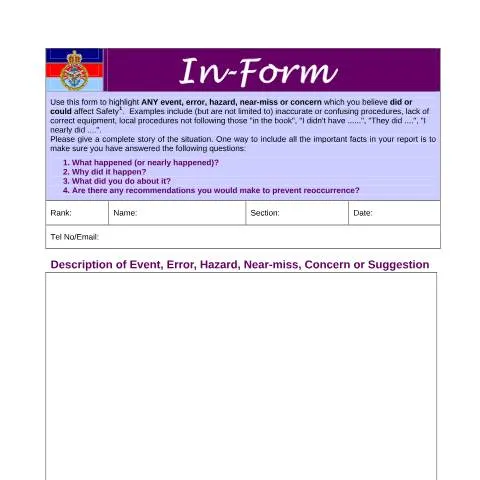
In the realm of aviation safety, the importance of reporting incidents cannot be overstated. The In-form reporting form, under the auspices of the Ministry of Defence and the Military Aviation Authority, serves as a vital tool for personnel to communicate potential hazards, errors, and near-misses. This document is not merely a bureaucratic requirement; it is an essential mechanism for enhancing safety protocols and operational efficiency within the military aviation sector.
Decoding the In-Form Reporting Form
The In-form reporting form is distinct from other forms used within the military framework. Its primary objective is to capture a narrative around safety events that have occurred or could occur. This form is designed to facilitate a thorough examination of situations that could impact safety, such as:
- Inaccurate or confusing procedures
- Lack of correct equipment
- Deviation from standard operational procedures
- Any near-miss scenarios
Unlike the typical paperwork that addresses accidents or incidents after they occur, this form encourages proactive reporting of potential safety concerns. The emphasis is on creating a culture of openness and safety awareness, urging personnel to reflect on their experiences and share insights that could prevent future occurrences.
The Chain of Reporting: From Incident to Resolution
Filing an In-form report is more than just filling out a document; it is the first step in a chain of actions aimed at improving aviation safety. The process typically unfolds as follows:
- Identification of an Issue: The first trigger for completing the In-form may arise from witnessing an unsafe practice or near-miss scenario.
- Completion of the Form: The individual must detail what happened, why it happened, and any actions taken in response. Recommendations for preventing future incidents should also be included.
- Submission: Once the form is completed, it is forwarded to a designated Flight Safety Officer, Representative, or directly to the Safety Event Management System Coordinator (SEMSCO).
- Review Process: The safety personnel will assess the report, investigating if any actions are required. This might involve further inquiry or changes to existing protocols.
- Feedback and Implementation: Based on the findings, recommendations may lead to procedural modifications, training updates, or equipment reviews.
This structured reporting mechanism ensures that safety is continuously reinforced within the military aviation framework, ultimately leading to fewer incidents and safer operations.
Preparing Your In-Form Report: Key Considerations
Before submitting an In-form report, adequate preparation is crucial. This includes gathering relevant facts and ensuring that the narrative is comprehensive. Here are a few key aspects to consider:
- Clarity and Detail: Your report should clearly outline the event, including specific details such as time, location, and the individuals involved.
- Answering Essential Questions: To provide a complete picture, ensure you respond to the following queries:
- What exactly happened?
- Why do you believe it happened?
- What actions were taken in response?
- What recommendations can you suggest to avoid a recurrence?
- Use Clear Language: Avoid jargon and technical terms that might not be understood by all readers. Your aim is to communicate effectively.
Properly preparing your report not only enhances the quality of information received but also demonstrates a commitment to safety and accountability.
Understanding the Broader Context: Regulatory Framework
The In-form reporting process is embedded within a larger regulatory framework that prioritizes safety in military aviation. The underlying principles stem from various safety regulations and directives that advocate for proactive safety management. The Data Protection Act 2018 and UK GDPR govern how personal data is processed in these reports, ensuring confidentiality and protection for those who report incidents.
This regulatory environment emphasizes the significance of reporting and creating an accountable culture where safety concerns can be voiced without fear of repercussion. Through this legal backing, individuals are encouraged to engage in open dialogue about safety, ultimately benefiting the entire organization.
Tracking Your Report: Following Up on Safety Concerns
After submitting your In-form report, understanding the follow-up process is essential. Here’s how you can stay informed about the status of your report:
- Seek Confirmation: Ensure that your report has been received. You can do this by contacting the recipient, whether it be the Flight Safety Officer or SEMSCO.
- Stay Informed: Ask about the investigation process and potential timelines for feedback. This establishes an expectation for the follow-up.
- Be Proactive: If you have not received updates within a reasonable timeframe, do not hesitate to inquire about the status of your report.
The transparency of the follow-up process is crucial for maintaining trust and encouraging ongoing reporting, as personnel see tangible results from their contributions.
What If Things Go Wrong? Handling Refusals and Errors
While the aim of the In-form reporting system is to enhance safety and operational efficiency, there may be instances where reports are mishandled or findings are disputed. In such cases, consider the following steps:
- Clarify the Situation: If your report is denied or dismissed, seek clarity on the reasoning behind the decision. Understanding the rationale is vital to addressing any misunderstandings.
- Correcting Errors: Should you find that critical information was omitted or an error was made in your initial report, you have the right to submit an amendment or a new report.
- Escalation: If you feel that your concerns are not being taken seriously, escalate the matter to higher authorities within the military aviation safety framework.
It is imperative to advocate for safety and ensure that all concerns are treated with due diligence, as this serves the greater good of maintaining a secure operational environment.
Embracing a Culture of Safety in Military Aviation
The In-form reporting form is not just a document; it is a cornerstone of safety culture within military aviation. By encouraging personnel to voice their observations and concerns, the Ministry of Defence and the Military Aviation Authority reinforce the importance of accountability and continuous improvement in safety practices.
Understanding the nuances of this form—from its completion to its submission and follow-up—empowers individuals to play an active role in enhancing safety. As a member of the military aviation community, embracing this reporting process contributes to a safer flying environment for everyone involved.
Next Steps: Your Role in Enhancing Aviation Safety
If you have encountered a situation that warrants reporting, take action today. Reflect on your recent experiences and consider whether you have sufficient grounds to submit an In-form report. Remember that every contribution counts towards a collective effort in promoting safety and operational excellence in military aviation.
Understanding the In-Form Reporting Requirements
The In-Form reporting system in the UK is designed to ensure compliance with various tax obligations and regulatory requirements. This reporting mechanism involves the submission of specific forms that detail an entity's income, expenses, and other financial activities. For businesses, the In-Form is particularly important as it aligns with the requirements set by HMRC for self-assessment and tax return submission.
Entities required to submit an In-Form must understand the various components involved. For instance, sole traders, partnerships, and corporations must provide a comprehensive overview of their financial activities, including declarations of income, allowable expenses, and capital allowances. These forms not only assist HMRC in assessing tax liabilities but also play a pivotal role in ensuring that businesses remain compliant with the UK's extensive tax regulations.
It is important to note that different types of entities may have distinct reporting requirements under the In-Form system. For instance, limited companies must file a Confirmation Statement alongside their accounts, while sole traders might simply need to complete the SA100 tax return. Understanding these nuances is crucial for compliance and to avoid potential penalties.
Common Mistakes in In-Form Reporting and How to Avoid Them
When dealing with In-Form reporting, businesses frequently make errors that can lead to compliance issues or financial penalties. Some of the most common mistakes include:
- Inaccurate Financial Data: This is perhaps the most prevalent mistake. Many businesses either miscalculate their income or erroneously categorize expenses. It’s vital to maintain accurate financial records to ensure all reported figures are correct.
- Missed Deadlines: The self-assessment deadline of 31 January is critical. Late submissions may incur fines. Businesses should have a reminder system in place to prevent this.
- Ignoring Changes in Tax Legislation: Tax laws can change, and it is essential for businesses to stay updated on any revisions that could impact their reporting obligations.
To mitigate these errors, businesses should implement robust accounting practices, seek professional advice when necessary, and regularly review financial records. Additionally, utilizing accounting software can help in generating accurate reports and ensuring that submissions are made in compliance with HMRC guidelines.
Consequences of Non-Compliance with In-Form Reporting
Failing to comply with the In-Form reporting requirements can lead to significant consequences for individuals and businesses alike. HMRC takes non-compliance seriously and has a range of penalties for those who fail to submit required forms or provide inaccurate information.
Penalties can include fines, interest on unpaid taxes, and even criminal charges in cases of deliberate fraud. For instance, if a business fails to file its In-Form by the deadline, it risks an immediate £100 fine. If the delay extends beyond three months, additional fines may apply, which can accumulate daily.
Moreover, non-compliance can damage a business's reputation. Being flagged for tax evasion or late submissions can deter potential clients and partners, impacting long-term growth and sustainability. It is crucial for entities to prioritize compliance and establish a culture of transparency and accountability within their financial practices.
In conclusion, understanding the intricacies of the In-Form reporting system is vital for compliance and financial health. By recognizing the potential pitfalls and ensuring accurate and timely submissions, businesses can navigate this landscape with confidence.